

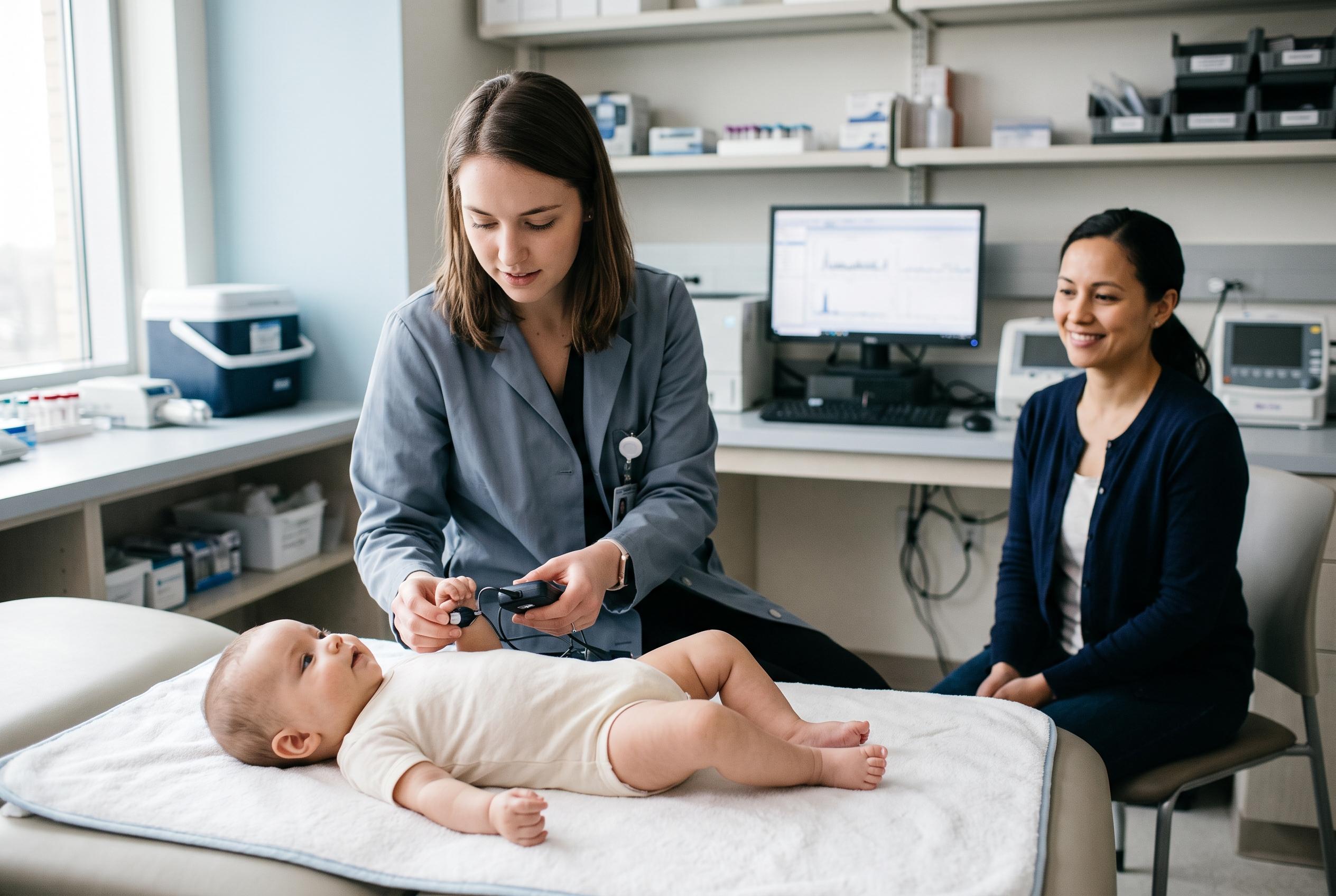

Scientists at LSU’s Pennington Biomedical Research Center are pioneering new methods to study infant energy use, aiming to reshape nutrition guidelines and combat childhood obesity from the very first year of life.
At LSU’s Pennington Biomedical Research Center, scientists are turning their attention to one of the most overlooked periods in human development: the first year of life. In the Developmental Physiology Laboratory, Emily Flanagan and her team are studying how babies grow, how they use energy and how those earliest patterns may shape the risk of obesity and other chronic diseases later on. Pennington says the work begins before birth, with researchers examining how the mother’s weight gain, metabolism and conditions such as gestational diabetes can influence a baby’s development in the womb.
Flanagan has said that each infant arrives with a distinct metabolic profile, and her team is trying to understand how that biology interacts with feeding, movement and growth after birth. The laboratory’s focus reflects a wider effort at Pennington Biomedical, which describes itself as a leading centre for research into obesity, diabetes, cardiovascular disease, cancer, dementia and nutrition. Flanagan’s own academic background in exercise physiology has helped shape a programme that looks closely at the balance between energy intake and energy expenditure in early life.
One reason the work matters is that guidance for feeding infants has not kept pace with current science. According to the research group, the most predictive window for later childhood obesity is the period from birth to 12 months, yet many recommendations still rely on decades-old data. To address that gap, the team has adapted metabolic tools originally designed for adults so they can be used safely with babies. Those methods allow researchers to measure how many calories infants burn while asleep and awake, and to study the full picture of energy balance during growth.
A central question is whether breast milk and infant formula affect metabolism in different ways. The lab is comparing how babies process the two, looking for signs that feeding type changes calorie use and nutritional needs. That work sits within a broader push towards precision nutrition for infants, based on the idea that birth size, feeding pattern, activity and metabolism vary from child to child and should not be treated as one-size-fits-all.
The centre recently received a $3.5 million grant to launch what it says will be the first study to track infant energy balance across the entire first year of life. Families will be seen shortly after birth and again at 3, 6, 9 and 12 months, giving researchers a chance to connect feeding, development and growth over time. Flanagan hopes the findings will eventually inform the Dietary Reference Intakes used to guide how much infants should be fed and help build a more modern evidence base for paediatric care.
Disclaimer: This content is for informational purposes only and is not intended to be a substitute for professional medical judgment, advice, diagnosis, or treatment.



