

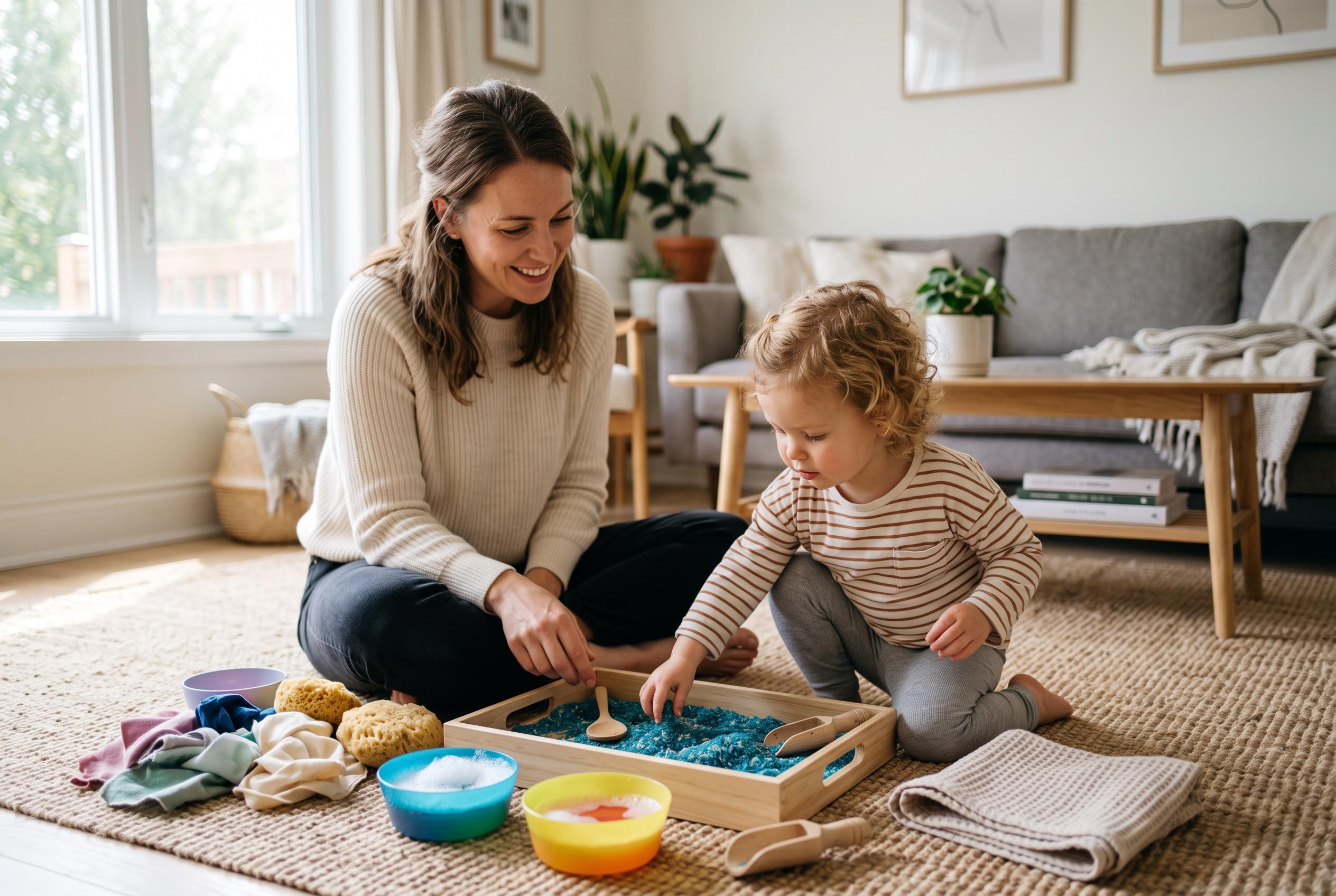

Recent guidance emphasises how simple, low-cost sensory activities can foster crucial brain connections in toddlers, with practical tips for parents to incorporate these engaging exercises safely into everyday routines.
Sensory play gives toddlers a hands-on way to learn by touching, hearing, seeing, moving and, often, making a mess. As the Cleveland Clinic notes, activities that engage the senses can help build the brain connections children need for language, motor skills, problem-solving and social development. The practical appeal for parents is just as clear: most effective sensory play at home can be made from ordinary cupboard items, a tray and a plastic bin. The most important rule, though, is simple: toddlers need close supervision whenever small materials are in reach.
At home, the easiest sensory activities are usually the ones that ask a child to pour, squeeze, tear, stack or scoop. A tray of play dough supports hand strength and finger control. A rice bin encourages scooping and pouring. Oobleck, made from cornflour and water, adds a surprising texture that shifts between solid and liquid. Paper tearing, sensory bags filled with safe dry materials, and cups-and-funnels pouring games all work the hands in slightly different ways while keeping the setup low-cost and quick.
Some of the best activities are not still at all. Dancing, stopping on cue, stomping, chasing bubbles and rolling or catching a balloon all add movement, balance and body awareness. Babylist and Healthline both point out that sensory play does not need special equipment; it can be as simple as music, finger paint, bath time or outdoor play. For many toddlers, the movement itself is the reward, and it can help them settle afterwards if they need strong physical input. But if a child is already overwhelmed, calmer activities are usually the better choice.
The real value of sensory play is not novelty but repetition. Toddlers often return to the same textures, sounds or motions again and again, and that is part of how they learn. A child who keeps reaching for squishy, heavy or noisy activities is giving useful clues about what kind of input they seek. The best approach is to start with what they already enjoy, change only one part at a time if interest fades, and leave the rest until another day. InclusiveLearn and Betteroo both stress that short attention spans are normal and that quality of engagement matters more than a complicated setup.
Parents should also keep an eye out for signs that sensory behaviour may need more attention. If a toddler consistently avoids textures, sounds, light or movement, becomes upset by ordinary routines, or has trouble with eating, dressing or sleep because of sensory reactions, it may be worth speaking with a paediatrician or occupational therapist. The aim is not to force a child into every kind of input. It is to notice what helps them feel steady, curious and ready to play.
Disclaimer: This content is for informational purposes only and is not intended to be a substitute for professional medical judgment, advice, diagnosis, or treatment.



