

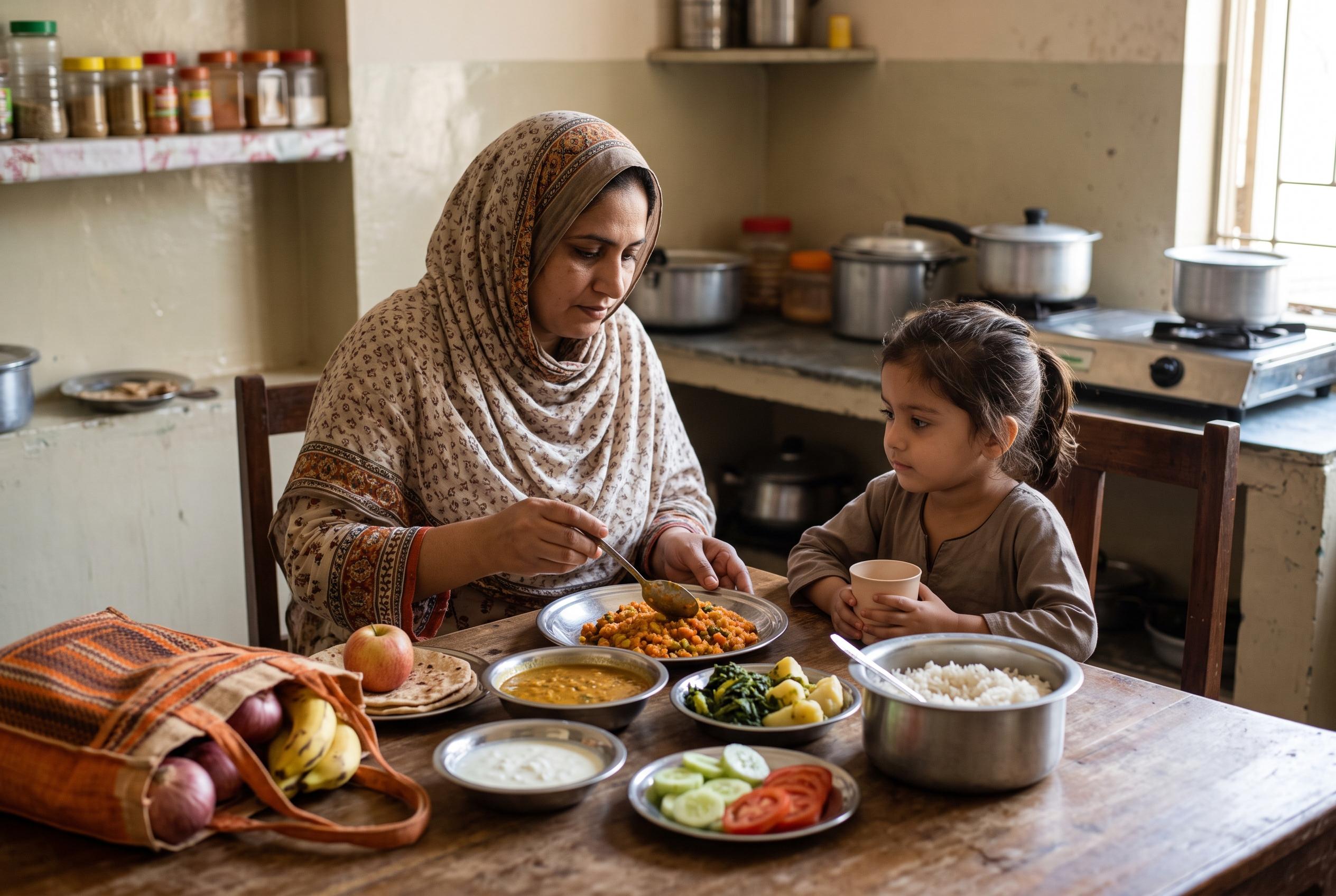

A new UN FAO report reveals Pakistan’s food issues are more about dietary composition and affordability of nutritious foods than mere calorie availability, urging a policy shift towards healthier diets to combat malnutrition and long-term health problems.
Pakistan’s struggle with food has moved beyond the question of whether enough grain is available. The deeper issue is that millions of people are eating enough calories without getting a diet that supports health, growth and long-term wellbeing. According to the latest assessment from the UN Food and Agriculture Organisation, more than 60% of Pakistanis cannot afford a healthy diet, a figure that points to a food system failing at the level of nutrition rather than simple supply.
The problem is not just affordability but composition. The FAO says Pakistan’s food supply is skewed towards staples and sugar, while vegetables, fruits, pulses, roots and tubers remain in short supply. That imbalance matters because it leaves many households with meals that are filling but nutritionally weak. The result, as the UN agency and related reports note, is a country still facing severe levels of childhood stunting and wasting alongside widespread micronutrient deficiencies, even as obesity, diabetes and cardiovascular disease become more common.
The FAO’s findings also suggest that Pakistan’s agricultural priorities may need to change. Several reports on the assessment say policy should do more to encourage the production and consumption of nutrient-rich foods such as pulses, vegetables and fruit, while still protecting supplies of basic staples. The agency has also pointed to measures outside farming, including taxes on sugary drinks, clear front-of-pack nutrition labelling and tighter limits on marketing unhealthy foods to children. Some summaries of the report also mention expanding school meals as part of a broader response.
That wider response matters because the challenge is not simply hunger, but the quality of what people can afford to eat. The UN’s Pakistan coverage has argued that the country needs a shift from treating food security as a matter of calories alone to thinking in terms of food systems and nutrition. For families, that means the policy debate has to extend from wheat prices to the availability of affordable protein, fresh produce and other foods that support healthy development. Without that change, Pakistan may continue to fill stomachs while leaving much of the population undernourished.
Disclaimer: This content is for informational purposes only and is not intended to be a substitute for professional medical judgment, advice, diagnosis, or treatment.



