

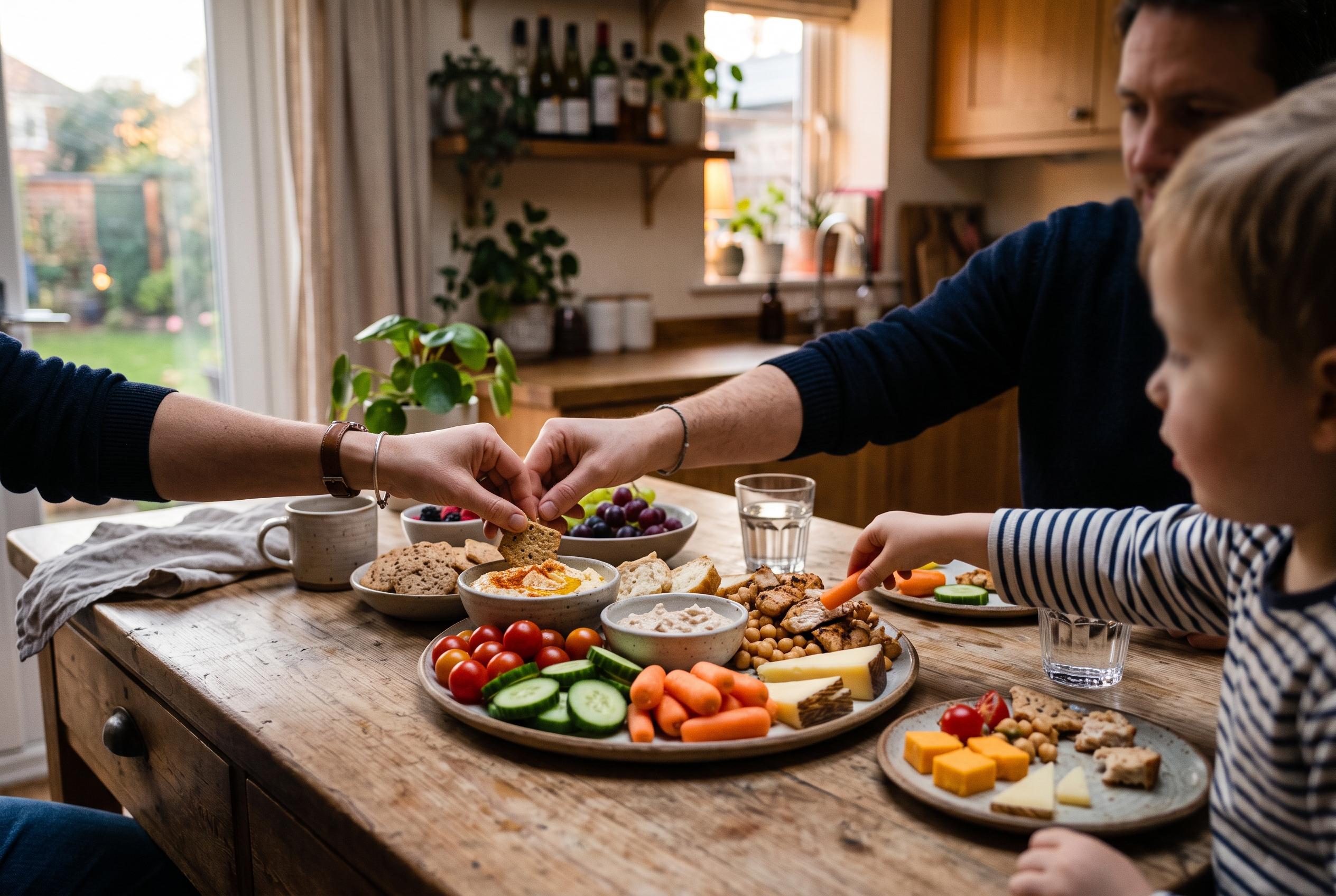

A versatile snack-plate approach offers families an adaptable, fuss-free way to enjoy nutritious, personalised dinners on nights when time and ingredients are limited.
On nights when making a full dinner feels like too much, a snack-plate meal can offer a practical middle ground. The idea is simple: assemble a few familiar foods, serve them in modest portions and let everyone build a plate that suits their own appetite. The approach is especially useful when schedules are uneven, leftovers are scarce or family members want different foods without a long negotiation at the table.
The basic formula rests on five parts. Start with a familiar base such as crackers, pita, toast, tortillas, rice, pasta, a baked potato or small sandwich wedges. Add a protein, which might be cheese, yoghurt, eggs, beans, hummus, leftover chicken or turkey, or a nut or seed butter if that fits the household. Then include one or two fruit or vegetable options, such as sliced apples, berries, cucumbers, carrots, peppers, grapes or roasted vegetables. Finish with something crunchy or fun, like pretzels, popcorn, a few chips, olives or a small treat, and a dip or spread such as hummus, salsa, guacamole or cream cheese.
The formula is meant to guide supper, not to turn it into a test of nutritional perfection. According to the original guide, families can use whatever foods they already keep on hand, while also taking account of allergies, dietary needs and age-appropriate textures. That flexibility is part of what makes the meal so useful: it can work with a nearly full fridge, a nearly empty one or something in between.
There are several easy ways to serve it. A family board lets everyone choose from a shared tray or cutting board, which can also help use up small amounts of leftovers. A personalised plate works better when tastes, restrictions or schedules differ. For nights on the move, the same ingredients can be packed into a divided container and eaten as a grab-and-go meal, as long as foods are kept at the right temperature.
The concept also adapts well to different kinds of food. A no-cook version might include crackers, cheese cubes, cucumber slices, apple wedges and hummus, with olives or pretzels on the side. A warmer version can use quesadilla wedges or roasted potatoes as the base, alongside beans or leftover chicken, fruit, vegetables and salsa. When the cupboards look bare, toast, canned beans or tuna, frozen fruit, applesauce and a simple spread can still make a workable meal.
Snack-plate supper can also make family life a little easier. Children can take on small jobs such as washing produce with supervision, carrying napkins, placing fruit on the board or filling water cups. The format can reduce pressure around picky eating because familiar items sit alongside newer ones without forcing anyone to commit to a single dish. It also keeps cleanup manageable, especially if only one tray is used and leftovers are returned to containers before everyone sits down. For busy nights, that may be the whole point: a dinner that is easy to serve, easy to eat and easy to finish.
Disclaimer: This content is for informational purposes only and is not intended to be a substitute for professional medical judgment, advice, diagnosis, or treatment.



