


An ongoing measles outbreak in Wisconsin has reached 243 cases, with health officials warning that the actual number may be higher due to underreporting and highlighting low vaccination rates in affected communities.
Wisconsin’s measles outbreak has climbed to 243 cases this year, and local health officials say that figure probably does not capture the full extent of infections. The Wisconsin Department of Health Services updated the total on 2 October, lifting the count from 192 reported a week earlier. Grant County health officer Kessa Klaas told the Milwaukee Journal Sentinel, in comments republished by Wausau Pilot & Review, that many infections are likely missed because not everyone seeks testing, medical care or reports their illness to public health authorities.
That concern reflects the way measles is counted, and the way it spreads. Mild cases can remain at home and never make it into official records, even though the virus is highly contagious and often begins with symptoms that can resemble a common respiratory illness. Fever, cough, a runny nose and red eyes can appear before the characteristic rash, leaving families with little warning that an infected person may already be exposing others in the household, at work or in school. Dr Anthony Zeimet, an infectious diseases specialist with ThedaCare, told Fox 11 that measles can be passed to nearly every unvaccinated person it reaches and that one in five patients may require hospital care.
The outbreak remains concentrated in south-western Wisconsin. The state says 220 confirmed and six probable cases are linked to the outbreak in Grant, Iowa, Lafayette and Vernon counties, with Lafayette carrying the heaviest burden, followed by Iowa and Grant. Travel-related cases have also appeared beyond the core outbreak area, including in Chippewa and Marathon counties, while Dane and Waukesha counties each reported an earlier case this year. The Wisconsin Department of Health Services has also said public health teams are watching wastewater, which has detected measles virus in several affected counties, underscoring that transmission may be broader than the case counts suggest.
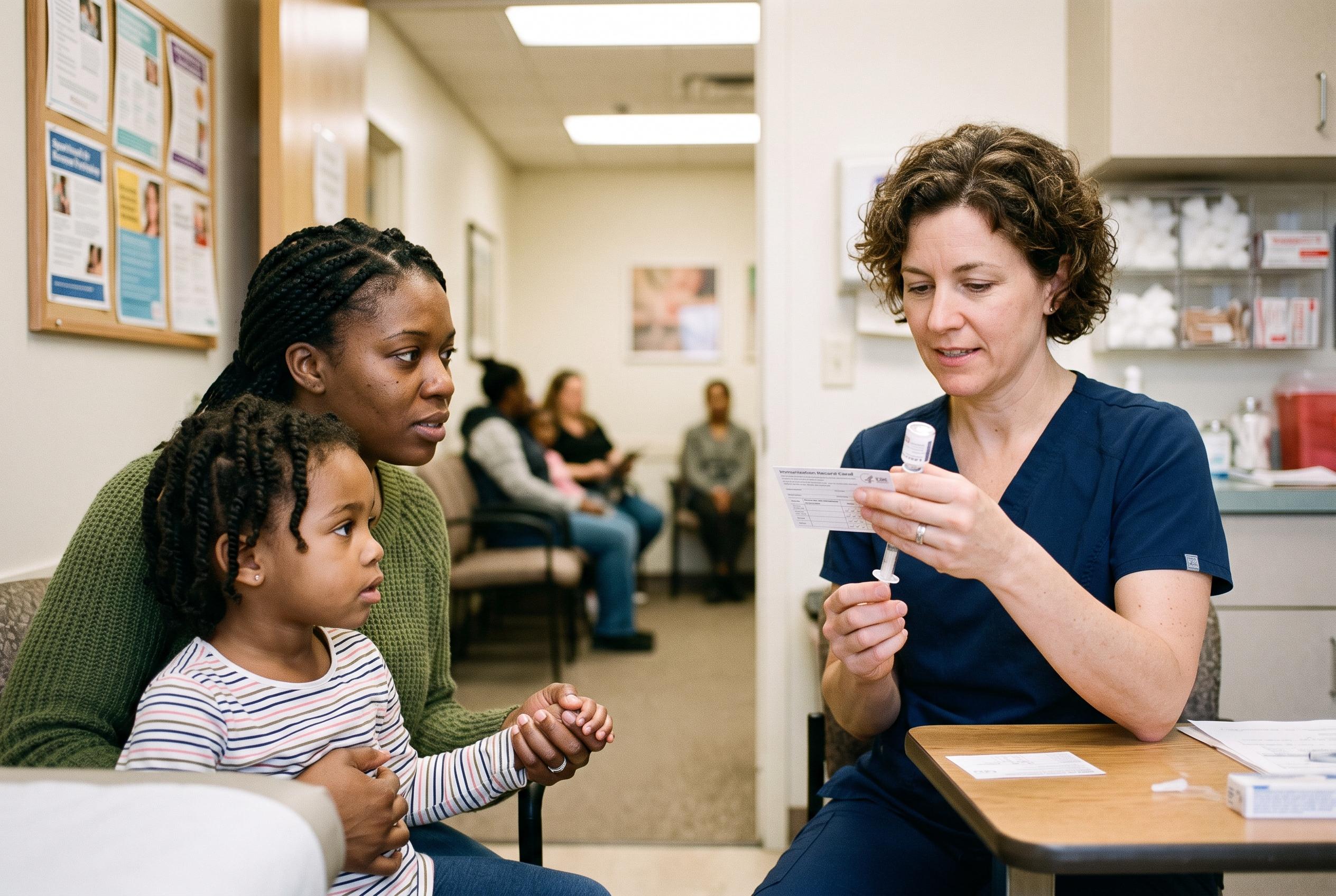
Vaccination remains the clearest divider between those at greatest risk and those with strong protection. According to the Journal Sentinel, nearly every Wisconsin patient so far has been unvaccinated. Two doses of the MMR vaccine are about 97% effective at preventing measles, and public health experts generally say coverage needs to be around 95% to stop outbreaks from taking hold. In Grant County, however, only 56% of 5- and 6-year-olds had received at least two MMR doses in 2024, according to WKOW, leaving a large gap in community protection.
For families in the affected counties, the practical advice is straightforward: check vaccination records, know the symptoms and call ahead before seeking care if measles is possible. The Wisconsin Immunisation Registry can help residents confirm whether they are protected, and county health departments may be able to point families to low-cost or free vaccines. That is especially important for infants too young for their first MMR dose, pregnant people who are not immune and anyone with a weakened immune system, all of whom depend heavily on the immunity of the people around them. The state says it posts county-level measles data twice a week, so the situation could change again within days.
Disclaimer: This content is for informational purposes only and is not intended to be a substitute for professional medical judgment, advice, diagnosis, or treatment.



