

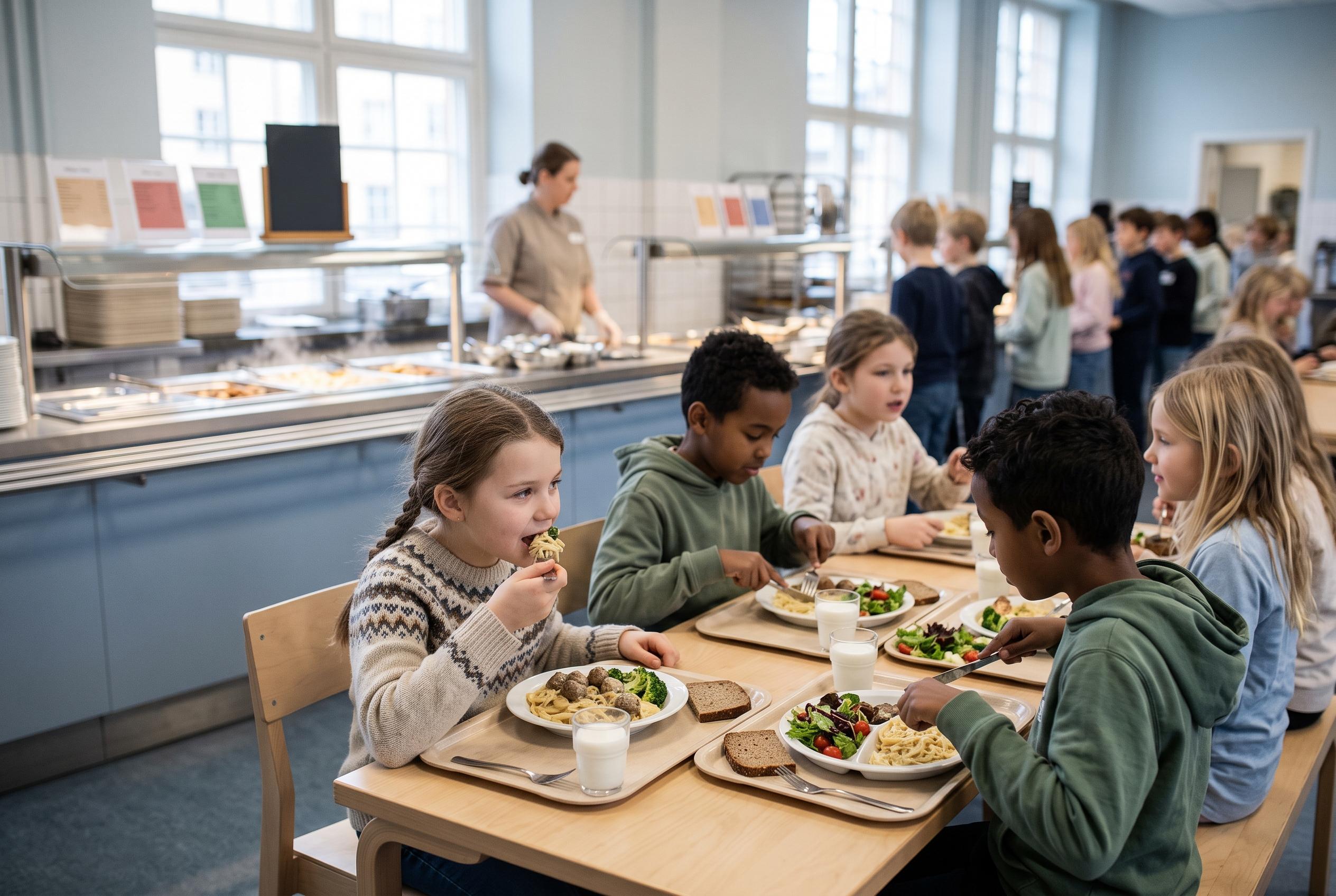

A new study in southern Sweden reveals that children favour familiar, tasty, and filling meals over climate labels, suggesting gradual recipe reformulation may be more effective than strict climate messaging in promoting sustainable school lunches.
Students are not rejecting climate-friendly school meals outright, but a new study suggests that what wins them over is not the carbon label. Taste, how filling a dish feels and whether it resembles something familiar mattered far more than the environmental case in surveys and group discussions with pupils in southern Sweden.
Researchers from the University of Gothenburg and Chalmers University of Technology studied children in grades 4 to 9 at six schools in Lund Municipality. The survey covered 1,268 students, and the team also held qualitative sessions with 20 pupils at two of the schools. Their findings, published in the journal Appetite, point to a divided but not hostile response: many students were neutral, with roughly similar shares expressing positive and negative views.
Monica Hunsberger, an associate professor at Sahlgrenska Academy at the University of Gothenburg, said the children understood that foods have different climate impacts, but that lunch decisions were driven by more immediate concerns. In practice, pupils cared most about whether a meal tasted good, left them satisfied and matched what they already knew. The discussions suggested that meat was often treated as the default for a proper, substantial meal, while vegetarian dishes were judged against that standard.
The study also found that students were somewhat more willing to accept recipes that contained less meat than they were to support more all-vegetarian days. That distinction mattered because the schools in the study already served one or two vegetarian days each week. Erik André, a doctoral student at Chalmers and the City of Gothenburg, said recipe reformulation could therefore be a useful way to cut climate impact without reducing acceptance, especially in kitchens already trying to lower the footprint of their menus.
The results build on an earlier intervention in the same setting, which reduced the carbon footprint of school meals by 20% without affecting how much pupils ate or how satisfied they were with the food. The new work suggests that the most workable route to greener school lunches may be gradual change rather than a sharp shift in menu style: keeping meals familiar, adjusting recipes and preserving the sense of a full plate may matter more than making climate arguments alone.
Disclaimer: This content is for informational purposes only and is not intended to be a substitute for professional medical judgment, advice, diagnosis, or treatment.



