

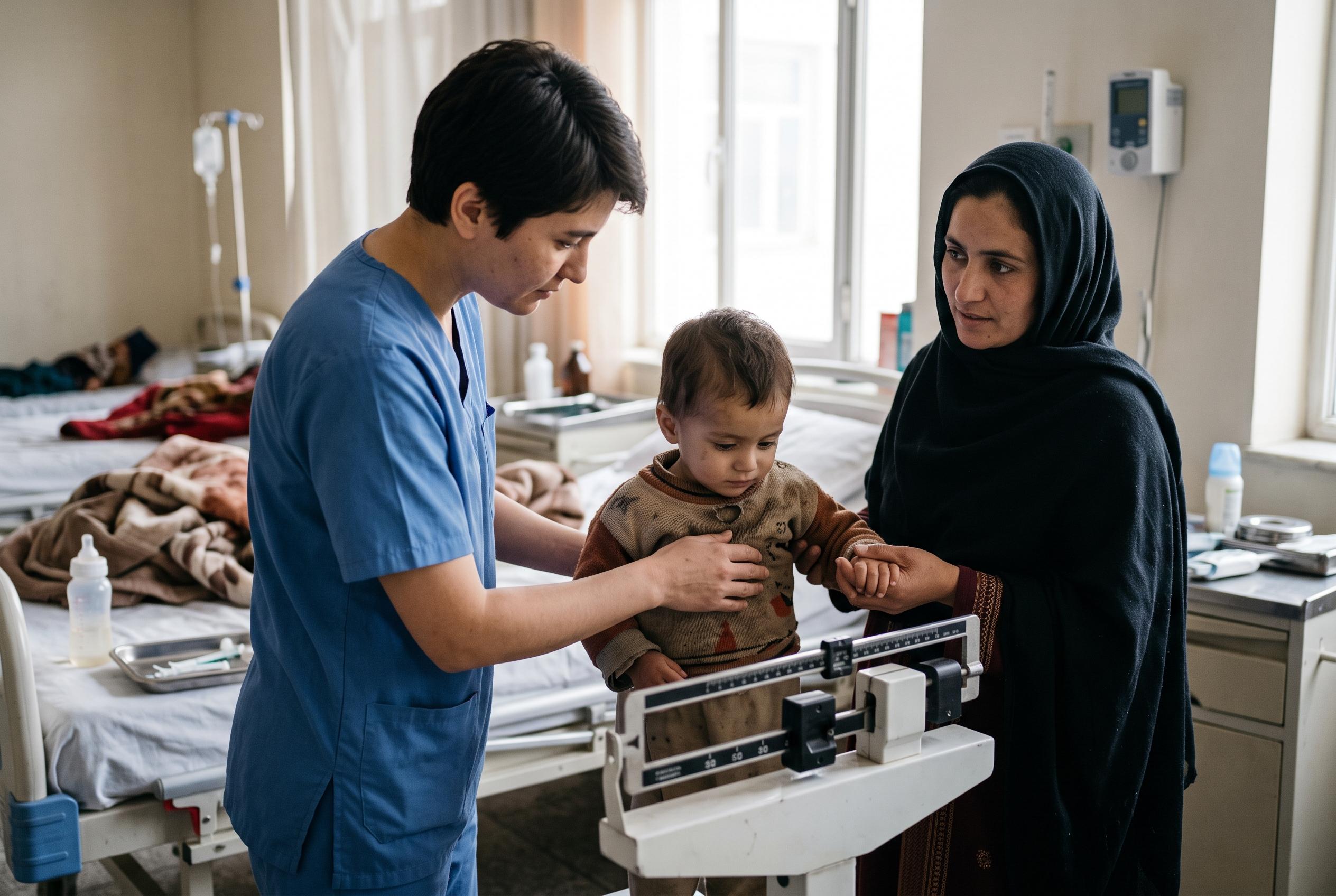

A recent hospital-based study in Herat highlights severe malnutrition cases among young children, seasonal trends in admissions, and the need for improved tracking and referral systems to enhance treatment outcomes across Afghanistan.
A hospital-based study from Herat, in western Afghanistan, has found that most young children referred for acute malnutrition were already in a severe condition when they arrived for care, with seasonal peaks in admissions and outcomes that varied by age and clinical signs such as oedema. The retrospective review of records from Guzara District Hospital, covering May 2020 to March 2022, looked at children aged 0 to 59 months and aimed to identify how serious the malnutrition was, what happened to the children after treatment began, and which factors appeared to shape those results.
Of the 266 records reviewed, 253 children met the study criteria after duplicate entries and children who were not classified as having moderate or severe acute malnutrition were excluded. The children were mostly very young: more than four in five were under 12 months old. Slightly more than half were girls. Based on weight-for-height measurements, most children fell into the severe category, while a smaller share had moderate acute malnutrition or were not classed as acutely malnourished. Among those aged 6 to 59 months, mid-upper arm circumference measurements, a common screening tool in nutrition programmes, also showed a heavy burden of severe cases.
Treatment outcomes were mixed. Just over two-fifths of the children were recorded as recovered, while a similar proportion were referred onwards to outpatient care. Smaller numbers were transferred to inpatient care elsewhere, defaulted from treatment, or had missing outcome data, and no deaths were recorded in the hospital file review. Younger infants were more likely to recover, whereas older children were more often sent to outpatient therapeutic care. Children with oedema, a swelling caused by fluid retention and recognised as a marker of severe acute malnutrition, were significantly more likely to be referred for outpatient follow-up.
The study also found a clear seasonal pattern. Admissions rose sharply in the summer months of 2021, peaking in June, before falling again as winter approached. The authors suggest the increase may have reflected a mix of factors, including seasonal swings in illness and food availability, wider economic pressures and possible changes in health-seeking behaviour during and after the Covid-19 period. The hospital serves a wider catchment area, and most children in the study came from Guzara district itself, though referrals also arrived from surrounding districts.
The findings add to a broader picture of child malnutrition in Afghanistan, where the problem has remained severe for years. A 2016 study in Faryab province found that 35% of children under five were acutely malnourished, underscoring how widespread the problem is outside Herat as well. UNICEF has highlighted the scale of the crisis through the case of a four-year-old girl, Parwana, whose recovery after timely treatment with ready-to-use therapeutic food illustrated both the life-saving potential of care and the urgency of early intervention. Humanitarian assessments have also warned that millions of Afghan children and mothers are affected by acute malnutrition, with severe cases forming a substantial share of the caseload.
Against that backdrop, the Herat study suggests that treatment services can achieve acceptable results on some SPHERE indicators, particularly for default and death, but that recovery remains uneven and follow-up after referral is a weak point. The authors argue that better tracking of children sent on to other centres, along with more detailed local data, will be important for improving planning, resource use and referral pathways. They also note that recent studies from other provinces, including Kandahar, continue to examine which factors most improve recovery from uncomplicated severe acute malnutrition, reflecting an active effort to refine treatment approaches across Afghanistan.
Disclaimer: This content is for informational purposes only and is not intended to be a substitute for professional medical judgment, advice, diagnosis, or treatment.



