

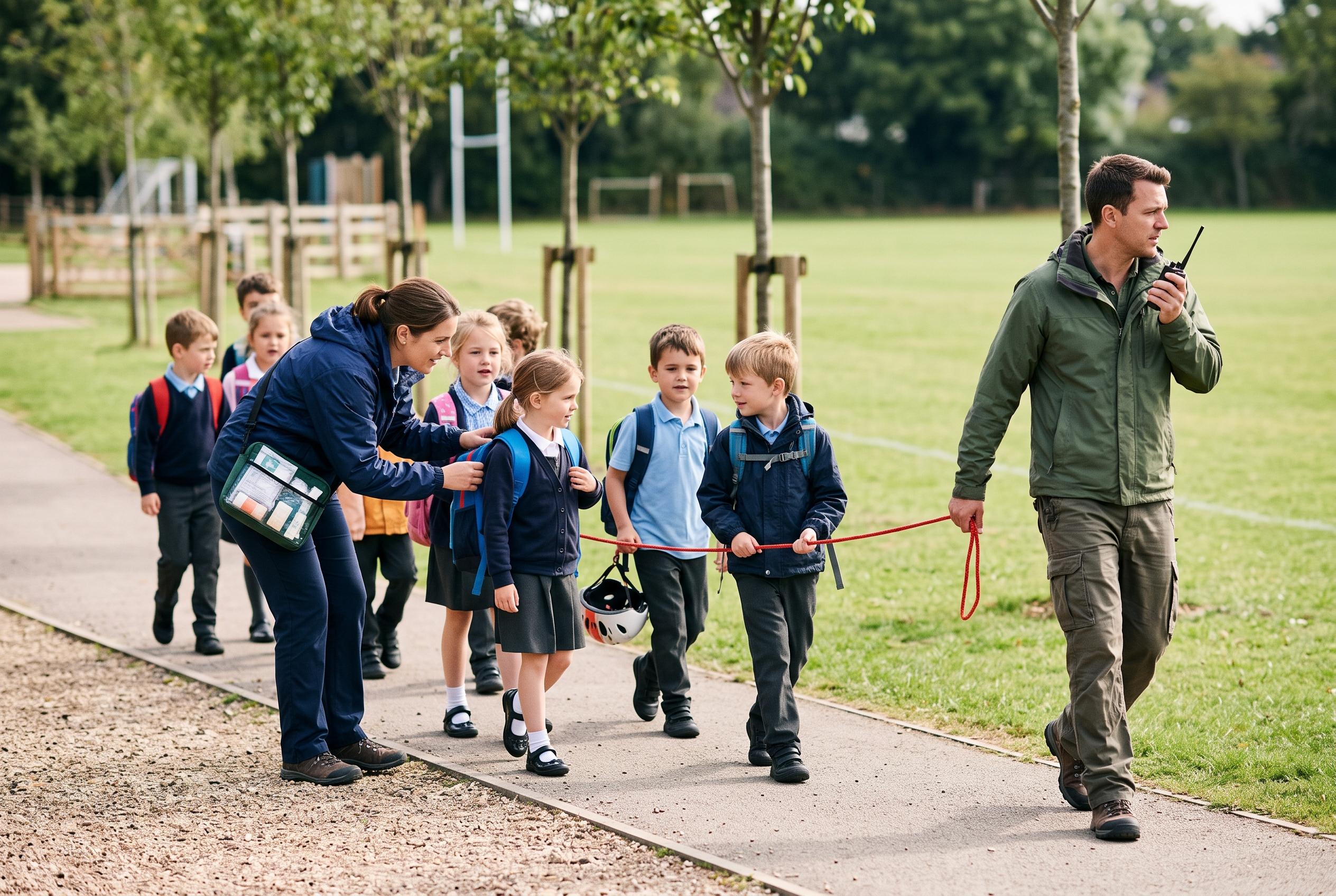

A tragic accident during a school trip in Huế renews focus on comprehensive planning, risk management, and adult supervision to ensure pupil safety during extracurricular activities in Vietnam and beyond.
A recent tragic accident involving a pupil during a school-organised trip in Huế has renewed scrutiny of how extracurricular activities for children are planned and supervised. In Việt Nam and elsewhere, similar incidents have prompted the same question: how can schools give pupils valuable experiences outside the classroom without putting them at unnecessary risk?
Lương Dũng Nhân, a master’s degree holder in education and the training director of ATY Education System, said his organisation has run school enrichment and skills programmes in Việt Nam and overseas since 2008, and that careful planning remains essential at every stage. He said schools should begin with a direct inspection of venues, transport, sleeping arrangements, kitchens, activity spaces and movement routes, rather than relying on descriptions alone. He also warned against choosing locations that are too remote, too unfamiliar or too large to supervise properly, and said equipment, especially for high elements and other physical activities, must be checked in advance and not changed at the last minute. TES, which offers guidance for schools, similarly stresses clear roles, clear expectations and risk management as the basis for safe extracurricular provision.
Nhân also said schools need detailed information about the children taking part, including any medical, psychological or behavioural issues that parents should disclose. He gave the example of a pupil who sleepwalks, saying such a child might need to sleep in the same room as a supervising teacher or another adult assigned to the group. The need for advance disclosure and contingency planning also appears in education guidance from Hong Kong’s Education Bureau, which says safety concerns should be reported early so that schools and partner organisations can prepare back-up arrangements. In Việt Nam, a draft rule from the Ministry of Education and Training aims to prevent misuse of extracurricular education by setting clearer boundaries around transparency, content and purpose.
Supervision during the activity is just as important, Nhân said. He argued that schools must have enough adults on site, and that if a school cannot provide sufficient staff, it should bring in outside organisers and, where necessary, involve parents. His rule of thumb was one adult for every 15 pupils at minimum. He said staff should be assigned clear duties, patrol sleeping areas on a rota, and stay fully focused rather than using phones or chatting. That level of supervision, he said, should continue during meals, travel, laundry time and any swimming or beach activity. The East Allegheny School District in the United States sets out similar expectations in its after-school safety rules, underscoring the wider principle that adult oversight should not stop when formal lessons end.
Nhân added that schools should review every trip afterwards, assess which partners and locations worked well, and drop those that did not meet the standard. He said extracurricular education is demanding work and schools should avoid turning it into a race for appearances or quantity. Better, he said, to run fewer activities that are carefully prepared and properly supervised than to stage many that are rushed or careless. That caution sits alongside the Ho Chi Minh City Department of Education and Training’s recent instruction that schools must follow nine requirements when organising off-campus educational activities to protect pupils, teachers and staff.
Disclaimer: This content is for informational purposes only and is not intended to be a substitute for professional medical judgment, advice, diagnosis, or treatment.



