

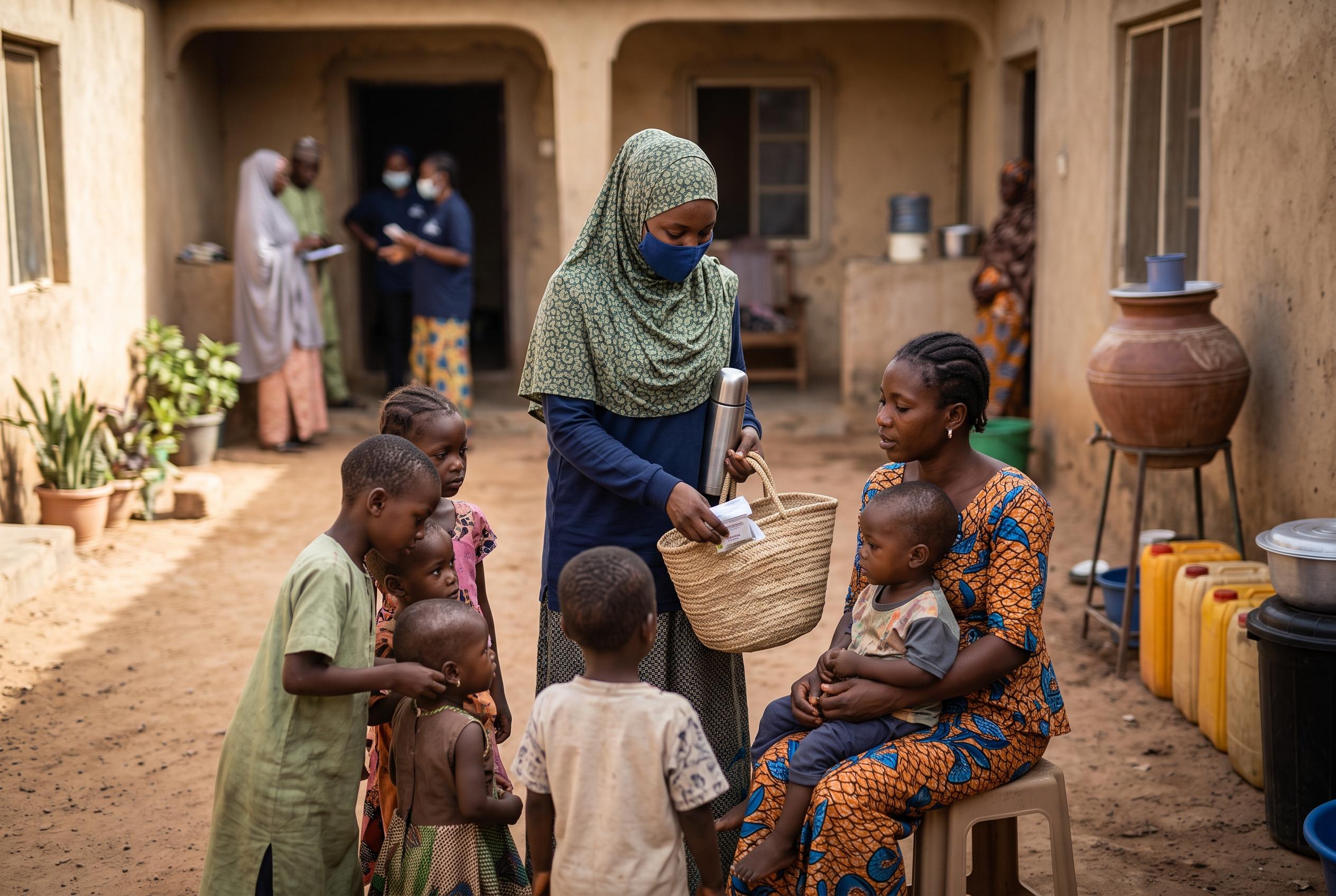

Bauchi State is scaling up its fight against child malnutrition through local volunteer networks, affordable nutrition strategies, and US government funding, impacting over 40,000 children with support from UNICEF.
Bauchi State is widening its fight against child malnutrition through a mix of village-level volunteer work, locally sourced foods and funding tied to a United States Government grant, with officials saying the effort has now reached more than 40,000 children. The campaign is being carried out with support from UNICEF and the state government, and it leans heavily on two community groups, Mama2Mama and Fathers for Good Health, which have been trained to visit homes, spot early warning signs and push families towards treatment before illness becomes severe.
At the heart of the approach is a simple message: families can often improve a child’s diet using affordable foods already available in their communities. Fatima Galadima, a Mama2Mama volunteer from Dankade in Darazo local government area, told BusinessDay that mothers are taught how to manage mild cases with staples such as beans or soya bean cake, known locally as Awara, while more serious cases are referred straight to hospital. Another volunteer, Maimuna Wakili, said the groups encourage the use of guinea corn, soya beans, rice, groundnuts and millet, alongside advice on antenatal care, routine immunisation and exclusive breastfeeding.
The programme has also made a point of bringing men into conversations that are often treated as women’s business alone. Safiyanu Yahaya of Fathers for Good Health said the group goes from house to house urging men to support their wives during pregnancy, childbirth and immunisation. Rilwanu Muhammad, chairman of the Bauchi State Primary Health Care Development Board, said the initiative was designed to counter cultural barriers that had sometimes slowed vaccination, antenatal attendance and proper feeding. He added that the volunteer network, which began in Ningi and Misau, has now expanded to more than 10 local government areas and focuses on the first 1,000 days of a child’s life, when growth and brain development are most fragile.
Muhammad also said the state had distributed about 480,000 cartons and approved N500 million for fresh purchases of Ready-to-Use Therapeutic Food and Multiple Micronutrient Supplements, with UNICEF expected to match that figure once state funds are released. A beneficiary, Fatima Muhammad, said the therapeutic food provided at a clinic had helped her child recover from severe acute malnutrition. Philomena Irene, a nutrition specialist at UNICEF’s Bauchi field office, said the U.S.-funded support is supplying Small Quantity Lipid-Based Nutrient Supplements to more than 40,000 children aged six to 23 months, while also training more than 6,000 community members and 50 health workers, strengthening local nutrition committees and improving digital health data systems. UNICEF says the focus on the first 1,000 days is crucial because most early development takes place in that period, and damage from poor nutrition can be permanent.
Disclaimer: This content is for informational purposes only and is not intended to be a substitute for professional medical judgment, advice, diagnosis, or treatment.



