

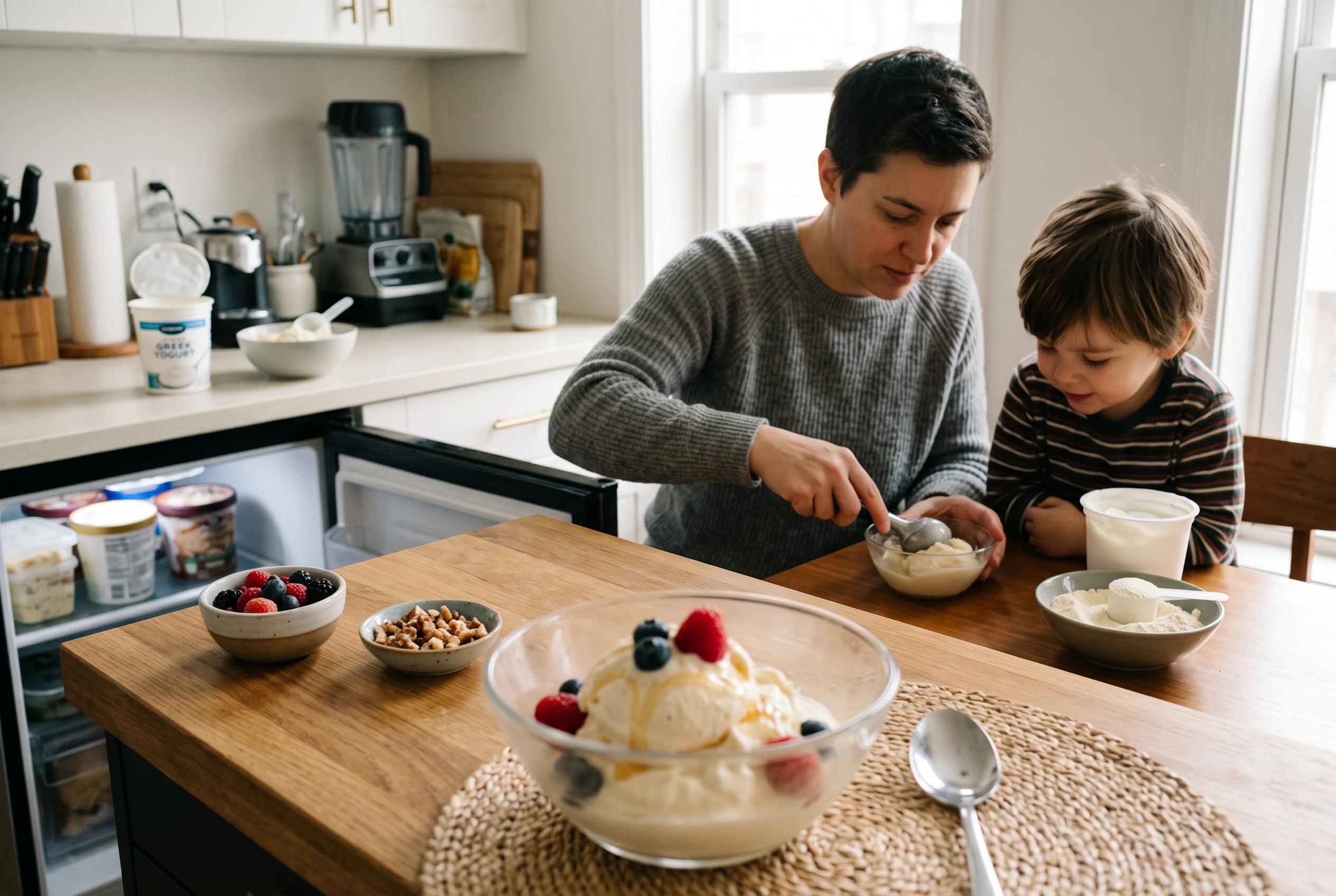

A new wave of protein-rich ice cream alternatives, leveraging Greek yoghurt, cottage cheese, and protein powders, offers healthier, adaptable treats for families and busy households, combining indulgence with nutritional benefits.
Homemade ice cream does not have to mean a sugar-heavy treat with little to offer beyond sweetness. A growing crop of protein-rich frozen desserts is leaning on Greek yoghurt, cottage cheese and protein powders to create puddings and soft-serve-style scoops that feel indulgent while delivering more staying power. For families, that shift matters: it opens the door to desserts that can work as an after-school snack, a post-sport refuel or a more balanced weekend treat, without requiring specialist equipment.
The recipe at the centre of this trend uses plain Greek yoghurt, frozen berries, banana, vanilla protein powder and a little honey or maple syrup, blended until thick and creamy. The mixture can be finished in a loaf tin or freezer-safe container rather than an ice cream machine, which makes it especially practical for busy households. The method also leaves room for easy adjustments, from adding more milk if the blades need help to swapping in different fruits such as mango, peaches or pineapple for children who prefer a milder or sweeter flavour.
Nutrition-wise, the appeal is straightforward. Greek yoghurt brings protein and a naturally tangy base, while protein powder raises the overall amount further; the same approach can also be adapted with cottage cheese for families who want to avoid powder altogether. Related recipe collections from sites including Lean Protein Queen and Eat Creami show how common this formula has become, whether the base is yoghurt, cottage cheese or a ready-to-drink protein shake. Even where a Ninja Creami machine is used, the goal is similar: a dessert that feels like ice cream but fits a higher-protein eating pattern.
For parents, the recipe’s flexibility may be its strongest point. The source material suggests dairy-free versions with coconut yoghurt and plant-based protein powder, as well as add-ins such as mini chocolate chips, sprinkles or crushed biscuits to make the dessert feel more special. It also notes that toddlers can eat a version of the treat if the ingredients are age-appropriate and honey is avoided for children under one year old. That makes the recipe less a single dessert than a template, one that can be adjusted for allergies, taste preferences and texture concerns.
There are still a few technical points worth keeping in mind. The mixture should be blended only until smooth, then frozen promptly, because overmixing can make the final result icy. Stirring during the first couple of hours of freezing can help prevent ice crystals from forming, and the finished dessert is best eaten after a brief softening period on the counter. Those are small steps, but they are the difference between a grainy frozen block and a scoopable treat that children are more likely to ask for again.
Disclaimer: This content is for informational purposes only and is not intended to be a substitute for professional medical judgment, advice, diagnosis, or treatment.



