

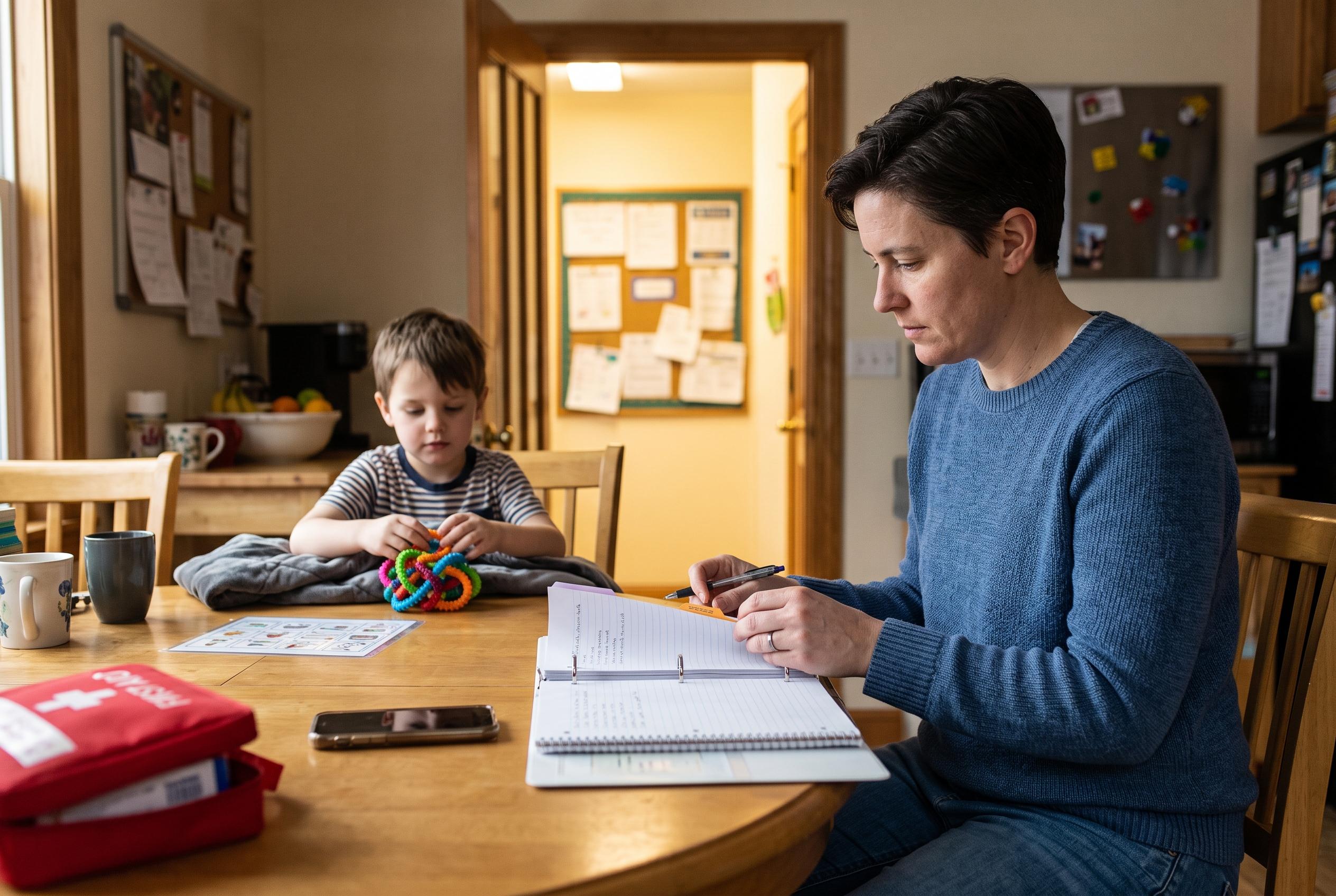

Parents and caregivers of children with developmental disabilities are urged to implement practical, repeatable safety habits and detailed documentation to prevent abuse and ensure quick response in emergencies, amid higher risks for this vulnerable group.
Protecting a child with special needs from abuse starts with practical, repeatable habits: limiting unscreened adults, making supervision visible, teaching body safety in a way the child can actually understand, and keeping a written plan ready for the moment something feels wrong. For families already under strain, the hardest part is often not recognising that protection matters, but turning that concern into a clear routine that others can follow.
Children with intellectual and developmental disabilities face a higher risk of abuse than their peers, and the danger often comes from someone already known to the family. That means risk tends to gather in ordinary settings such as bathrooms, school transport, therapy rooms, dental appointments and respite care at home. Parents cannot control every environment, but they can control access, documentation and the adults who are allowed unsupervised time.
A strong first step is a single page that any caregiver could pick up and use without guesswork. It should list emergency contacts, the child’s doctor, a back-up doctor, the nearest emergency department and two trusted adults who are not the person of concern. It should also name the local reporting route, the school safeguarding lead or special education contact, and any disability advocacy organisation that can help the family navigate child protection concerns. Because reporting rules and agency names vary by state and country, families are best served by confirming local procedures before a crisis.
That page should also include the child’s medical and developmental baseline: diagnoses, medication, seizure plans, communication methods, sensory triggers and the behaviours that are normal for that child. A child who does not speak, or speaks only in limited ways, still needs a way to have their normal patterns recorded so that new distress can be recognised. Families should keep the current education plan, therapy reports, medical records and a list of everyone with regular access to the child in one place, alongside any medical ID or emergency bag that may be needed.
Warning signs often appear in behaviour before they appear in visible injury. Watch for new fear of a person or place, regression in toileting, speech or feeding, unexplained injuries, changes in sleep or eating, distress during personal care, secretive behaviour, or new sexualised actions. The key distinction is between a pattern that follows a specific person, setting or kind of touch, and a sensory meltdown or routine-related distress that has a more obvious trigger. If the cause is unclear, it should still be written down and treated as important.
Childhelp says its National Child Abuse Hotline operates 24 hours a day, is confidential, and offers help by phone, text and online chat, with support in more than 170 languages. For families in the United States, that means there is a live reporting and referral option at any hour, even when a parent is unsure whether the concern rises to the level of an emergency. When there is immediate danger or a medical emergency, 911 remains the first call.
Boundary teaching also has to be concrete. Children do better with short, repeated scripts than with vague lectures. Families can practise phrases such as “No. I don’t like that.”, “Stop.”, “That is my private part.”, “I need to leave.” and “Help me.” The point is not to prepare a child to physically overpower an adult, which many cannot do, but to make disclosure and getting help automatic. For children who use augmentative and alternative communication, the body-safety vocabulary, refusal symbols and help icons need to be part of everyday communication, not introduced only after a crisis.
Adult safeguards matter just as much. Parents should vet hired caregivers, verify licences and credentials, insist on open-door or visible-space arrangements for one-on-one care, and set written limits on transport, personal care, photos and outings. They should also ask who else has access to the child, what happens during transitions such as bus rides or changing classes, and how incidents are reported back to the family. A caregiver who cannot answer those questions clearly is already offering a warning.
If something happens, documentation becomes the family’s strongest tool. Notes should include the date, time, location, who was present, what was seen or said, any injury, any witness and the action taken. Messages and voicemails should be preserved in their original form when possible. If there is immediate danger, call 911; if the concern is suspected abuse without an emergency, contact Childhelp or the local child protective services agency and let the agency handle the investigation rather than confronting the suspected person alone. Childhelp says its hotline has been operating since 1982 and has received more than 2 million calls, which underlines how often families need help deciding what to do next.
Disclaimer: This content is for informational purposes only and is not intended to be a substitute for professional medical judgment, advice, diagnosis, or treatment.



