

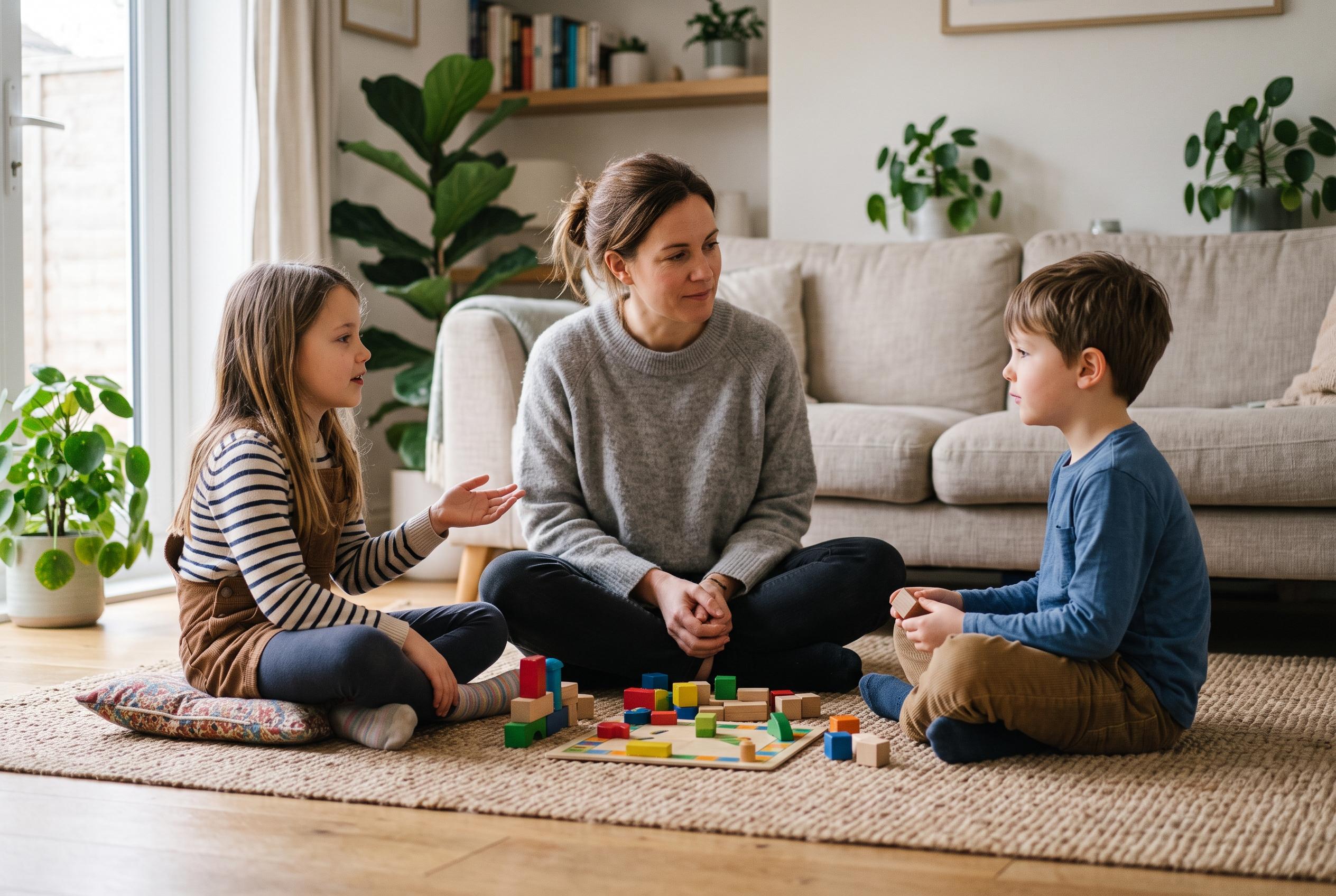

Experts emphasise the importance of allowing children to navigate disputes independently, modelling respectful conflict management to foster resilience and emotional skills that benefit their long-term development.
Parents who jump in at the first sign of a quarrel may mean well, but child development experts say that instinct can rob children of an important lesson: how to manage disagreement on their own. The point is not to leave children unsupported, but to allow them to practise standing up for themselves, negotiating and finding a compromise. That kind of learning takes time, and without enough practice, children may struggle later when conflicts become more complicated.
The idea fits with wider guidance on positive parenting. The American Psychological Association’s ACT Raising Safe Kids programme says the early years are critical for development and that parents are not only protectors, but also teachers and advocates. In that sense, a dispute over a toy or a turn on the swing can become a low-stakes lesson in resilience if adults stay close enough to step in when needed, but do not take over too quickly.
Specialists in conflict resolution for children also stress that youngsters learn most from what they watch adults do. If parents pause, calm themselves and repair disagreements respectfully, children are more likely to copy those habits. Several parent-training programmes, including workshops that focus on communication, listening and problem-solving, are built around the same premise: children do better when adults model how to handle anger and disagreement without turning every clash into a crisis.
Research backs that approach. A study published in Child Development found that children whose parents were trained in mediation skills handled conflicts better than those whose parents received no such training. Other evidence-based programmes, such as SNAP for children who struggle with aggression, also show the value of teaching emotional regulation and step-by-step problem-solving rather than simply punishing bad behaviour. The practical message for parents is straightforward: intervene when a child is overwhelmed or when someone could be hurt, but otherwise guide the process, then talk it through afterwards so the child can learn from it.
Disclaimer: This content is for informational purposes only and is not intended to be a substitute for professional medical judgment, advice, diagnosis, or treatment.



