

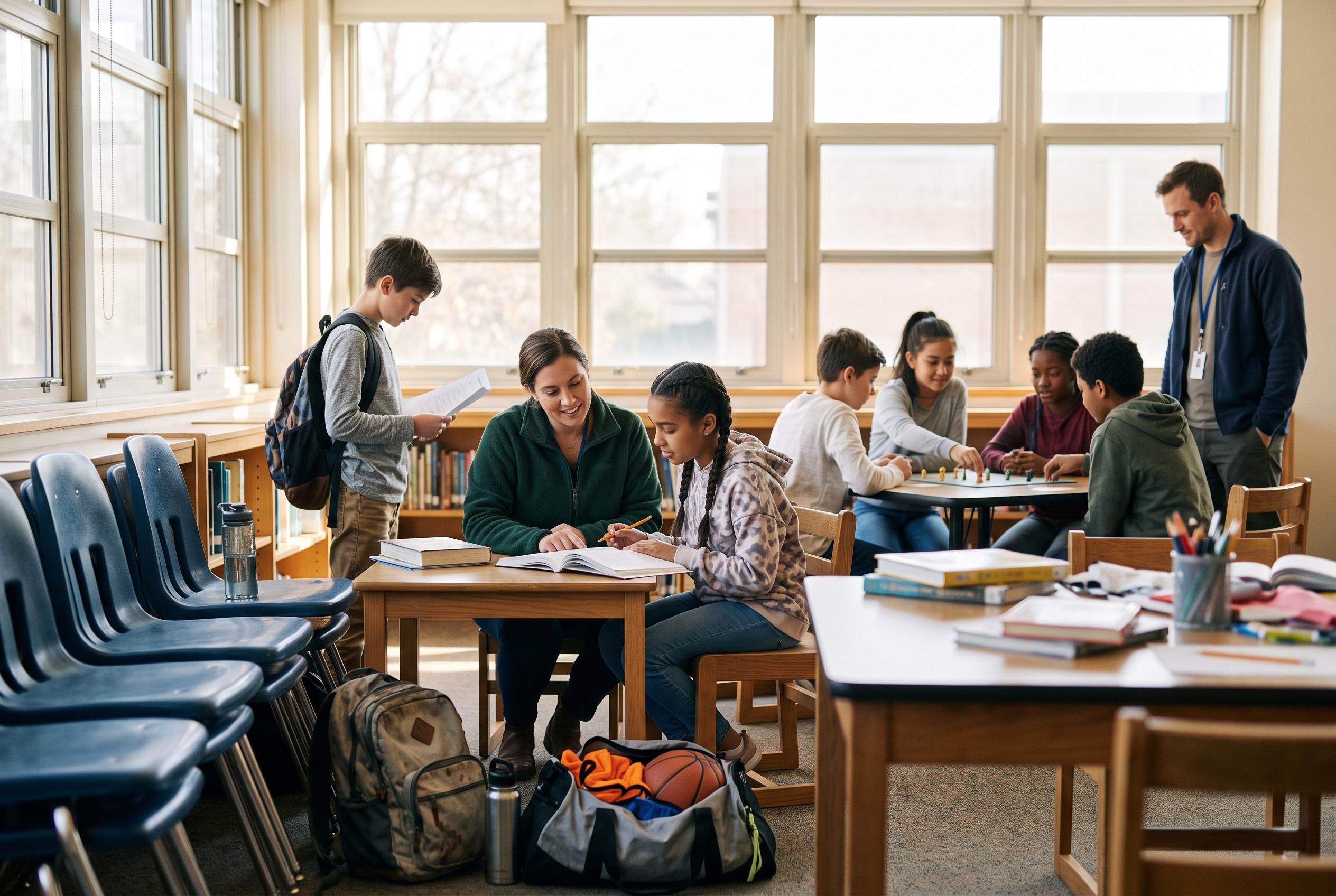

Spokane Public Schools’ EngageIRL initiative is increasing participation in after-school activities, correlating with improved academic results and reduced absenteeism among students, in a move towards fostering authentic relationships and holistic development.
Spokane Public Schools is betting that a busier after-school life can help children do better in class, stay healthier and feel more connected to school. Through Engage In Real Life, known as EngageIRL, the district and the nonprofit LaunchNW are steering students towards sports, clubs, arts and community groups in an effort to give them more reasons to be present, engaged and off their phones. District leaders say the initiative, which became official in 2024 after expanding informally in the years after the pandemic, is designed to build what they describe as more authentic relationships among students.
The programme now reaches thousands of students, and district data for the 2025-26 school year shows 65% took part in at least one after-school activity. Spokane Public Schools says it wants that share to rise to 75% by 2028. According to figures the district shared, elementary students involved in two or more activities posted about 61.7% proficiency in maths and 58.7% in reading, compared with roughly 43.6% and 44.3% for students with no involvement. Secondary students also showed stronger outcomes, with average grade-point averages rising as participation increased.
Attendance data points in the same direction. The district says chronic absenteeism, defined by the state as missing at least 10% of the school year for excused or unexcused reasons or suspensions, fell by about 18% in elementary and secondary schools during the 2025-26 school year. Among elementary students, chronic absence was about 33% for those in no activities, compared with 20% for students in one activity and 15% for those in multiple activities. At the secondary level, the comparable figures were 44%, 34% and 26%.
The effort goes well beyond athletics. LaunchNW says EngageIRL connects students to dozens of youth-serving organisations across the city, with offerings ranging from basketball and volleyball to multicultural groups and arts-and-crafts clubs. The initiative also relies on engagement navigators, adults assigned to feeder-school patterns to find out what students want and help make it happen. Austin Johnson, who works with the Rogers High School feeder pattern, said he sees the role as a chance to be a steady, positive adult in young people’s lives.
At Rogers High School, the idea is visible after the final bell. Slowpitch softball, played in the fall to keep players active before the spring season, fills a gap in the athletic calendar and gives students another reason to stay involved. Cris Coffield, who coaches the sport and teaches health and physical education at Rogers, said students who join activities tend to do better because eligibility rules push them to keep their grades up. Senior Autumn Whitacre, who also takes part in Key Club, said balancing commitments can make life busier, but also more rewarding. “It definitely makes it a lot busier, but it also makes it a lot more fun,” she said.
Disclaimer: This content is for informational purposes only and is not intended to be a substitute for professional medical judgment, advice, diagnosis, or treatment.



