

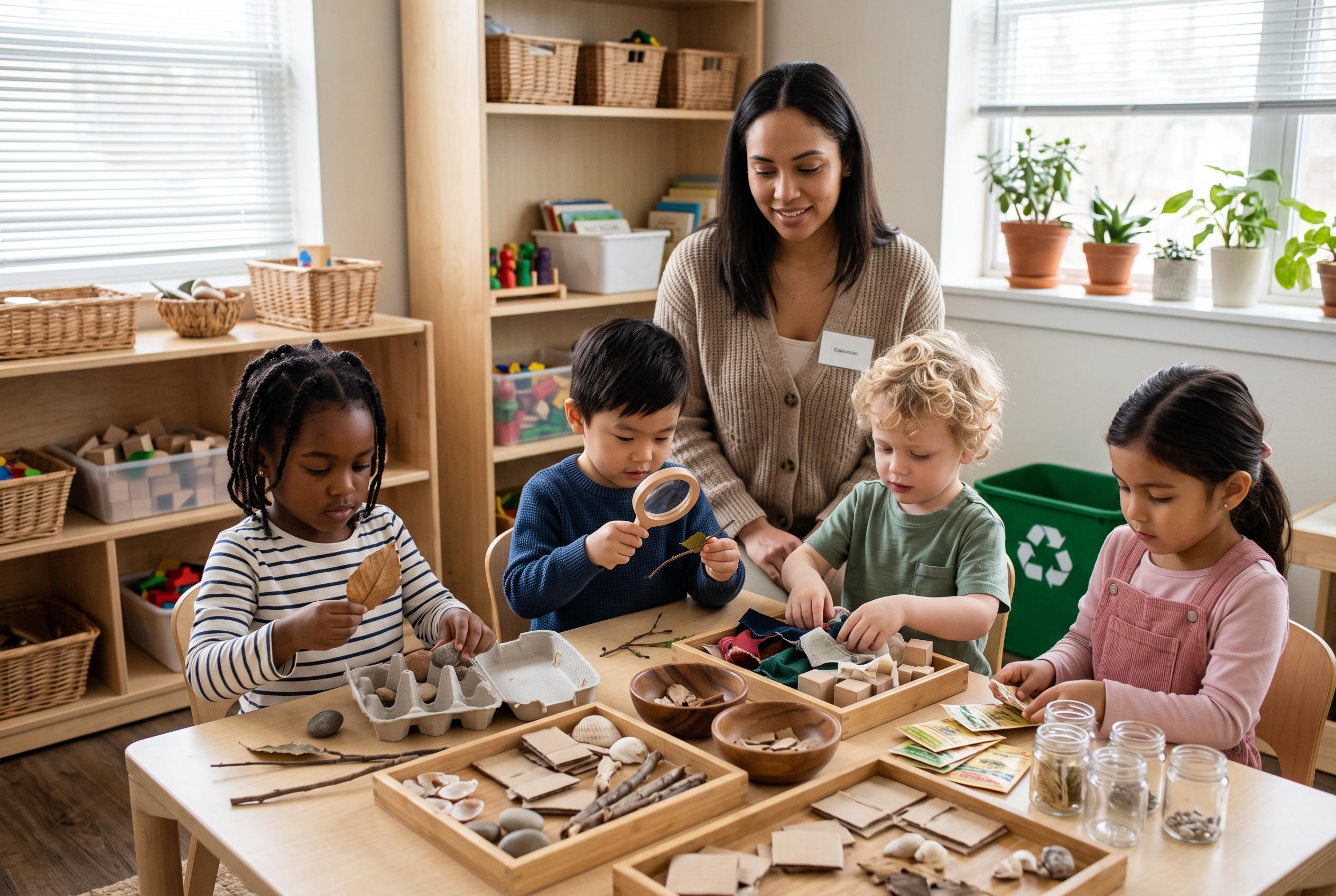

A comprehensive analysis of 142 studies uncovers how early childhood STEM and STEAM research often includes sustainability themes implicitly, highlighting the need for clearer distinctions to better inform education policies and practices.
A new systematic review published in Sustainability argues that early childhood STEM and STEAM research often contains sustainability-related ideas without always saying so explicitly, and that this distinction matters for how the field is interpreted. The review examined 142 studies and found that most of them sat in a general category, with fewer offering contextual or explicit sustainability evidence. The authors say this approach was designed to avoid treating overlap between STEM learning and sustainability themes as if it were proof of sustainability education.
That caution is important because earlier reviews in the area have tended to focus on much smaller sets of studies and narrower sustainability framings. Jefferson Rodrigues-Silva and Ángel Alsina, for example, analysed 12 studies published between 2007 and 2022 and concluded that the literature was dominated by environmental themes and science-focused activity. Their review, like others in the field, pointed to the value of linking early learning with education for sustainability, but it also showed how concentrated the evidence base still was. The newer review broadens that lens considerably, looking not only for explicit references to education for sustainability, the Sustainable Development Goals or related policy language, but also for contextual signs that sustainability issues are shaping the learning experience even when authors do not label them that way.
The larger corpus reveals a striking split between frequent child competencies and sustainability-specific framing. Cognitive, social and emotional skills appeared often, including problem solving, scientific inquiry, engineering design, creativity, communication and collaboration. Yet these capabilities were usually presented in general educational terms rather than as sustainability-related outcomes. By contrast, environmental awareness, nature-based learning, sustainable resource use, family or community participation, inclusivity, and equity-related themes were more likely to be tied to sustainability. The pattern suggests that many early childhood STEM and STEAM studies may be contributing material relevant to sustainability without making that intention clear. The authors therefore argue that the field needs a sharper distinction between child development, learning context and explicit sustainability claims.
The review also found that representation varied by study design and search phase. Qualitative work was more likely than quantitative or mixed-methods research to contain contextual or explicit sustainability evidence, which the authors say may reflect the visibility of children’s talk, observation and artefacts in qualitative reporting. The updated search captured a larger share of contextual studies, while the earlier search produced more explicit sustainability framing. Even so, the overall balance between general and sustainability-related material remained broadly similar. The authors conclude that the field is richer and more varied than a simple count of sustainability keywords would suggest, but also more ambiguous than a broad reading of STEM or STEAM research alone might imply. For educators and researchers, the message is that early childhood STEM can support sustainability learning, yet that connection should be demonstrated carefully rather than assumed.
Disclaimer: This content is for informational purposes only and is not intended to be a substitute for professional medical judgment, advice, diagnosis, or treatment.



