

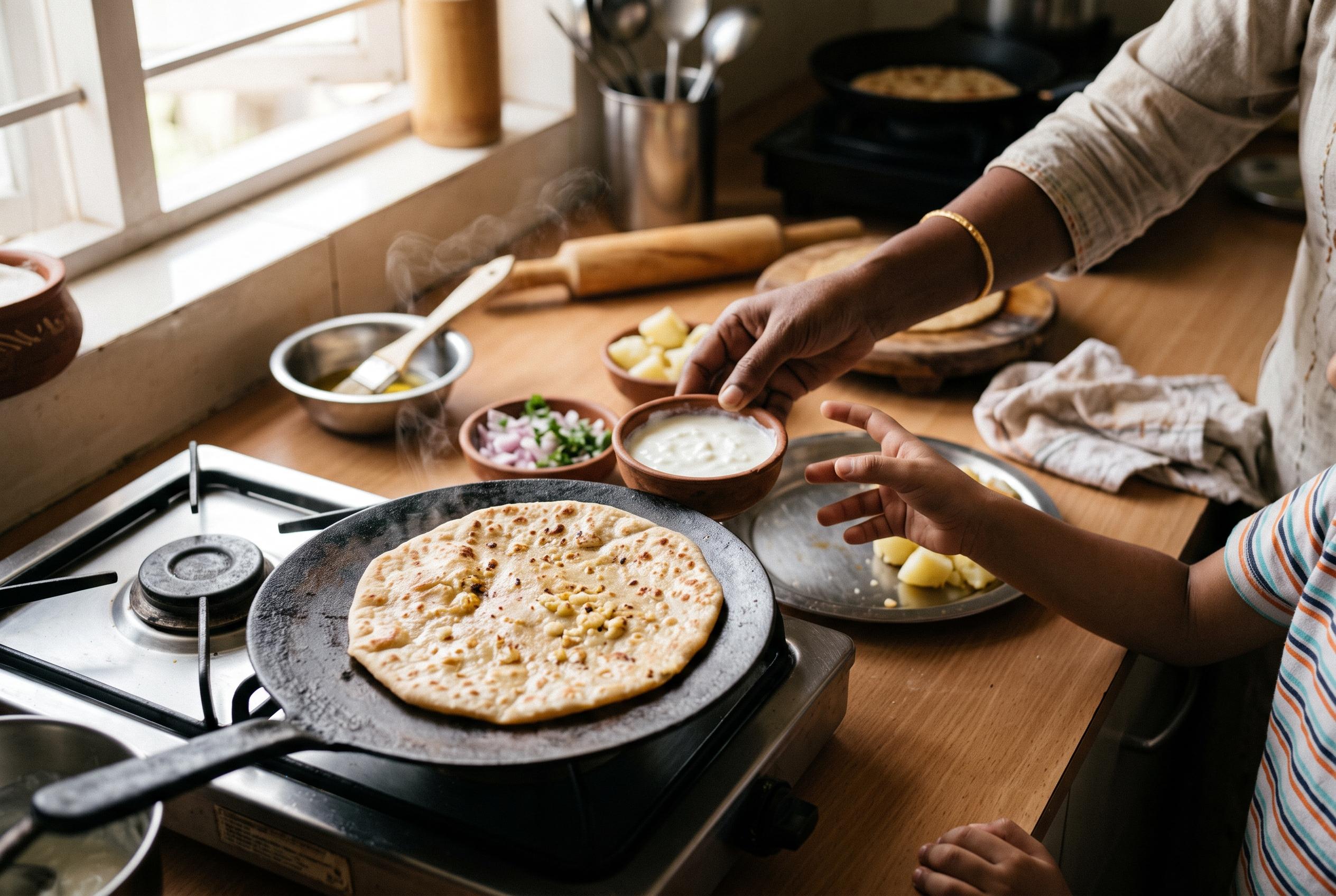

A recent assessment by dietician Meena Kumari highlights cauliflower paratha as the healthiest option among popular fillings, with onions and potatoes trailing but each offering distinct health benefits, provided preparation methods are mindful.
For many households, parathas are a familiar breakfast staple, but not every filling offers the same nutritional profile. If the choice is between aloo, gobhi and pyaz, dietician Meena Kumari of Sarvodaya Hospital in Faridabad says cauliflower-filled paratha comes out ahead, followed by onion, with potato in third place.
Kumari’s reasoning is straightforward: cauliflower tends to deliver more fibre and a wider spread of vitamins while keeping the meal relatively light. That fits with broader nutrition guidance, which notes that cauliflower is low in calories and contains fibre and antioxidants, including compounds that may help reduce inflammation. The vegetable is also valued for its versatility in balanced meals, including as a lower-calorie base in place of more energy-dense ingredients.
Onion paratha takes second place in Kumari’s ranking because onions bring their own advantages. According to health information widely cited by nutrition sites, onions contain antioxidants and sulphur compounds such as quercetin, along with prebiotic fibres that can support gut health. Even so, Kumari says onions do not add quite as much bulk as cauliflower, which is why gobhi still edges ahead.
Aloo paratha, meanwhile, is not unhealthy, but it is more carbohydrate-heavy. Potatoes provide energy and potassium, which is important for muscle and nerve function, yet they offer fewer vegetables per serving than the other two fillings. Nutrition sources also point out that potatoes can be part of a healthy diet when prepared sensibly, but their overall contribution is shaped heavily by cooking method and portion size.
That, Kumari says, is the part many people overlook. The amount of oil, ghee or butter used, the size of the paratha and what is served alongside it can matter more than the filling itself. She advises that all three fillings are relatively low in protein, which means a paratha eaten on its own may not keep hunger away for long. Pairing it with curd, paneer or dal can make breakfast more satisfying and nutritionally balanced.
The same principle applies to making any paratha healthier. Kumari recommends whole wheat flour, and when possible a mix with millet flour or besan to raise fibre and nutrient levels. She also suggests adding more vegetables to the stuffing, using only as much fat as needed for cooking and choosing plain yoghurt, raita or homemade chutneys instead of butter and pickle. A simple plate of one or two parathas, a protein-rich side and perhaps a seasonal fruit is likely to work better than relying on carbohydrates alone.
Disclaimer: This content is for informational purposes only and is not intended to be a substitute for professional medical judgment, advice, diagnosis, or treatment.



