

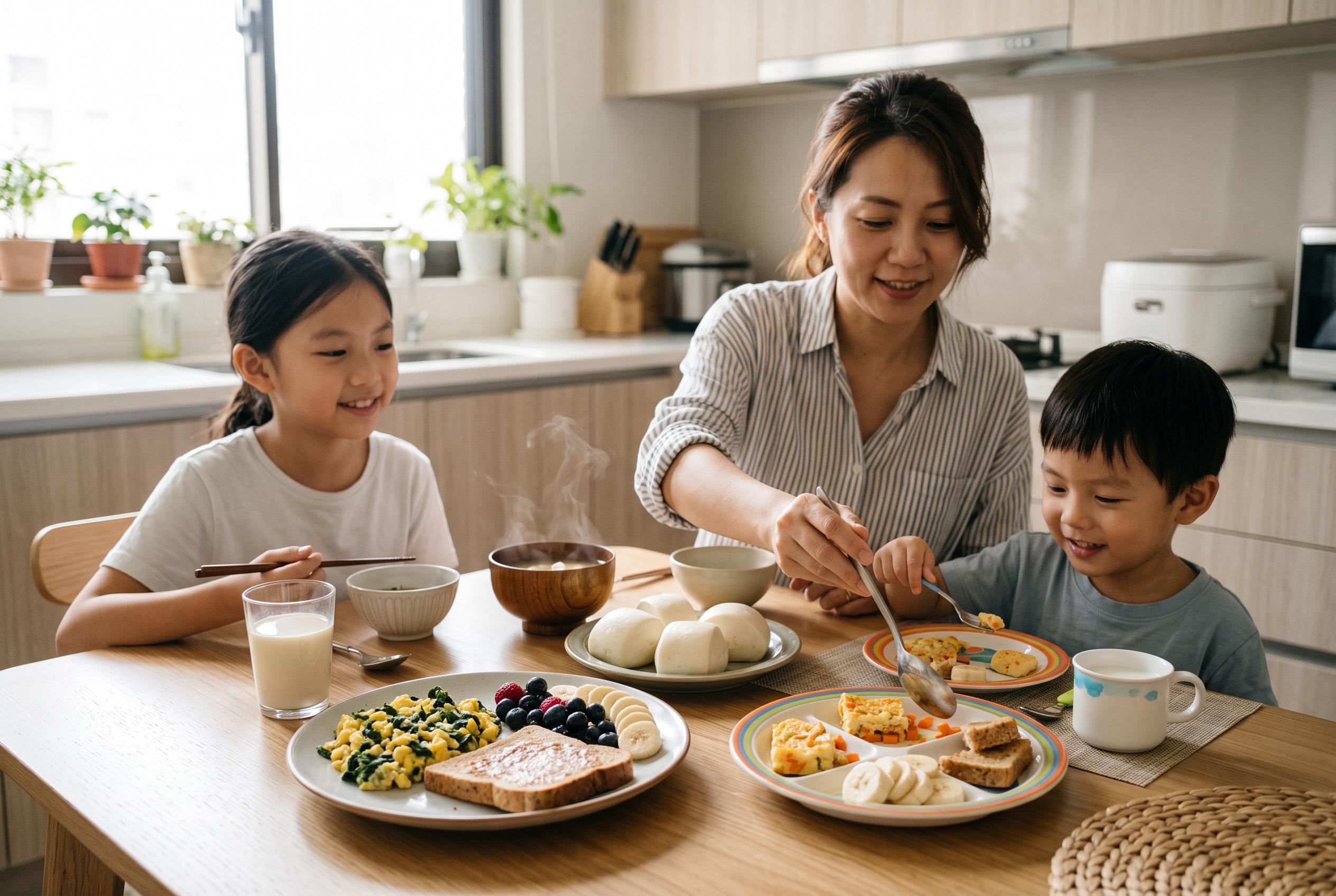

A Taiwanese nutritionist highlights the importance of tailored breakfast strategies for children of different ages, emphasising balanced meals over convenience foods to support growth, attention and long-term health.
Parents often worry when children leave home with little more than a sweet drink or a rushed bite, but the real issue is usually not the clock. Taiwanese nutritionist Yang Sihan said breakfast does not have a single fixed time that suits every child; what matters more is leaving enough time after waking to eat, finishing before school when possible, and adjusting the portion to the child’s age, activity level and lunch time. Medical groups such as HealthyChildren.org also note that eating breakfast can support attention, memory and school performance, while skipping it may encourage poorer eating later in the day.
For younger children, Yang recommends keeping breakfast simple but complete rather than large or elaborate. In her guidance for nursery-age children, she suggests a modest meal with a staple food, a source of protein and either fruit or dairy, such as sweet potato with egg and milk, or toast with cheese and fruit. That advice matches broader paediatric nutrition guidance from the Mayo Clinic and Johns Hopkins Medicine, which both stress balanced meals built around whole grains, protein and dairy or other nutrient-dense foods.
As children grow into primary school age, the same pattern still applies, but the portions usually need to be more substantial. Yang said children aged roughly six to 12 may do well with combinations such as a rice ball and egg with milk, or wholemeal toast, egg and fruit. She warned that a single slice of bread or a sugary drink may be enough to provide quick energy, but it often leaves children hungry again before lunch. Consumer Reports makes a similar point, advising parents to avoid heavily sugary breakfast choices and to lean on whole grains, fruit and protein.
By secondary school, breakfast needs often change again because growth accelerates and schedules become less forgiving. Yang said teenagers may need more food at breakfast, especially if they have morning sport, club activities or a long wait until lunch. She suggested combinations such as a steamed bun with egg, unsweetened soy milk and fruit, or a rice ball with egg and milk. Cleveland Clinic and the Mayo Clinic both note that children and adolescents need enough protein for growth, and that foods such as eggs, beans, soy products and dairy can help meet that need without relying on overly processed options.
The clearest message from Yang’s advice is that breakfast does not have to be fancy, but it should do more than fill a stomach briefly. Drinks such as milk tea, juice or flavoured milk may seem convenient, yet they usually deliver too much sugar and too little protein or staying power to count as a full breakfast. A meal built from a staple food, quality protein and fruit or dairy is more practical: for example, sweet potato with egg and milk, wholemeal toast with cheese and fruit, or oatmeal with milk and fruit. For children who are not hungry early in the morning, starting with a smaller combination, such as a banana with milk or toast with egg, is still better than nothing and can help build a routine that lasts.
Disclaimer: This content is for informational purposes only and is not intended to be a substitute for professional medical judgment, advice, diagnosis, or treatment.



