

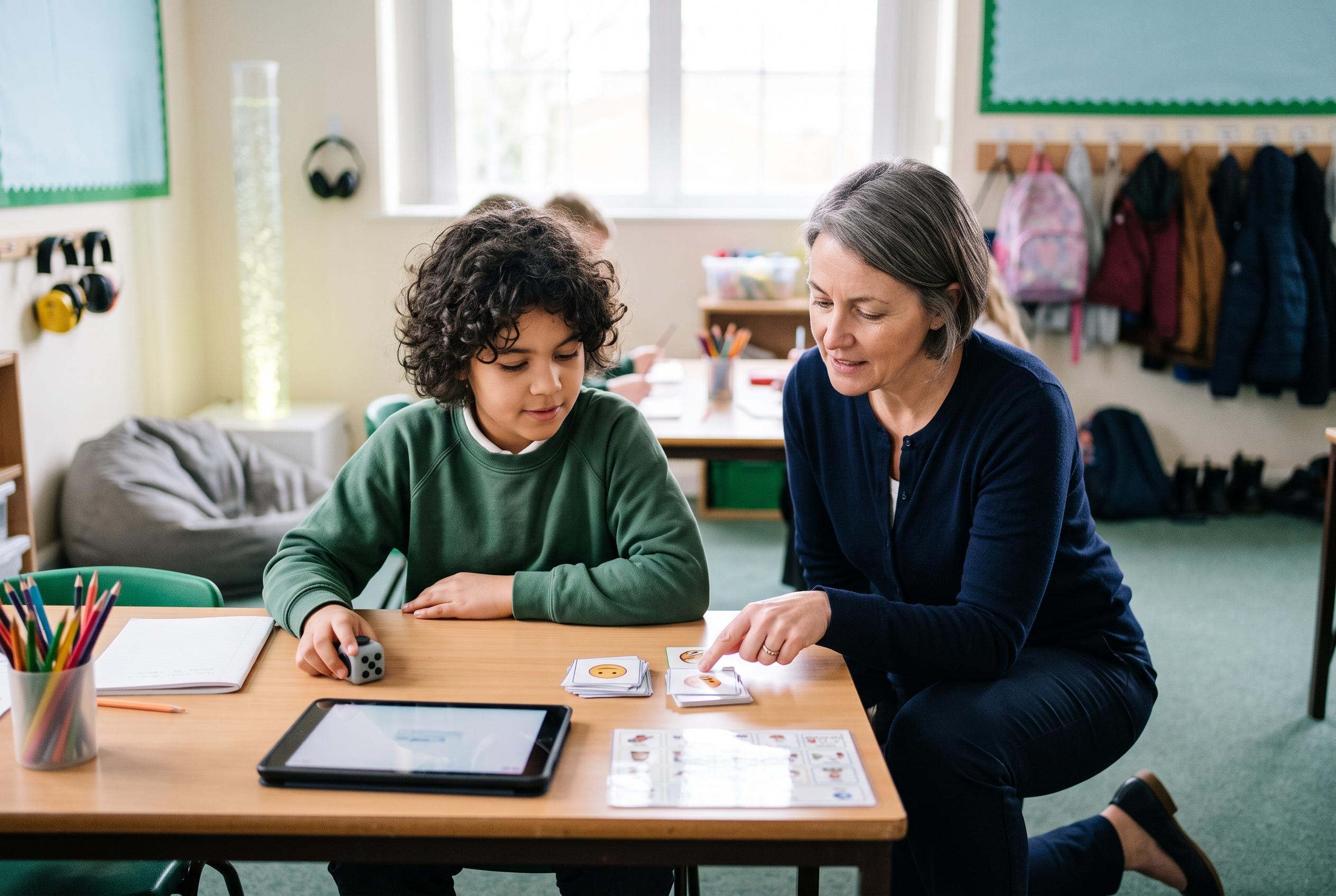

Innovative approaches in UK schools are expanding beyond speech to support autistic and neurodivergent pupils, emphasising visual, gestural, and technological communication to foster inclusion, understanding, and wellbeing.
Helping autistic and neurodivergent pupils communicate in the ways that suit them best is increasingly central to inclusive schooling. The Belonging Effect argues that education becomes more accessible when staff move beyond an assumption that speech is the main route to participation and instead recognise that eye contact, gesture, posture, facial expression and written or aided communication can all carry meaning. Autism organisations in the UK similarly stress that pupils may need communication to be slowed down, made more visual and adapted to the individual rather than to the classroom as a whole.
That matters because communication difficulties can shape not only learning but also social confidence, relationships and mental wellbeing. The National Autistic Society says autistic people may struggle with non-verbal cues and the unwritten rules of interaction, while the Worcestershire education service notes that most everyday communication is non-verbal. The Belonging Effect points out that behaviours sometimes dismissed as unusual, such as avoiding eye contact, hand-flapping or speaking in a flat tone, may simply be different communication styles rather than signs of disengagement.
One practical response is to offer more than one way to express a need, a feeling or an answer. British Sign Language can give minimally verbal pupils a full language system, while augmentative and alternative communication, or AAC, can allow speech to be generated through tablets or other devices. The National Autistic Society says support may also include speech and language therapy, play-based social learning and other tailored interventions. The Belonging Effect adds that visual supports, such as timetables, choice boards, feelings charts and break cards, can reduce pressure and make expectations easier to follow. Leicestershire Partnership NHS Trust and the Autism Toolbox both say visual supports can improve understanding, memory and independence, especially for pupils who think visually.
Technology is widening those options further. The Belonging Effect highlights AAC devices and emerging tools such as virtual reality, which can give pupils a safer, more predictable environment in which to rehearse social situations and practise communication at their own pace. That emphasis on predictability matches wider autism guidance, which recommends consistency across settings so that visual tools and communication routines do not change from class to class or room to room.
The article also frames inclusive communication as an issue of fairness, not just technique. It cites recent data suggesting that around 13,000 autistic pupils miss 4.5 months or more of school each year, and that about one in five of those absences is linked to schools lacking the right support structures. Autism charities and local authority guidance both argue that schools should train staff, adapt sensory environments and validate different communication styles rather than treating them as problems to be corrected. In practice, that means presuming competence, spending time observing how each pupil communicates, reducing sensory barriers and building a support network with parents and specialists.
Disclaimer: This content is for informational purposes only and is not intended to be a substitute for professional medical judgment, advice, diagnosis, or treatment.



