

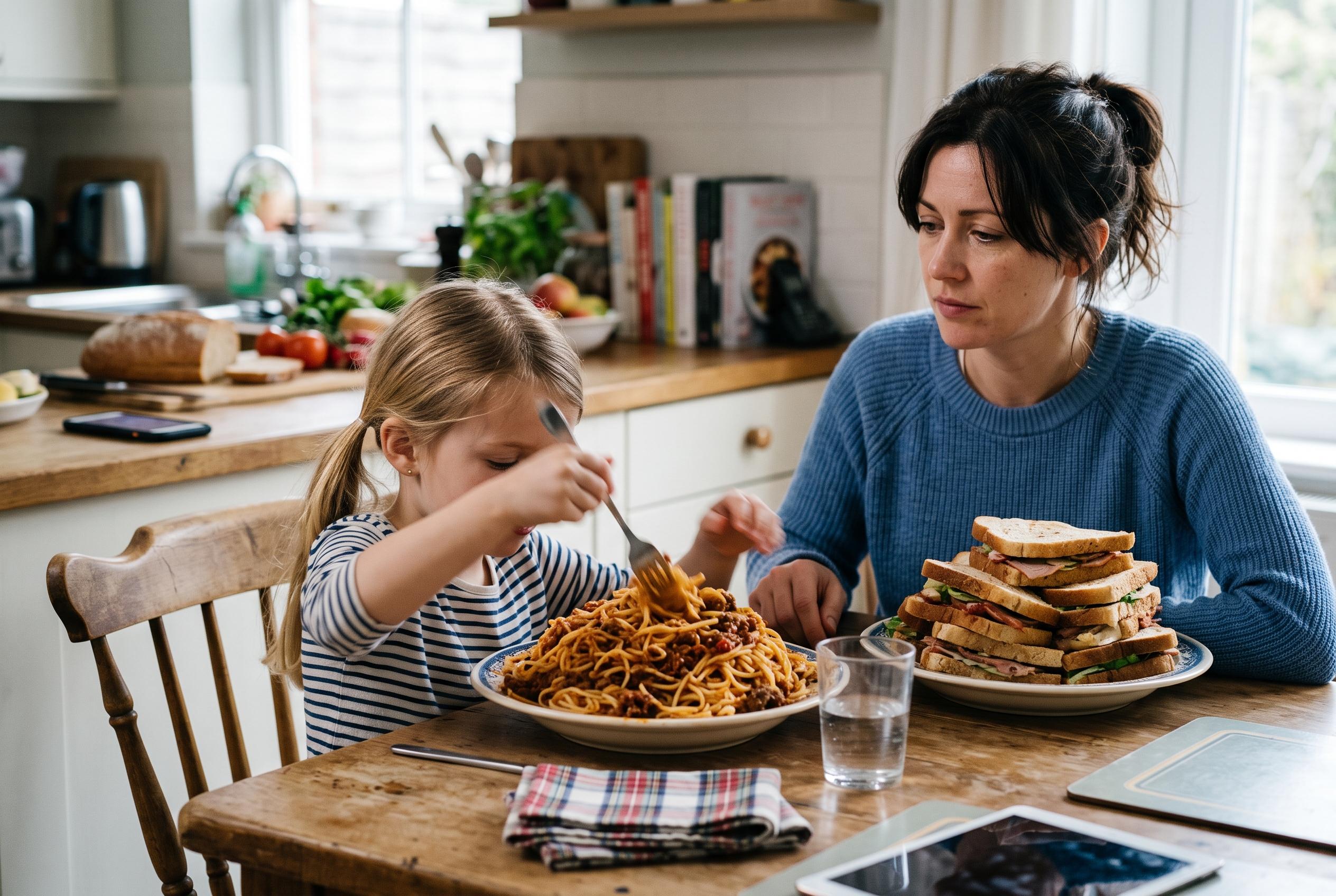

Videos featuring oversized meals and speed-eating contests are not only entertainment but may subtly influence viewers’ perceptions of portion sizes, with potential implications for eating behaviours and health, experts warn.
Videos of oversized meals and speed-eating contests have become a familiar fixture of social media, drawing millions of views with their mix of spectacle, suspense and excess. Flavia Marsola, a psychologist at Hospital Brasília Águas Claras, says that what makes these clips so effective is not just the food itself but the sense of drama around it: people want to know whether the challenger will finish, what the outcome will be and how far the stunt will go. That same attention-grabbing formula can have a subtler effect over time. Research on portion exposure suggests that repeated viewing of unusually large servings can shift people’s sense of what counts as a normal amount, while other studies have found that smaller or larger portion cues can change what people believe they should eat and how much they later consume.
Marsola stresses that watching this kind of material does not automatically change how someone eats in daily life. The greater concern, she says, is for children, teenagers and people already vulnerable to disordered eating patterns. In her view, the risk lies in repetition: when huge portions are consistently linked with entertainment, competition and success, they can begin to seem less extreme and more routine. That does not mean a food challenge alone causes an eating disorder, she notes, because eating behaviour is shaped by biological, psychological, social and environmental factors, and compulsive eating has specific clinical criteria, including a loss of control.
The physical demands on the people taking part are another matter. Ricardo Corbucci, a Brasília-based influencer and competitive eater, said he prepares for challenges with long fasting periods, strict dieting in the days beforehand and regular training, including weight training, cardio and medical monitoring. He also said he undergoes periodic blood and imaging tests and sees a gastroenterologist and a cardiologist. Even with that preparation, he warned that the activity still carries risk and said he would not recommend it without medical supervision, particularly if it is done often.
Manuela Dolinsky, president of the Brazilian Federal Council of Nutrition, says the body can stretch to accommodate food, but that should not be mistaken for permission to push it to extremes. Large amounts eaten quickly can cause abdominal distension, discomfort, nausea, reflux and vomiting, she says. When time pressure is added, as in many online competitions, the dangers increase further, with a greater chance of choking, breathing difficulty and blockage of the airway. Dolinsky says that can become a life-threatening emergency.
Research on competitive eating backs up those warnings. Medical and science-based reporting has linked the practice with immediate problems such as obstruction and vomiting, as well as longer-term strain on the digestive system. Separate research on portion size also shows how powerfully visual cues can influence appetite: labels such as small, medium and large, or simply exposure to bigger servings, can change how much people think they should eat and how much they are willing to consume. Taken together, the evidence suggests that the most obvious danger of food challenge videos may not be imitation alone, but the way they quietly reset expectations about how much food is normal.
Disclaimer: This content is for informational purposes only and is not intended to be a substitute for professional medical judgment, advice, diagnosis, or treatment.



