

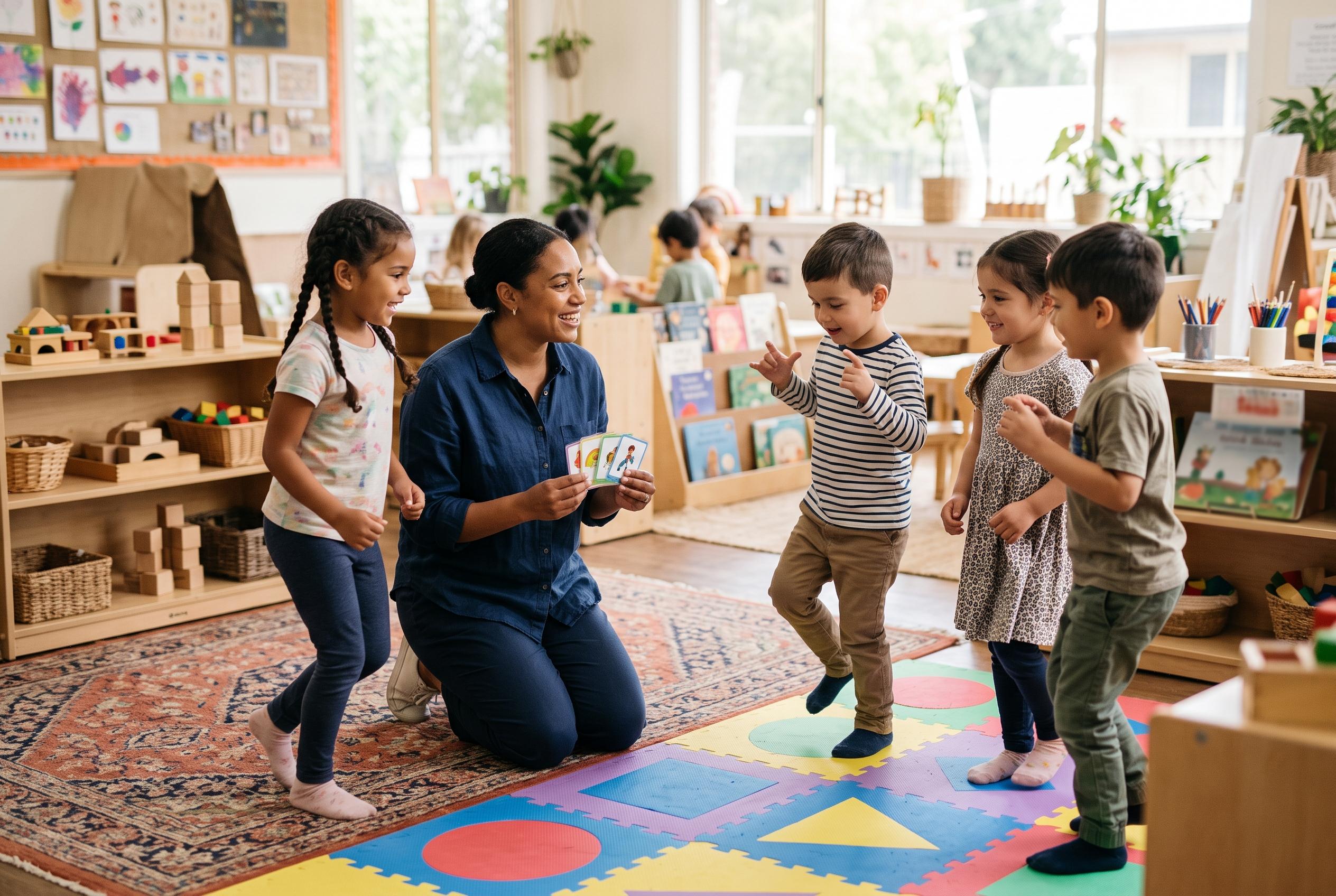

Interactive movement and visual supports are revolutionising how kindergarten teachers introduce syllables, making early reading skills more engaging and effective for young learners.
Teaching syllables can be one of the most practical early literacy routines in a kindergarten classroom, because it helps children hear how words are built before they are asked to read them. Rather than relying on worksheets or formal phonics drills, the most effective approach is usually hands-on and playful: children listen to the “beats” in words, say them aloud, and move their bodies as they count. That kind of repeated oral practice supports phonological awareness, the skill set children need to notice and work with the sounds in language.
A strong starting point is to use familiar words and keep the language simple. Teachers can introduce a syllable as a beat in a word, then model how many beats can be heard in common examples such as apple, banana, or elephant. From there, children can clap, tap, stomp, or pat the syllables they hear. Education resources from Lucky Little Learners and Class Weekly also recommend pairing this kind of oral practice with visual supports such as anchor charts, pocket chart activities, or picture cards, which can help young children connect a spoken word with its parts.
Movement-based activities can make syllable practice especially engaging. Children can clap syllables, tap their heads or knees, stomp their feet, or jump the number of times that matches the word. Some teachers also use instruments, puppets, or rhythm sticks to keep the routine lively. A syllable hunt around the classroom can turn ordinary objects into learning tools, while hopscotch, chants, and nursery rhymes add rhythm and repetition. Begin Learning suggests that children respond well when syllable activities are short, familiar, and tied to words they already know.
Sorting activities are another useful way to build understanding. Picture cards work particularly well because children do not need to read the words yet; they only need to say them, count the syllables, and place each image in the right group. Teachers can organise items by one, two, three, or four syllables, using examples such as fish, pencil, butterfly, and kangaroo. Some classrooms also use crafts such as a syllable caterpillar, with one body segment for each syllable, to give children a visual way to see how words break apart.
The common thread across these approaches is repetition without pressure. Young children do not need a long lesson on syllables; they need frequent, low-stress chances to hear language, play with it, and notice patterns. Whether the activity involves clapping, singing, sorting, or jumping, the aim is the same: to help children listen closely to words and recognise that spoken language can be broken into smaller parts. That foundation matters, because once children can hear those beats, they are better prepared for later reading and word work.
Disclaimer: This content is for informational purposes only and is not intended to be a substitute for professional medical judgment, advice, diagnosis, or treatment.



