

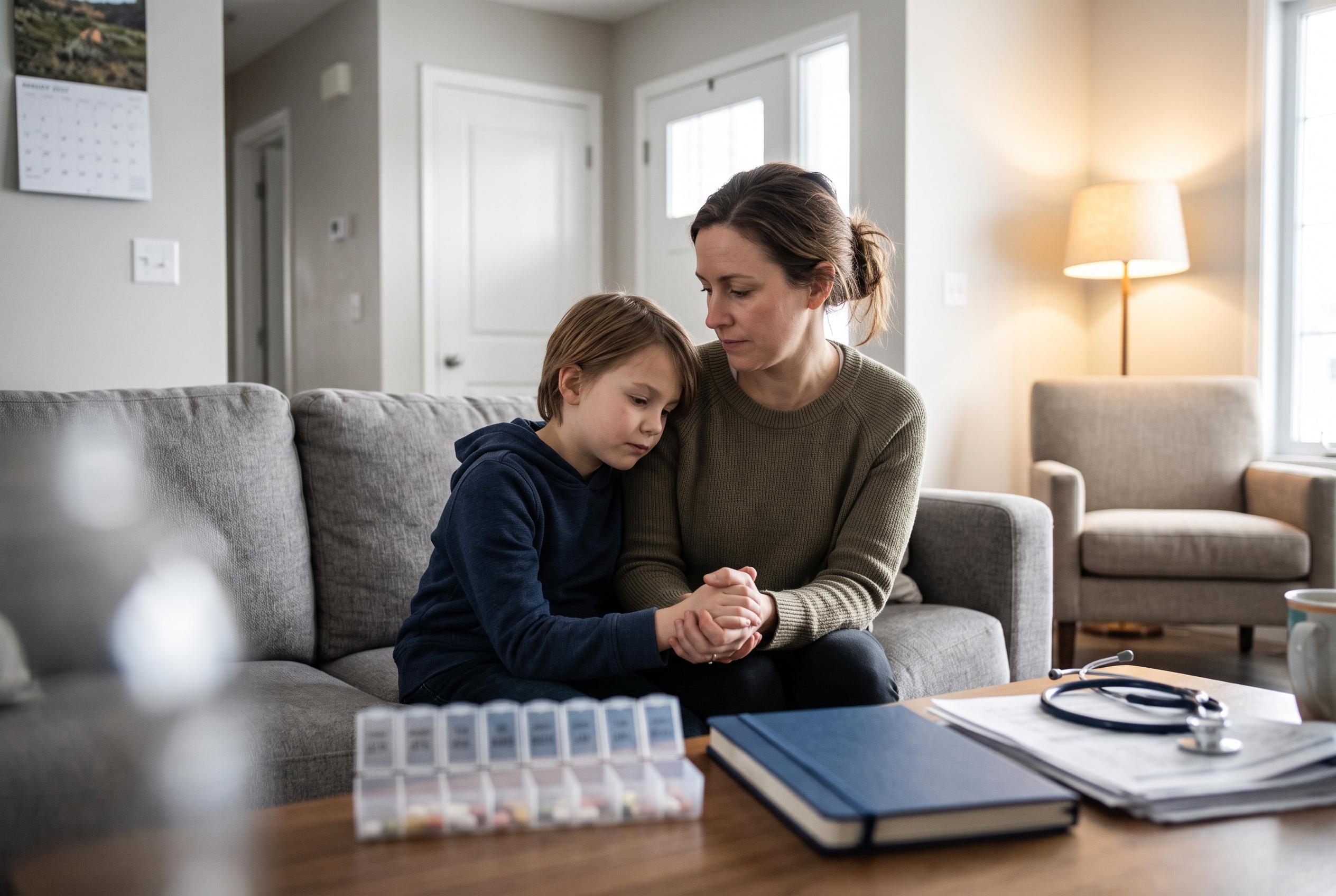

Research reveals the emotional toll and overlooked support gaps faced by families during the diagnostic odyssey of rare childhood diseases, emphasising the importance of psychological guidance and accurate communication.
When a clinician finally puts a name to a child’s rare condition, the relief can be mixed with shock. Families often spend months or years in what specialists call a diagnostic odyssey: a long sequence of tests, referrals and second opinions before the picture becomes clear. Research on rare diseases in children shows that this delay is not just medically exhausting; it is emotionally draining too, leaving parents and children to cope with uncertainty, fear and, often, a sense of isolation. According to a review in the journal Children, rare diseases also tend to create wider strain at home, because the diagnosis affects not only treatment decisions but relationships, routines and expectations.
Psychologists say the first task for parents is often not to act, but to absorb the news. The instinct to immediately search for treatments, call relatives and make plans is understandable, yet counsellors warn that those first days are usually too raw for clear thinking. Kalyani Raman, a Chennai-based child psychologist, has advised parents to take another adult with them to follow-up appointments so that someone can listen, take notes and help retain information when emotions are running high. That approach reflects a broader theme in the research: parents commonly want more psychological support and clearer guidance from health professionals once the diagnosis is delivered.
How parents explain the condition to the child matters as much as the medical facts. Family counsellors recommend asking first what the child already understands, then using simple, concrete language that matches the child’s age. Younger children may cope better with explanations tied to daily life , medicines, appointments and limits on certain activities , rather than a diagnostic label they cannot yet grasp. Ritu Burman, a former family counsellor in Mumbai, has also advised parents to be honest about their own feelings rather than pretending nothing is wrong, because children often take emotional cues from the adults around them. Just as important, she says, is making clear that the child did not cause the illness.
The diagnosis usually reshapes life for siblings as well. Psychologists caution against changing the whole household’s rules or expectations in a way that makes brothers and sisters feel they are being either ignored or overburdened. Research on children with rare diseases has found that siblings may carry their own quiet mix of fear, guilt and confusion, especially if they are left to overhear conversations or piece together information on their own. Small, age-appropriate ways to help can reduce that tension, but experts say occasional one-on-one time away from hospitals and treatment routines can be just as important for preserving a child’s sense of security.
In India, the wider family often becomes part of the story almost immediately. Grandparents, in-laws and neighbours may all want to know what is happening, which can make a rare diagnosis harder to manage if the family does not agree on a single explanation first. Psychologists say that script does not need technical detail; it should simply say what the condition is, what it is not and what kind of support the family needs. That matters because rare diseases are often surrounded by blame, stigma and folk remedies, and studies of parents show that caregiver distress rises when families have to fend off misinformation while still trying to keep up with appointments and treatment decisions.
Experts also stress that families should not try to carry the burden alone. Genetic counselling, peer support groups and hospital-based social workers can give parents a place to process both the facts and the feelings that come with a rare diagnosis. Research has repeatedly found that families value information-seeking and peer support because they help create a new normal, even when the illness itself does not go away. The hardest period often comes at the start, but psychologists say many families gradually settle into a workable rhythm once they have reliable information, practical help and a support network that includes relatives as well as clinicians.
Disclaimer: This content is for informational purposes only and is not intended to be a substitute for professional medical judgment, advice, diagnosis, or treatment.



