

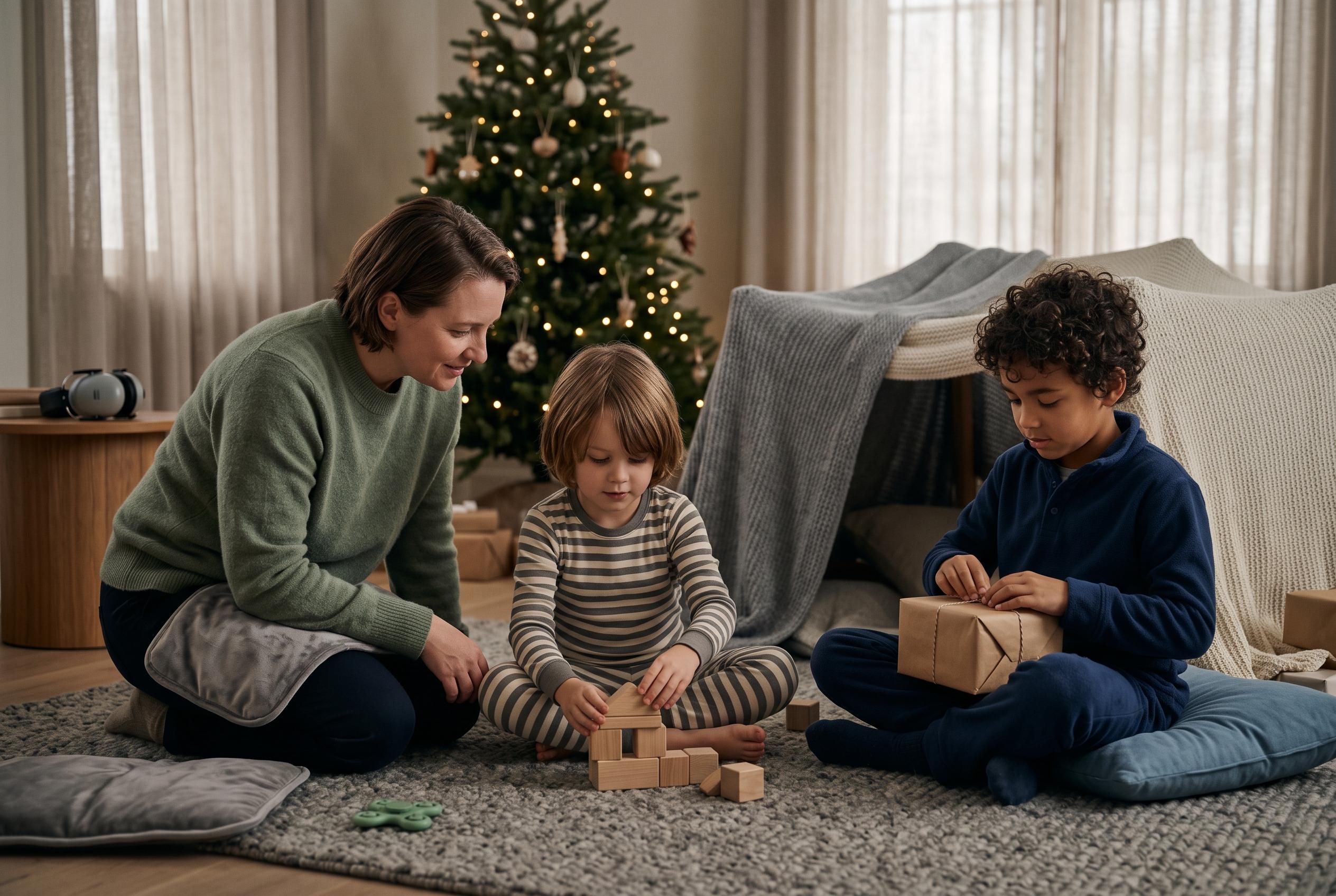

Practical strategies for families supporting autistic children during Christmas to reduce sensory overload and create a more familiar, manageable festive morning.
For many families, Christmas morning becomes difficult not because of the presents themselves, but because the day compresses too many sensations into too little time. Bright lights, noise, unfamiliar smells, different food, new clothes and a broken routine can quickly overwhelm an autistic or AuDHD child, especially when the excitement starts before dawn. The most effective response is not to improvise in the moment, but to shape the morning in advance so it feels familiar, slower and easier to leave if needed.
That preparation should begin the night before. A simple written sequence for the morning, a few photographs or a social story showing the actual rooms and routines, and familiar breakfast food can reduce uncertainty before the day begins. Autism charities and specialist guidance regularly recommend that families preview what will happen, keep expectations clear, and make sure a calm space is available if the child needs to step away. The point is not to create a perfect Christmas, but one your child can recognise. That usually means cutting down the number of activities, avoiding surprises and deciding in advance what can be skipped.
The sensory environment matters just as much as the schedule. Advice from organisations supporting autistic people suggests swapping flashing decorations for steadier lighting, limiting strong scents, and having ear defenders, ear plugs or noise-cancelling headphones ready before the first guest arrives. Other common adjustments include softer clothes, favourite comfort items and a dedicated quiet corner where the child can recover without being watched. A festive season that looks magical to adults can feel chaotic to a child if every sense is being hit at once.
Gift opening is another pressure point, and the best approach is to make it orderly rather than dramatic. One present at a time, with a clear sequence the child can follow, is far easier to manage than a pile of wrapping paper, paper rustling and several adults calling out directions. Social stories for Christmas morning often work best when they include the whole arc of the day, not just the moment gifts are opened, because the hardest part for many children is not the present itself but not knowing what comes next. If relatives want photos, hugs or extended conversation, it is usually better to keep those brief and predictable.
Food can also become a flashpoint. New textures, unfamiliar dishes and crowded tables often add to the strain, so many families do better by sticking with meals the child already accepts, or by keeping one safe option on the table. Autism guidance also notes that families should plan meals, visitors, travel and activities in advance, then be ready to change course if the child’s capacity drops. A shorter visit, a quieter room or an earlier exit may preserve the rest of the day. Pushing through usually makes things worse.
Just as important is learning the difference between early discomfort and full overload. A flinch at a sudden sound, covering the ears, going quiet, repeating questions or seeking a corner are often warning signs that the nervous system is starting to tip. At that stage, reducing input quickly can prevent a much harder crisis later. Once a child is fully overwhelmed, talking, reasoning or negotiating tends to add pressure rather than relieve it. The same principle applies to parents and carers: if you are exhausted or overstimulated too, hand over to the backup adult and take your own quiet break. A calmer adult makes the whole plan more likely to work.
The most useful Christmas strategy is often the least glamorous one: decide what your child needs, decide what can be left out, and build the morning around those limits. For some families, that means a shorter breakfast, fewer visitors, a quiet exit phrase and no expectation that every tradition must happen on December 25. For others, it means keeping the whole day deliberately small. Either way, the goal is the same: a holiday that respects sensory needs, protects regulation and leaves room for a better rest of the day.
Disclaimer: This content is for informational purposes only and is not intended to be a substitute for professional medical judgment, advice, diagnosis, or treatment.



