


The initial encounter with menstruation marks a significant milestone in puberty. This guide highlights what children and parents should understand about the timing, symptoms, and managing the first period with confidence and normalcy.
A first period, known medically as menarche, is a normal part of puberty, but it often arrives with a mix of curiosity, anxiety and awkwardness for children and parents alike. Cleveland Clinic says the first period usually begins between ages 11 and 14, though it can start earlier or later, and the timing often reflects broader puberty changes rather than a single exact age. Doctors also note that breast development is often one of the first visible signs that menstruation may not be far away. According to Medical News Today and KidsHealth, a first period commonly comes about two years after breast development begins, with pubic hair, underarm hair, wider hips and vaginal discharge also appearing beforehand.
Understanding what a period actually is can make the experience feel less intimidating. As the Cleveland Clinic explains, hormones thicken the lining of the uterus in preparation for possible pregnancy. If pregnancy does not happen, that lining sheds and leaves the body through the vagina as blood, mucus and tissue. That process is not just about blood, which is why the first period may look and feel different from what a child has imagined. For families, the American College of Obstetricians and Gynecologists advises talking about menstruation early and plainly, using correct anatomical terms and treating the topic as a normal part of health rather than a source of secrecy or embarrassment.
The first bleed is often lighter than expected. It may appear as a few spots in underwear rather than a dramatic gush, and the colour can be brown, dark red, pink or rusty rather than bright red. Cleveland Clinic says the average menstrual period involves a relatively small amount of blood loss overall, even though it can look more substantial once absorbed by pads or underwear. Healthline notes that premenstrual symptoms such as cramping, breast tenderness and mood changes can begin days before bleeding starts, which can help explain why some children feel unwell or emotional before they see any blood at all.
It is also important to know that early cycles are usually irregular. The body does not settle immediately into a neat monthly rhythm, and Cleveland Clinic says menstrual cycles in the first years after menarche can vary considerably. That means one cycle may come after four weeks, while the next may take much longer. Tracking the start date on a calendar or in an app can help families see patterns over time, but the goal is not perfection. It is simply to learn what is normal for one child’s body.
Symptoms can range from barely noticeable to quite uncomfortable. Some people experience cramps, bloating, tiredness, headaches, sore breasts or back pain, while others have very few symptoms. Gentle movement, heat, rest and hydration can help with mild discomfort. The American College of Obstetricians and Gynecologists says severe pain should not be brushed aside, especially if it regularly keeps a teenager out of school, sport or sleep. Heavy bleeding also deserves attention, particularly if it lasts more than seven days, soaks through protection quickly or leaves a child looking pale, dizzy or unusually exhausted.
Choosing a first period product can feel daunting simply because there are so many options. Pads and period underwear are often the easiest starting point because they are worn externally and do not need to be inserted. Reusable pads can also be a practical option for families looking for a washable alternative. Internal products such as tampons, menstrual cups and discs can be used by teenagers too, but there is no need to rush into them. The best product is the one that feels comfortable, suits the child’s routine and gives them confidence at school, during sport or overnight.
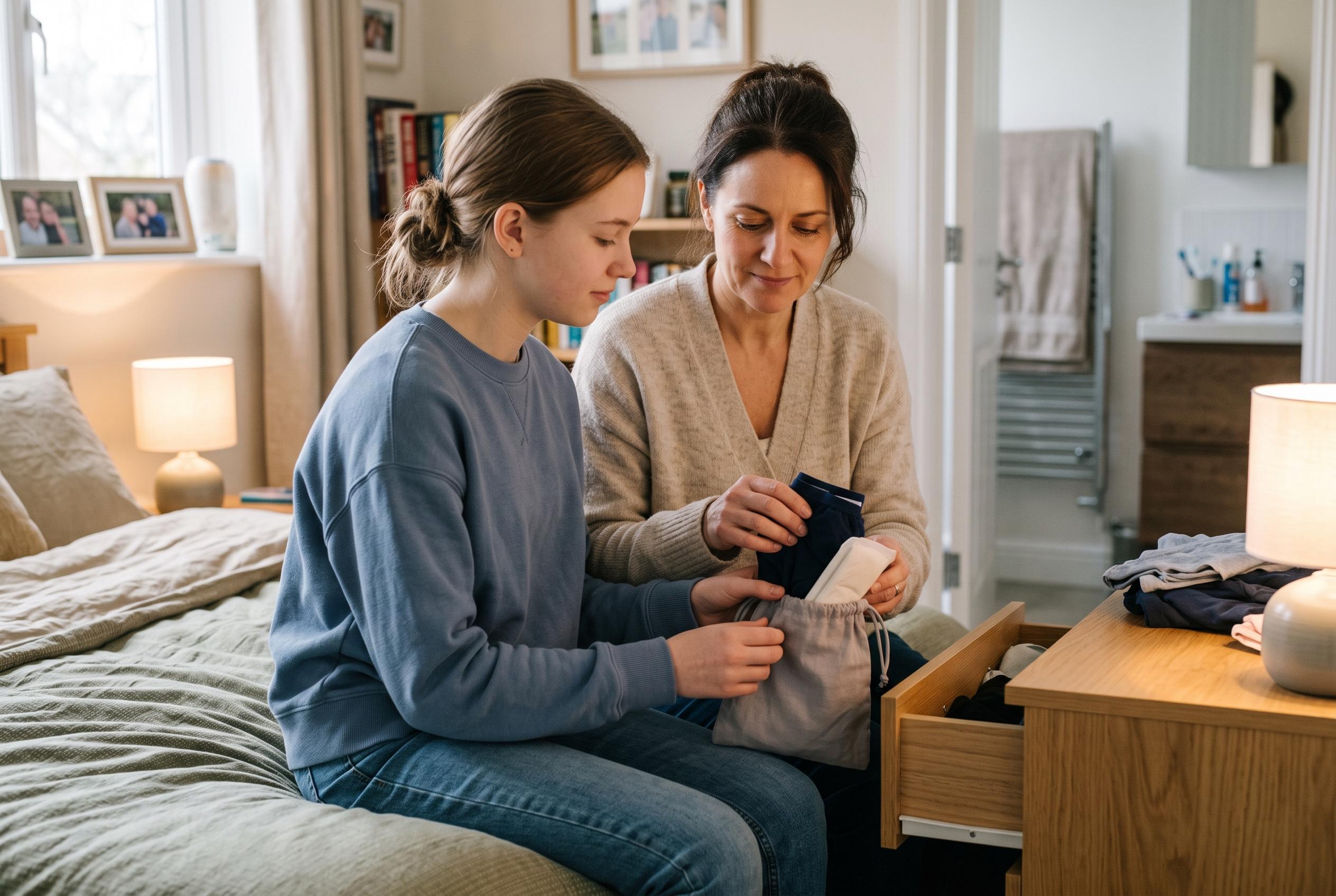
Parents can make a first period much easier by preparing quietly and without drama. A small kit with a couple of pads, period underwear or reusable options, a waterproof pouch, unscented wipes and a heat pack can help a child feel ready for school, sleepovers and other outings. The bigger task is emotional as much as practical: making it clear that periods are ordinary, questions are welcome and leaks are nothing to be ashamed of. Cleveland Clinic and ACOG both emphasise that most concerns about timing, regularity and symptoms can be handled with reassurance, but persistent heavy bleeding, very early onset or a first period that has not arrived by the mid-teen years should be checked by a healthcare professional. In other words, a first period is not the end of the conversation. It is the start of learning how a changing body works.
Disclaimer: This content is for informational purposes only and is not intended to be a substitute for professional medical judgment, advice, diagnosis, or treatment.



