

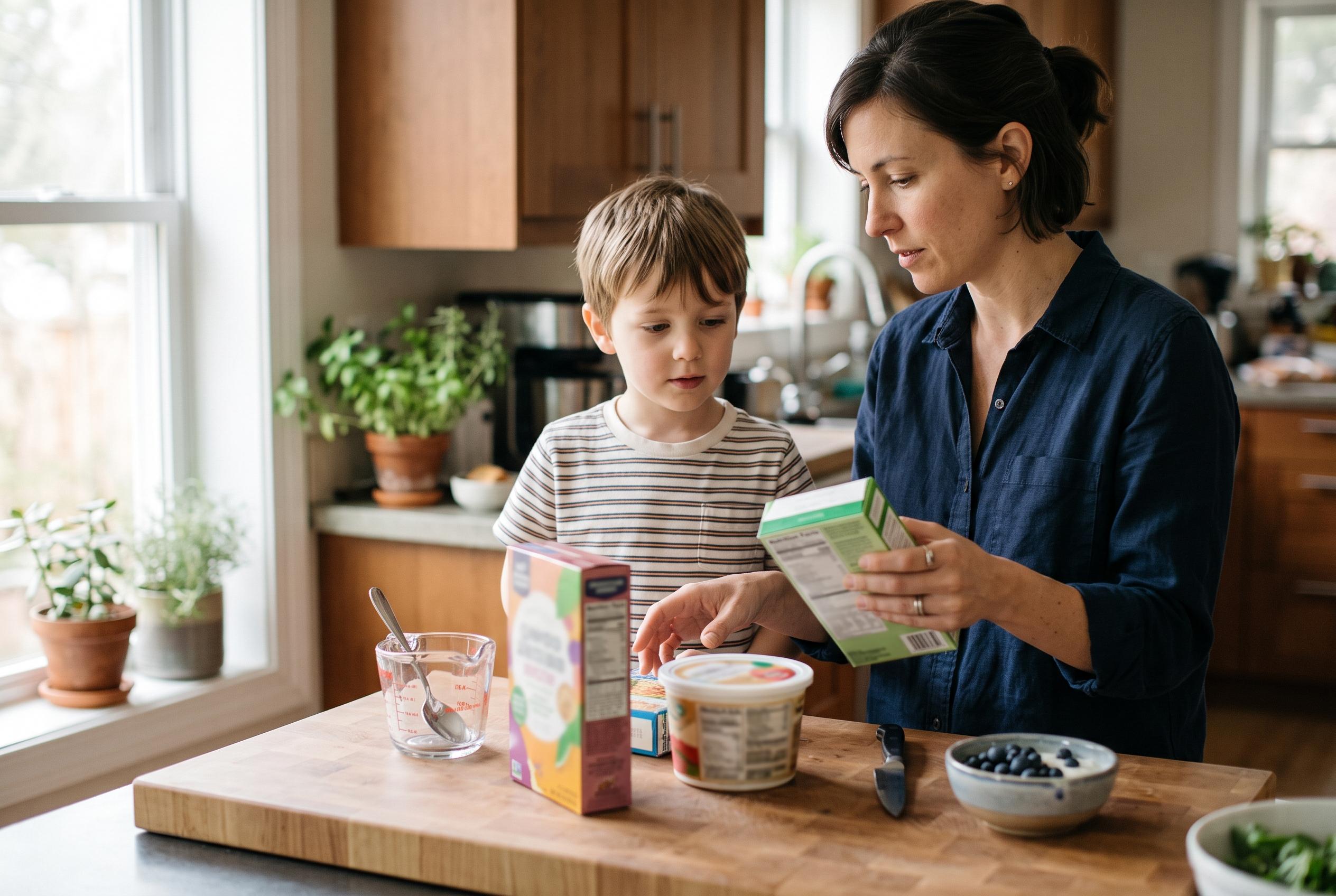

A guide for parents on decoding packaged food labels to identify hidden added sugars, recognising diverse names, portion sizes, and the importance of gradually reducing intake for better health choices.
For parents trying to make sense of packaged food, added sugar is often hiding in plain sight. The name on the ingredient list may sound wholesome, technical or even harmless, but the underlying job is the same: these sweeteners are added during processing or packaging, not found naturally in the food itself. The Food and Drug Administration says the Nutrition Facts label now separates added sugar from the sugars that occur naturally in milk, fruit and vegetables, and the rule requires both grams and a percentage of the daily value to be shown.
The quickest way to spot it is to start with the Nutrition Facts panel, not the front of the packet. On a US label, the “Added Sugars” figure sits directly beneath “Total Sugars”, and that is the number that matters when you are trying to work out how much sugar the manufacturer introduced. Under federal labelling rules, ingredients must also be listed in descending order by weight, so the first few entries usually tell the biggest part of the story. The UK government uses the same basic principle on ingredient lists, which is why reading from top to bottom remains the simplest and most reliable habit.
The real challenge is that sugar rarely appears under one obvious name. It can show up as sucrose, dextrose, corn syrup, high fructose corn syrup, maltodextrin, honey, agave nectar, molasses or fruit juice concentrate, among many others. The broad patterns are easier to remember than the full list: names ending in “-ose”, syrup-based ingredients, and words such as nectar, concentrate or cane juice all deserve scrutiny. A label that seems to contain several small sweeteners may actually be splitting the same thing across multiple ingredients, making the total look lower than it really is.
That distinction matters because naturally occurring sugar is not the same as added sugar. The FDA treats sugar already present in plain milk, fruit or vegetables differently from sugar introduced during manufacturing, while single-ingredient products such as honey and maple syrup are still counted as added sugar on the label. That is why a plain yoghurt and a sweetened yoghurt can look similar at a glance but mean very different things nutritionally. For families, especially those managing selective eating, the label is useful precisely because it separates what the food naturally contains from what was put there to change the taste, texture or shelf life.
Serving size is the other place where shoppers can easily be misled. A product can look modest on paper while delivering far more sugar than a child actually eats in one sitting. The daily value for added sugars on US labels is based on a 50-gram reference diet, and health organisations advise keeping intake below 10% of total calories, with the World Health Organisation recommending even lower intake where possible. That makes the percentage column on the label useful, but only if you also check how many servings are in the packet and whether the portion size matches reality.
For parents, the most practical approach is often not to eliminate sweet foods abruptly, but to compare products carefully and make gradual swaps. A bread, sauce, cereal or drink can carry added sugar even when it is not marketed as a sweet treat, so the habit of checking every packaged item pays off. The safest rule is simple: read the added sugars line first, scan the ingredient list for hidden forms of sugar, then compare the serving size with what your family actually uses. According to the FDA, that is exactly what the added sugars declaration was designed to help consumers do.
Disclaimer: This content is for informational purposes only and is not intended to be a substitute for professional medical judgment, advice, diagnosis, or treatment.



