

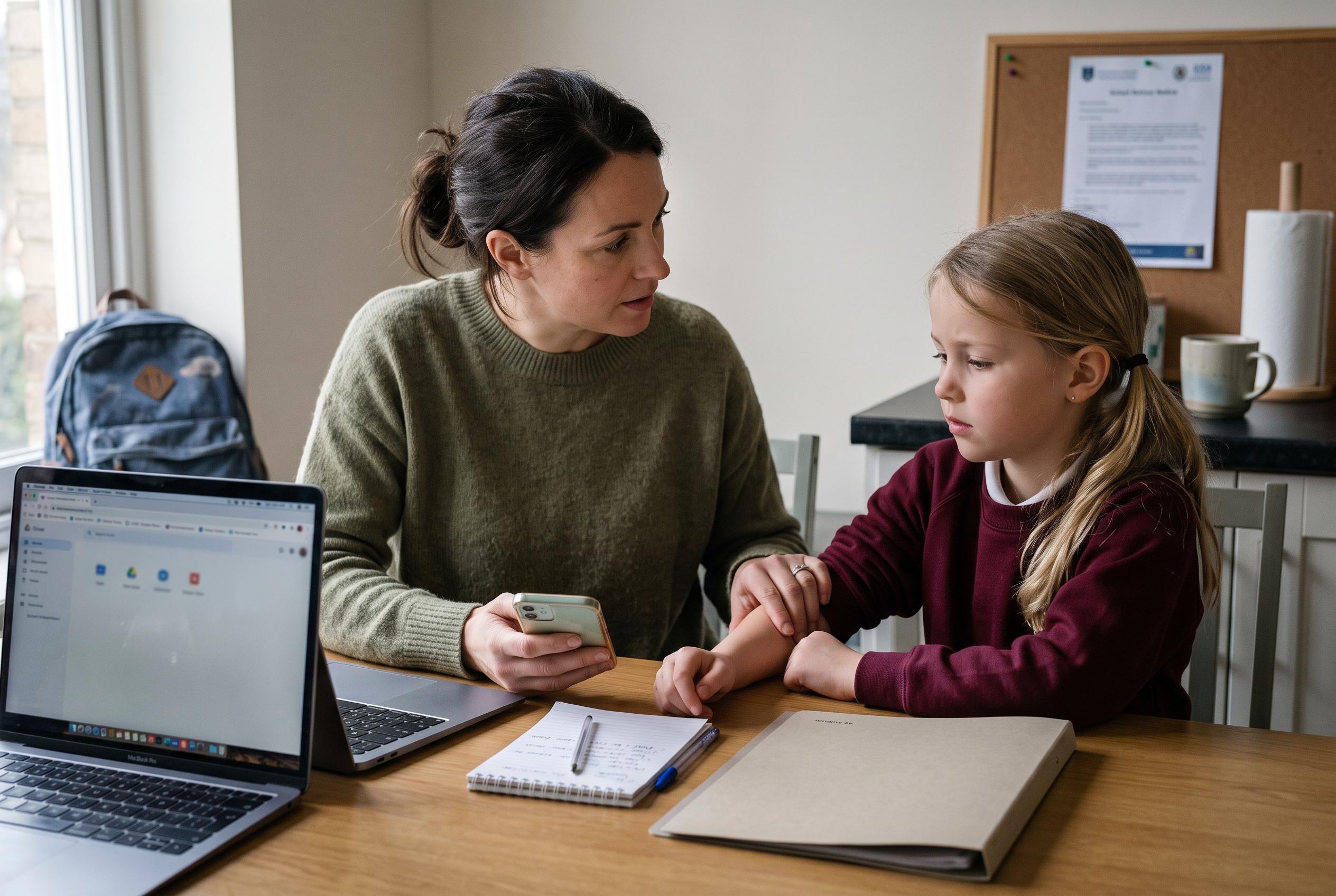

Experts emphasise that listening with patience, gathering evidence, and strong school communication are key to supporting children facing bullying, including online harassment and physical abuse.
When a child says they are being bullied, the first task for a parent is not to solve everything at once, but to make the child feel believed and safe. Calmly listening, avoiding blame and reassuring them that the behaviour is not their fault can make it easier for them to keep talking. Charities and local authorities that work with families, including Kidscape and Kent County Council, stress that children often open up more when adults respond with patience rather than a stream of anxious questions.
Bullying is more than playground teasing. It can include repeated insults, threats, exclusion, humiliation, online harassment and physical harm. Oxfordshire County Council defines it as repeated, deliberate hurtfulness backed by a power imbalance, which is a useful way for parents to judge whether an incident is more than a one-off disagreement. Repeated targeting can damage confidence, unsettle sleep, and leave children anxious, low in mood or reluctant to go to school. For some children, especially those who are already vulnerable, the emotional effects can linger long after the incidents stop.
It helps to start keeping a clear record as soon as concerns arise. Note when and where each incident happened, what was said or done, who was present and how your child responded. Keep screenshots, messages and any damaged belongings. Hampshire County Council advises children and families to tell a trusted adult promptly and, if the first person does not help, to speak to someone else. That principle applies at home too: if your child is not ready for a detailed conversation, a quiet moment later may work better than pressing for answers in the heat of the moment.
Parents should also think carefully about the school’s role. Contact the class teacher, form tutor, head of year or designated safeguarding lead early, rather than waiting to see whether the problem fades. Read the school’s anti-bullying policy and ask for a practical plan that sets out who your child can turn to, how staff will monitor trouble spots and when the school will update you. Kidscape, which supports families affected by bullying, says parents often need both information and advocacy, especially when they are preparing for difficult meetings or follow-up conversations.
Home support matters while adults work on the problem. Keep routines steady, make time for things your child enjoys and look for small ways to rebuild confidence. That might mean helping them stay connected with friends, practise simple assertive phrases or notice what they are already doing well. It is equally important to be realistic: children should not be expected to endure bullying in order to appear resilient, and they should not be told that changing their personality is the answer. If racist, homophobic or other prejudiced comments are involved, those are never acceptable as jokes or banter.
Online abuse needs the same seriousness as bullying face to face. Save evidence before blocking accounts, report harmful content to the platform and tell the school if pupils are involved, even when the behaviour happens away from the school gate. If a child has been physically hurt, they should be moved to safety and assessed for injuries. If distress continues, or school avoidance, sleep problems, fear or panic begin to affect daily life, parents should speak to their GP or seek mental health support. In urgent situations, or if a child cannot be kept safe, parents should call emergency services or contact their local authority’s children’s social care team for help.
Disclaimer: This content is for informational purposes only and is not intended to be a substitute for professional medical judgment, advice, diagnosis, or treatment.



