

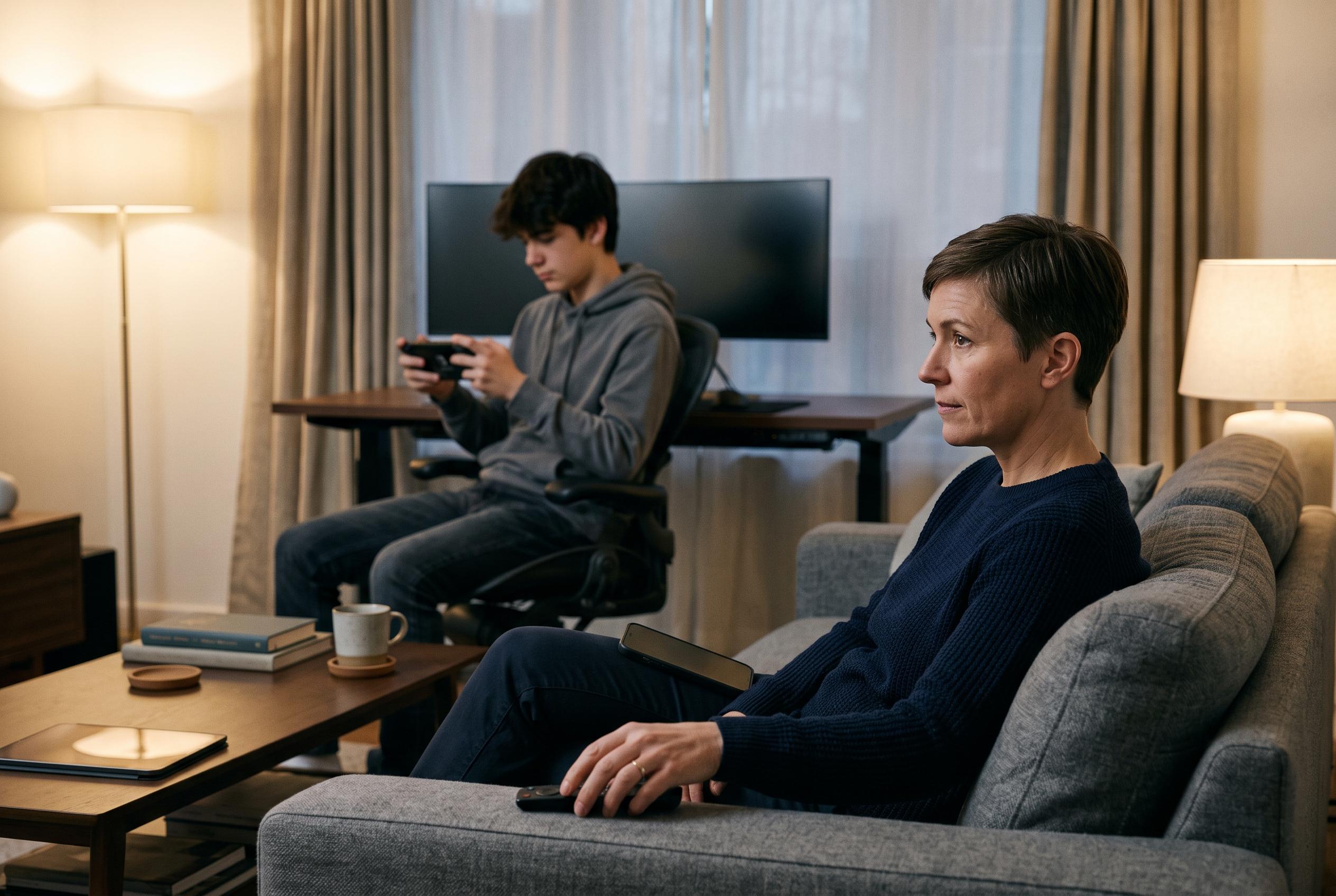

A new study reveals that parents’ own device use at home significantly shapes teenagers’ gaming habits, including exposure to mature titles and instances of problematic gaming, with active monitoring proving most effective.
Parents’ own screen habits may do more than set the mood at home: they may also help shape how much their teenagers game, and what kinds of games they play. A large study of more than 7,400 American adolescents found that the way adults used devices around the house was linked to later video game use among teens, including games rated for mature audiences. Researchers tracked the families over two years and found the pattern held up one and two years later, suggesting the connection was not just a short-term blip.
According to reporting from StudyFinds and summaries of the research shared by Newswise and EurekAlert!, parents who regularly used screens around their children, kept devices going at mealtimes, or had screens present around bedtime or in bedrooms were more likely to have teens who later played more mature-rated games. Those teens also tended to spend more time gaming, particularly on weekends. The study also linked these household habits with slightly higher levels of problematic gaming, a term researchers use when play begins to interfere with school, relationships or daily routines.
By contrast, the study pointed to a different pattern in homes where parents actively watched and limited screen use. Parents who monitored their children’s screen time saw lower odds of later mature-rated gaming and less overall game play. Clear limits appeared to have an even stronger effect, with fewer mature-rated titles played and fewer weekend hours spent gaming. That finding fits with earlier research published in Cyberpsychology, Behavior, and Social Networking, which also connected parental regulation and the location of devices with teen gaming time.
One result stood out for families trying to discipline screen use: using screen time as a reward or punishment did not appear to help. Instead, it was associated with more total play and more signs of problematic gaming. Researchers suggested that framing screen access as something to be earned may make it more tempting, or may tap into the push for independence that often comes with adolescence. Still, those explanations remain hypotheses rather than proven causes. The broader message from the study is straightforward: children do not only absorb rules about screens from what parents say, but also from what parents do.
Disclaimer: This content is for informational purposes only and is not intended to be a substitute for professional medical judgment, advice, diagnosis, or treatment.



