

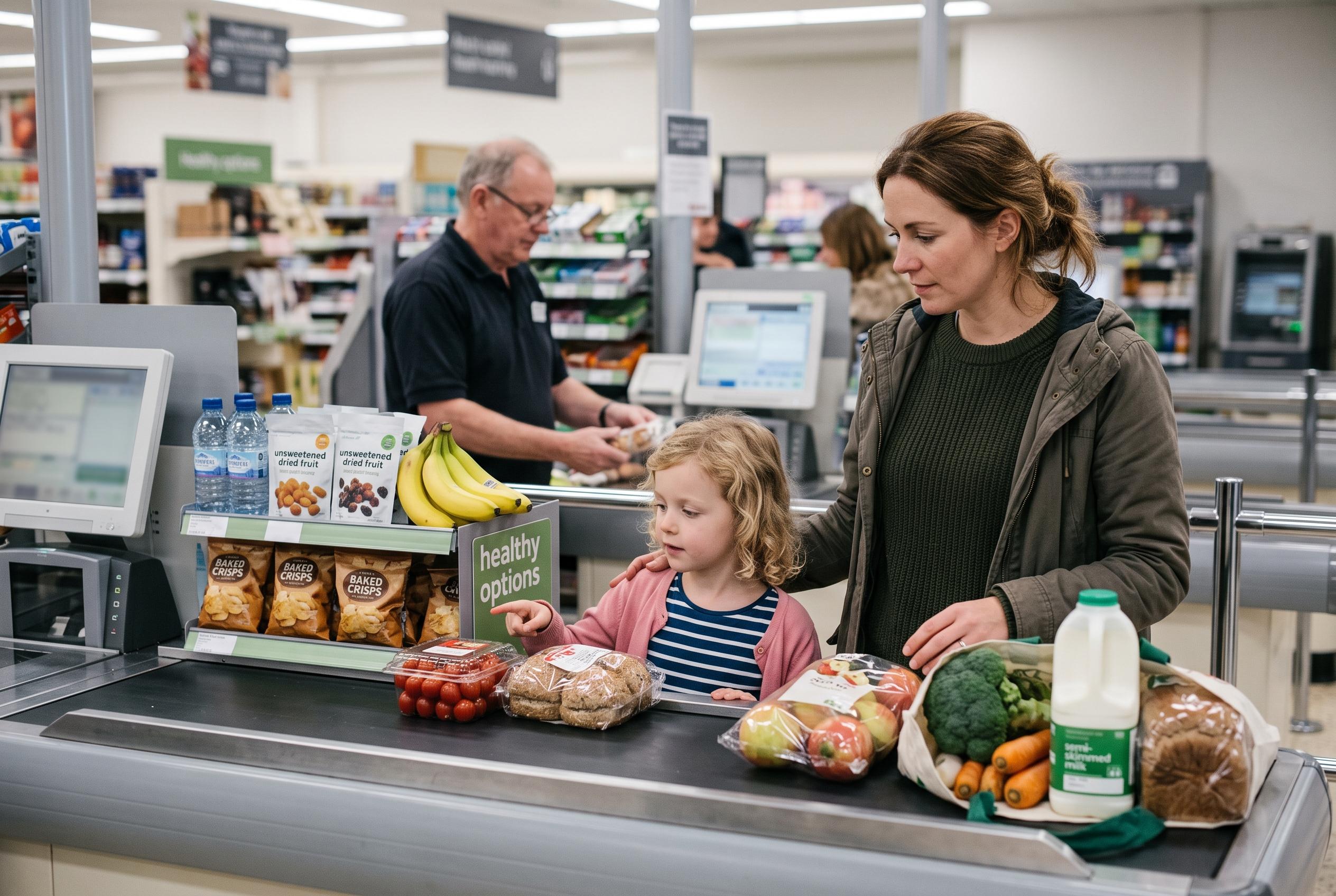

From October 2026, Scotland’s new rules will restrict placement of high-fat, sugar, and salt foods at supermarket checkouts and promotional displays, aiming to improve public health by reducing impulse purchases of unhealthy foods.
Chocolate bars, sweets and sugary drinks are set to disappear from supermarket checkouts in Scotland as ministers move to curb the kinds of displays that encourage impulse buying. According to the Scottish Government, new rules taking effect on 1 October 2026 will stop larger retailers from putting foods high in fat, sugar or salt in prominent spots such as entrances, checkout lanes and the ends of aisles, both in-store and online.
The restrictions cover a broad range of pre-packed products, including fizzy drinks, confectionery, biscuits, cakes, ice cream, crisps and some breakfast cereals. They also extend to items such as flavoured yoghurts and convenience foods, though not every product in those categories will be caught. Officials will assess items using a nutrition scoring system to decide whether they fall into the less healthy category. Freshly prepared food packaged and sold on the same premises, such as made-to-order baguettes, is generally exempt.
The government says the aim is to make healthier choices easier and to reduce obesity. Public health minister Maree Todd said two-thirds of adults in Scotland are overweight or obese and that people in the poorest areas are more likely to be affected. She said promotions and prominent placement can encourage overconsumption and impulse purchases of foods high in calories, fat, sugar and salt, and argued that limiting those tactics would improve health and wellbeing.
The regulations go beyond location alone. The Scottish Government has also said some price promotions will be restricted, including multi-buy offers and free refills of sugary drinks. Retailers will still be allowed to sell the affected products, but they must do so away from the most visible parts of shops. Products can be placed in normal aisles, but not at the end of an aisle if that falls within the restricted zone, and they must be at least 2 metres from checkouts and queueing areas.
Industry groups have largely accepted the move as a workable one. The Scottish Retail Consortium said the rules were proportionate and pointed out that retailers already promote fruit and vegetables, reformulate products to cut salt, sugar and fat, and use traffic-light labelling to help shoppers make informed choices. It added that aligning Scotland’s approach with the rest of the UK should make the change easier to implement, though retailers are still expected to spend around £20m on compliance. Businesses that fail to follow the rules could face compliance notices and fines of up to £2,500, with repeat offenders potentially facing prosecution.
Disclaimer: This content is for informational purposes only and is not intended to be a substitute for professional medical judgment, advice, diagnosis, or treatment.



