

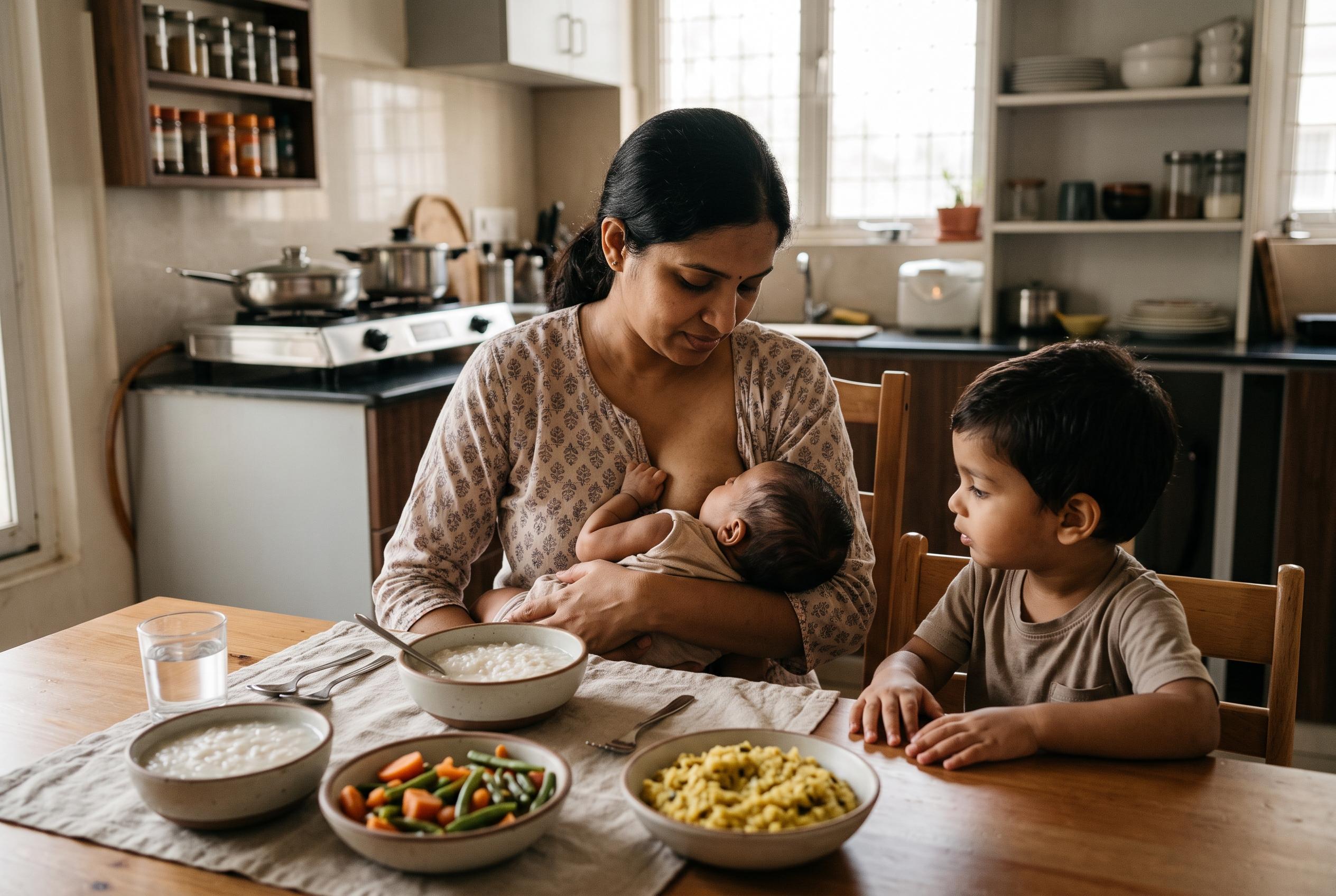

India’s health authorities recommend exclusive breastfeeding for six months and home-cooked complementary foods thereafter, warning against unnecessary supplements amid a booming market and potential nutritional risks.
India’s child nutrition guidance is clear: breast milk and ordinary home-cooked food should do the heavy lifting in the early years, not commercial supplements. The Hyderabad-based ICMR-National Institute of Nutrition, or ICMR-NIN, says infants should be exclusively breastfed for the first six months, with feeding started within the first hour after birth and colostrum, the first milk, given to the newborn. The institute’s guidance also says water, other liquids and honey should not be introduced during this period.
From six months, the focus shifts to complementary feeding, which means adding safe, home-prepared semi-solid foods while continuing to breastfeed until at least two years and beyond, according to the ICMR-NIN dietary guidelines. The guidance stresses variety rather than expensive add-ons: seasonal fruit, vegetables, protein-rich foods and healthy fats can provide a broad spread of nutrients when they are offered regularly in age-appropriate meals.
The advice comes at a time when supplement marketing aimed at children has grown more visible and, according to the Telangana Today report, the commercial infant nutrition and supplement market in India is now worth Rs 56,500 crore and could rise to Rs 87,000 crore. Senior paediatrician and public health communicator Sivaranjani Santosh warned on X that parents should not be swayed by advertising promises of better growth or stronger nutrition, saying there are “very few indications for giving supplements to children” and that misuse can carry risks.
Public health experts say the main danger is not simply wasted money but the replacement of balanced family food with powders, fortified drinks or other products that are unnecessary for most healthy children. They caution that indiscriminate use of multivitamins and protein blends can contribute to nutritional imbalance and, in some cases, excessive weight gain. The ICMR-NIN guidance instead urges parents to avoid added sugar and salt in infant meals, discourage sugary drinks and fruit juices, maintain hand hygiene during feeding, and feed patiently without force.
Disclaimer: This content is for informational purposes only and is not intended to be a substitute for professional medical judgment, advice, diagnosis, or treatment.



