

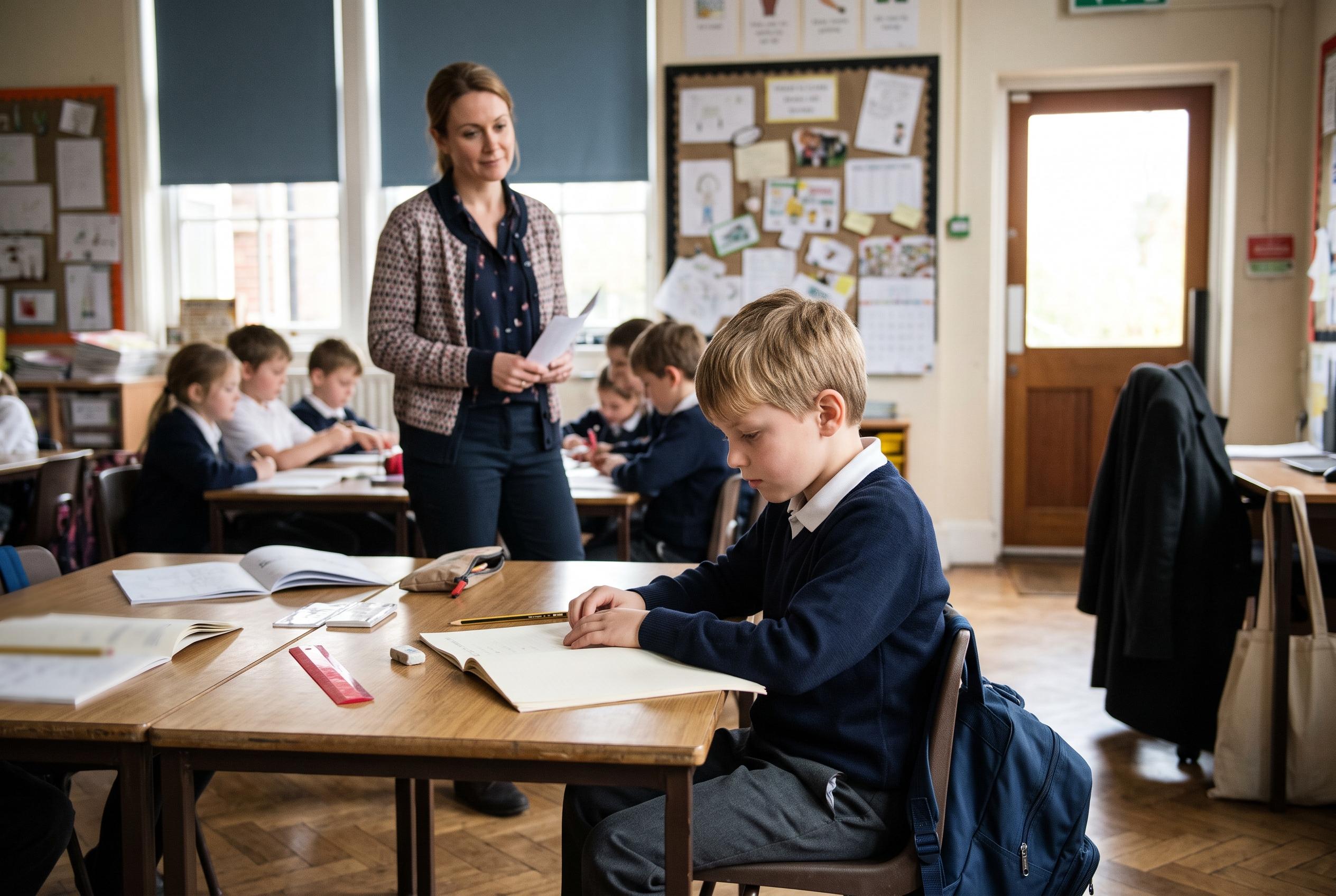

A drop in academic motivation often stems from unseen stresses such as overload, social influences, and disconnection from real-life relevance, rather than laziness or defiance, suggests new research.
A child who resists homework is often blamed for laziness or defiance, but the problem is usually more complicated. In a piece drawing on the ideas of child neuropsychologist Valentina Paevskaya, the Russian site Fine News argues that a drop in academic motivation can stem from hidden pressures that parents overlook. Research from medical and educational sources supports that view: sleep, social environment, emotional state and the way children experience learning all play a part in whether school feels manageable or overwhelming.
One of the most common pressures is simple overload. WebMD and the Sleep Foundation both report that too little sleep can weaken attention, memory and problem-solving, while the National Institutes of Health has linked shorter sleep in pre-teens to differences in brain development and more mood and cognitive problems. If a child is juggling lessons, clubs, tutors and sport with little time to recover, even a well-designed timetable can become counterproductive. The practical fix is often not more effort, but better pacing: lighter days should stay lighter, meals and rest should be protected, and difficult subjects should not be stacked on top of each other when a child is already drained.
The social environment matters too. Fine News says children are strongly shaped by the company they keep, and that point is backed by studies on peer influence. Research published in PubMed found that peers and close friends can affect how intensely children engage in physical activity, while a separate study in Developmental Psychology found that peer groups can influence classroom engagement and academic development. In other words, motivation is not only an individual trait; it is also contagious. Parents who want to strengthen a child’s interest in learning may need to think less about lectures and more about surroundings, whether that means encouraging clubs, sports, art classes, chess or other groups where effort and curiosity are normal.
Another frequent problem is that schoolwork feels disconnected from real life. A child who cannot see why mathematics, science or language skills matter may see learning as an abstract demand rather than a useful tool. That is why experts often recommend turning ordinary activities into practical lessons. Cooking can show measurement and fractions; planting seeds can introduce biology; making soap or perfume can make chemistry more tangible. When children see how knowledge works outside the classroom, effort becomes easier to justify.
Parents can also weaken motivation without realising it if their own behaviour does not match their advice. Children are more likely to take learning seriously when they see adults reading, improving their skills or showing discipline in daily life. Fine News suggests that shared interests are especially powerful, and that aligns with what developmental research shows about children learning through observation. A parent who learns a language, exercises regularly or picks up a hobby alongside a child sends a stronger message than a lecture about hard work ever could.
The child’s room and study space matter as well. A cluttered corner full of forgotten notebooks, broken toys and old assignments can make school feel like another source of stress. The Russian article recommends placing visible reminders of success in the room, such as certificates, trophies, favourite books or creative materials. That idea is less about decoration than reinforcement: children need to feel that effort leads somewhere, and visible signs of achievement can help make that connection.
For parents trying to rebuild a child’s interest in learning, the most useful questions are often the simplest. Which days feel most tiring? What would the child most enjoy doing together with a parent? Those answers can reveal where the real pressure lies and where motivation might return. The broader point is that children are usually not born unwilling to learn. More often, they lose the conditions that make learning feel possible, and the adults around them have the power to restore them.
Disclaimer: This content is for informational purposes only and is not intended to be a substitute for professional medical judgment, advice, diagnosis, or treatment.



