

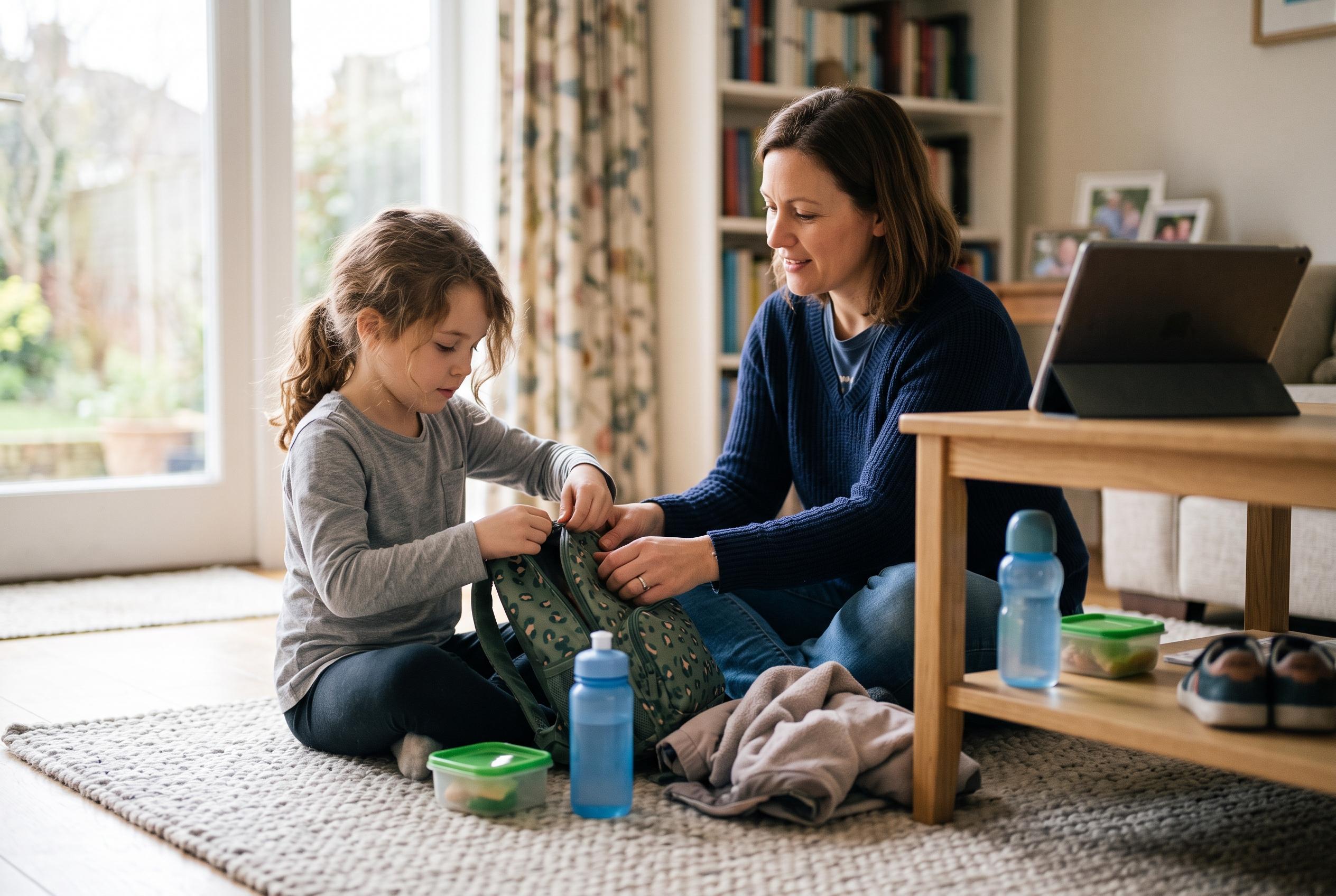

Parents and caregivers are increasingly turning to video modelling as a practical, adaptable approach to teach daily routines and foster independence in children with autism, supported by recent research highlighting its effectiveness and versatility.
Video modelling is emerging as a practical way for parents and caregivers to teach everyday routines at home, particularly for autistic learners who benefit from predictable, repeatable instruction. In its simplest form, the method involves filming a person carrying out a task, watching the clip with the learner, and then practising the same sequence in real life. The approach has been used in applied behaviour analysis for years, and research has found that it can improve the acquisition of functional living skills when the task is broken down clearly and adapted to the individual learner. According to a meta-analysis indexed by PubMed, the intervention is moderately effective for teaching daily living skills to people with autism spectrum disorder.
The appeal of video modelling is that it reduces the social pressure that can come with live instruction. Instead of relying on a parent to talk through each step in the moment, the learner sees the same action, in the same order, every time. That consistency can be especially useful for children who struggle with processing spoken directions while also managing the physical demands of a routine. Reviews of the research, including one from Pennsylvania State University, have found that video modelling and related video prompting methods can support the teaching of daily living skills, while also underscoring that the best results come when the intervention is tailored to the learner and the task.
The first step is to choose a routine with a clear beginning and end, such as hand washing, brushing teeth, putting on socks or setting the table. Behavioural researchers recommend task analysis, which means breaking a skill into small, ordered actions before teaching begins. That matters because vague goals such as “be more independent” are difficult to model or measure, whereas a concrete routine can be filmed and practised step by step. A study published in the Journal of Applied Behavior Analysis found that instructional video modelling could teach functional living skills to children with autism across several different tasks, supporting the value of this structured approach.
Once the task has been mapped out, the clip itself should be short, calm and easy to follow. Research and practitioner guidance suggest that video modelling works best when the person recording uses ordinary materials, keeps the camera steady and shows only the actions needed for the routine. Some families and clinicians also use video self-modelling, in which the learner watches themselves successfully completing a target behaviour. A review in PMC found that this variation can be effective for adults with autism spectrum disorder, and it highlighted the importance of individualised planning. Other overviews of the field note that video modelling can also be adapted as peer modelling or point-of-view modelling, depending on the goal and the learner.
What happens after the video matters just as much as the recording itself. The evidence base suggests that watching the clip should be paired with immediate practice in the real setting, whether that is a bathroom sink, a bedroom floor or a kitchen counter. The Penn State review found video prompting particularly effective, which is consistent with the idea that learners often need support at the moment a step is attempted, not just after observing it. In practice, that means pausing the clip, trying the action, and offering the least amount of help needed to get the step started.
For parents, the method is appealing because it is inexpensive and flexible. A phone is usually enough, and no specialist software is required. According to autism-focused guidance from clinicians and training resources, video modelling can be used for a wide range of skills, including communication, play, school readiness, safety and daily living routines. The key is to keep the clip matched to the learner’s needs and to fade the support over time, so the child eventually performs the routine without relying on the video.
The research also points to a broader lesson: progress is rarely dramatic at first. Some children will learn a routine quickly, while others may need repeated practice on one small step for weeks. That variation does not mean the method has failed. Instead, it shows why task analysis, individual pacing and careful observation are so important. For families looking for a practical way to build independence, video modelling offers a structured, low-cost starting point that can be used at home and adapted as the child grows.
Disclaimer: This content is for informational purposes only and is not intended to be a substitute for professional medical judgment, advice, diagnosis, or treatment.



