

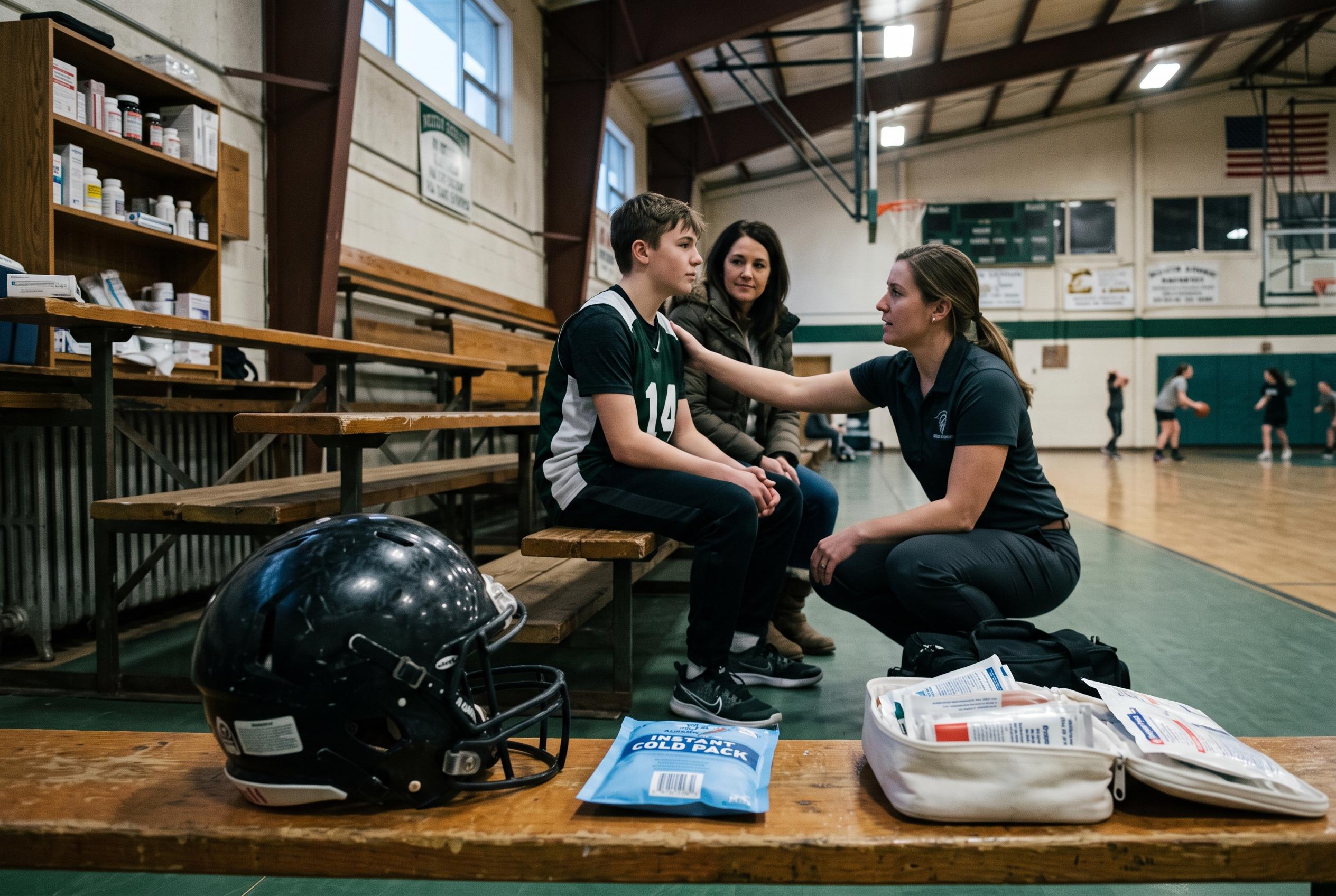

North Dakota is witnessing a shift in youth sports culture towards prioritising concussion awareness and safety. However, disparities persist in rural schools, where training, staffing, and attitudes continue to hinder progress, raising concerns over long-term brain health for young athletes.
North Dakota youth sports are moving away from the old culture of shrugging off head injuries, but the change is uneven, with rural schools and small programmes still facing gaps in training, staffing and attitudes. Andrea Watkins, a brain injury specialist with the North Dakota Brain Injury Network, said she still hears young athletes repeat warnings from coaches that they should not even mention a concussion, a sign that some communities continue to treat head injuries as something to hide rather than report.
That lingering mindset sits in sharp contrast to the growing awareness around brain trauma in elite sport. A study released in late August found that at least a quarter of former NFL players who died between 2016 and 2021 had chronic traumatic encephalopathy, or CTE, a degenerative brain disease linked to repeated head impacts. Among the 338 players whose brains were donated for the research, 93.2% showed signs of CTE, a figure that has helped push the issue further into the public conversation.
The concerns are not limited to professional football. A 2023 survey by North Dakota Health and Human Services found that more than one in five middle school students and more than one in six high school students reported a concussion in the previous year from organised sports or physical activity. Sarah Frauenberg, a family nurse practitioner in LaMoure who is certified in concussion evaluation, said families often underestimate a head knock, but she warned that the greatest danger can be a second concussion before the first has fully healed.
For Cassie Kramer, a nurse whose son suffered a serious football concussion, the issue became personal. She said coaches and officials followed the return-to-play protocol carefully, including balance and cognitive testing that showed he was not yet back to baseline, keeping him out longer. Kramer said a later head injury was treated just as cautiously, adding that parents should not rush children back before they are ready because “that’s when things can get ugly”.
Schools and youth leagues have also responded with more structured safeguards, including post-injury testing apps, strict removal rules and protective equipment. Justin Fletschock, assistant director of the North Dakota High School Activities Association, said concussion education is now part of a regular review cycle, while state law requires coaches, trainers and officials to complete training every two years and mandates immediate removal from play when a concussion is suspected. Some football programmes also use padded helmet covers such as Guardian Caps, which the NFL has said were associated with a 52% reduction in concussions in certain preseason practice settings, although a separate high school study reported by Wisconsin Public Radio found no clear reduction for teenage players. That mixed evidence suggests equipment can help, but it is no substitute for prompt reporting, medical evaluation and a culture that puts safety ahead of toughness.
Disclaimer: This content is for informational purposes only and is not intended to be a substitute for professional medical judgment, advice, diagnosis, or treatment.



