

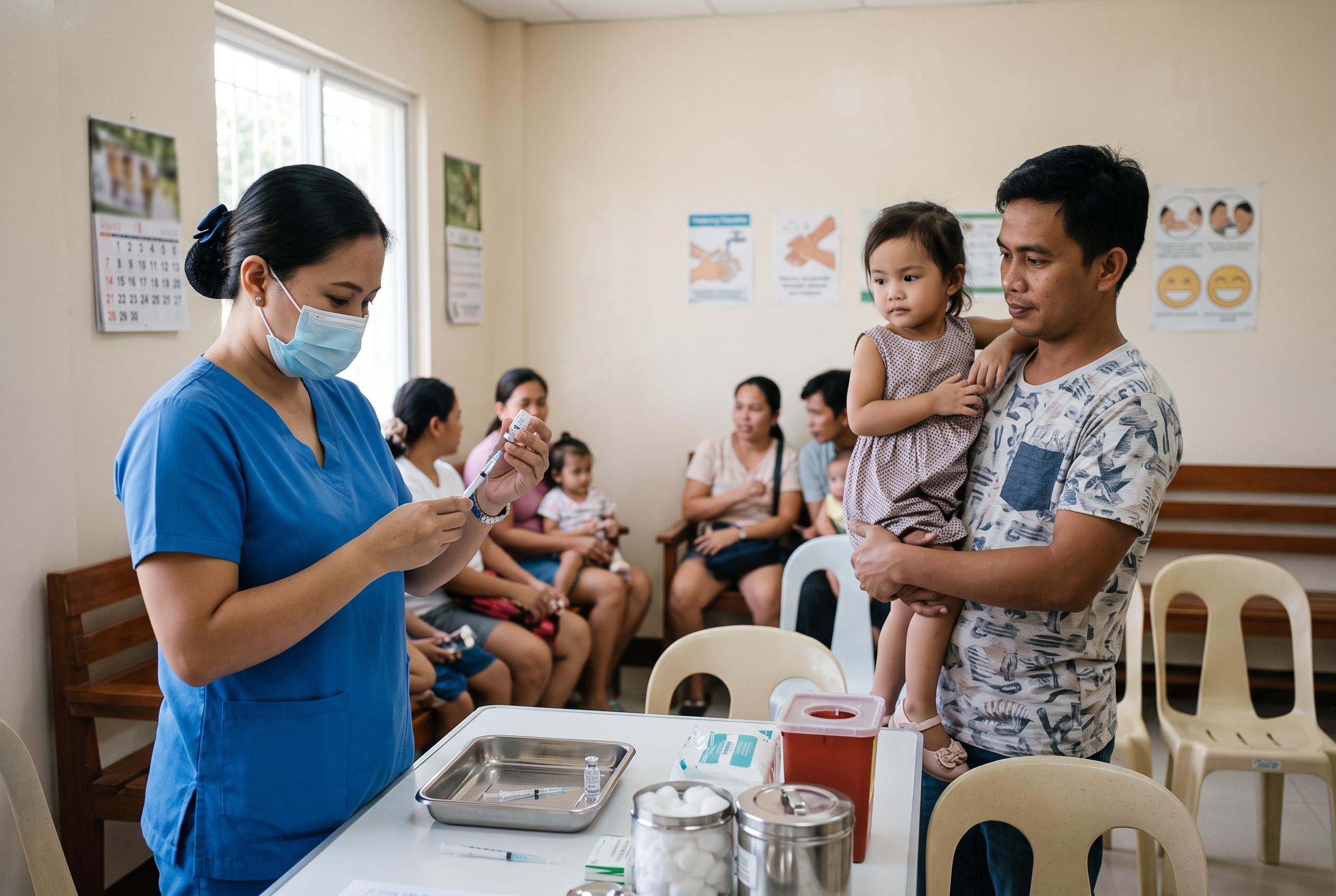

A recent measles-rubella immunisation drive in the Philippines has been targeted by viral falsehoods on social media, undermining efforts to restore confidence in vaccines and threatening progress against preventable diseases.
A measles-rubella vaccination campaign in the Philippines has become the latest target of online falsehoods, after a sick child’s post-jab illness was misrepresented on social media as proof that the vaccine had killed him. Doctors found no connection between the boy’s condition and the shot, and he recovered, but his photograph was then reused in viral anti-vaccine posts that spread widely on Facebook. The episode has sharpened concern among health workers that misinformation is undermining routine childhood immunisation at a time when the country is still trying to rebuild confidence in vaccines after years of low uptake.
According to AFP’s reporting from Manila, more than seven million Filipinos were vaccinated during this year’s campaign, while about 230,000 people declined the jab. The Department of Health said fears about side effects accounted for 66% of refusals and described social media influencers as a major driver of vaccine anxiety. That reflects a wider pattern seen across the country, where officials have struggled for years to restore confidence after falling immunisation rates helped fuel a polio resurgence in 2019 and repeated measles outbreaks.
The online rumours did not emerge in a vacuum. AFP said the claims recycled global conspiracy theories that gained momentum during the Covid-19 pandemic while also drawing on lingering anger over the Philippines’ botched dengue vaccine rollout a decade ago. Daniel Fritz Silvallana, a health communication researcher at Deakin University, told AFP that vaccine hesitancy in the Philippines cannot be reduced to a simple lack of scientific knowledge, but is also tied to trust, politics and people’s previous experience with public institutions.
One Facebook creator, Maharani Sona Shiloh, used the child’s photograph in a video that framed the vaccination drive as harmful to children and paired it with references to Donald Trump and the words “Everyday slaughter”. Facebook later removed the page, though AFP said three linked pages remained active. Shiloh denied spreading misinformation and described herself as a human rights advocate, while also saying she had been active in anti-vaccine circles for years. Her videos, AFP reported, have at times drawn millions of views and have promoted claims that vaccines contain dangerous substances and are part of a broader global plot.
For front-line health workers, the challenge is not only scientific but emotional. Wenna Mae Belen, a rural health worker in Sorsogon province, told AFP that some parents had grown frightened after watching the videos and that conversations could quickly become hostile. She said the answer was not confrontation, but patient discussion and respect for parents’ fears. That message is echoed by separate reports from Central Visayas and Mandaue City, where local health officials have said misinformation is contributing to low measles-rubella coverage and preventing vaccination teams from meeting daily targets. Fact-checkers in the Philippines have repeatedly stressed that the vaccines are safe and effective, with side effects generally mild and temporary, but public-health workers say rebuilding trust will take time.
Disclaimer: This content is for informational purposes only and is not intended to be a substitute for professional medical judgment, advice, diagnosis, or treatment.



