

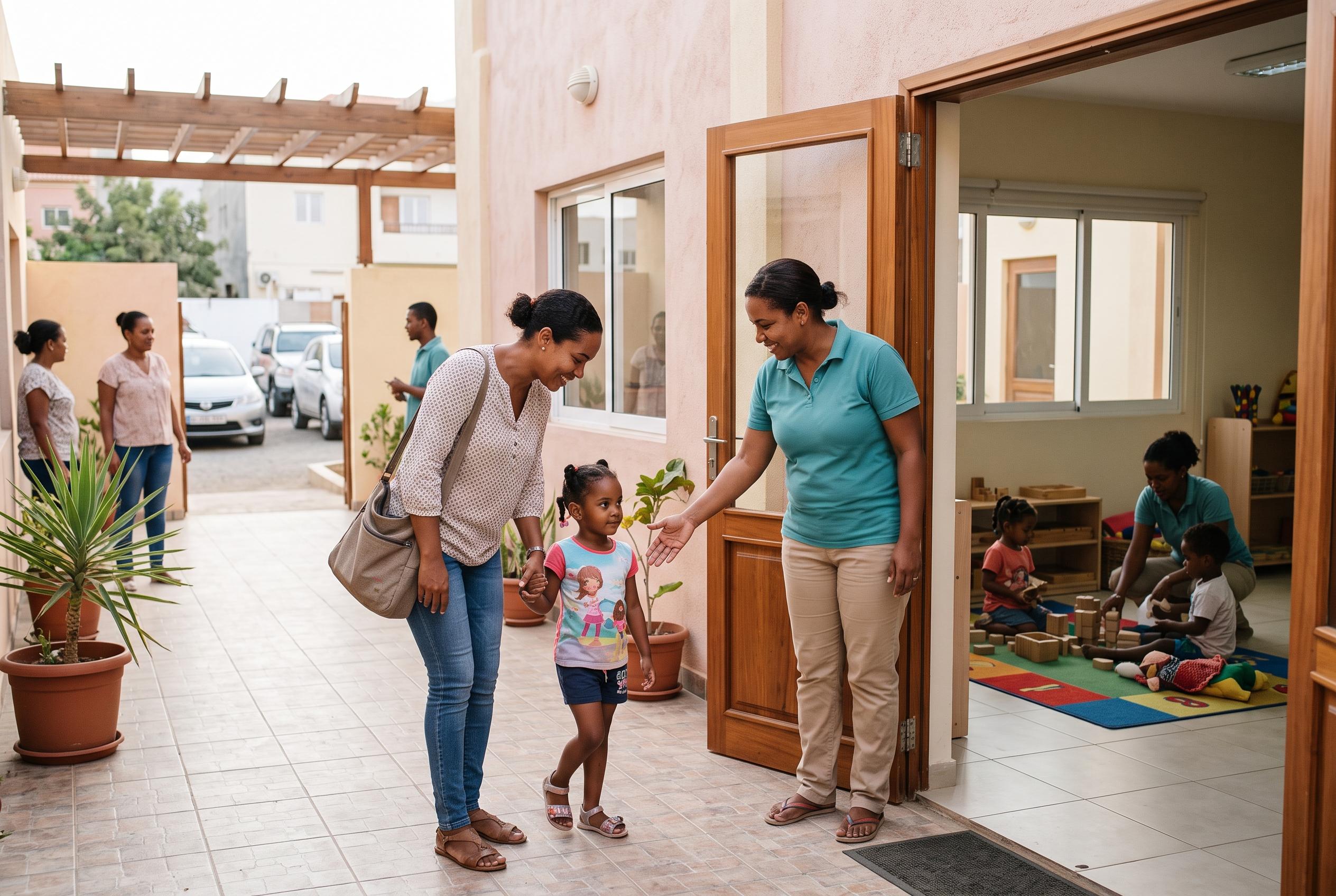

The Cabo Verde government is rolling out a new scheme to provide free or subsidised childcare for up to 1,000 children from low-income families, aiming to ease the burden on families and promote labour participation.
Cabo Verde’s government has said about 1,000 children aged up to five could gain free or subsidised access to crèches and nursery schools under a new childcare support scheme aimed at low-income families. The Ministry of Family, Inclusion, Social Development and Labour said the measure is designed first and foremost for households in vulnerable situations that are registered in the Single Social Registry, the country’s main social targeting system.
Under the scheme, the state will cover monthly fees at eligible childcare institutions, with payments sent directly to the provider once support is approved. Families must first find a participating crèche or nursery with places available, complete enrolment and submit the required paperwork, while ministry staff and municipal teams are expected to guide applicants through the process, according to the information released by the ministry.
The government says the policy is intended to ease the burden of childcare costs and prevent financial hardship from blocking access to early education and care. Officials have also framed it as a labour-market measure, arguing that more affordable childcare can make it easier for parents and other carers to work, study or pursue income-generating activities while children spend time in a setting that supports development and socialisation. The campaign to explain the scheme, launched on 18 September under the slogan “Cuidar é investir no futuro”, is being promoted through broadcast media and digital channels.
The announcement fits into a broader push to expand childcare in Cabo Verde, including a separate additional fund linked to the Human Capital Project that the government says is backed by the World Bank to the tune of 3.75 million dollars. According to an official statement on the government’s website, that fund is meant to strengthen quality childcare services and widen access, with particular emphasis on Sal, Boa Vista, São Vicente and Santiago. The government has also highlighted the role of the Single Social Registry, created in 2018, as the key mechanism for directing social benefits to households most in need.
Disclaimer: This content is for informational purposes only and is not intended to be a substitute for professional medical judgment, advice, diagnosis, or treatment.



