

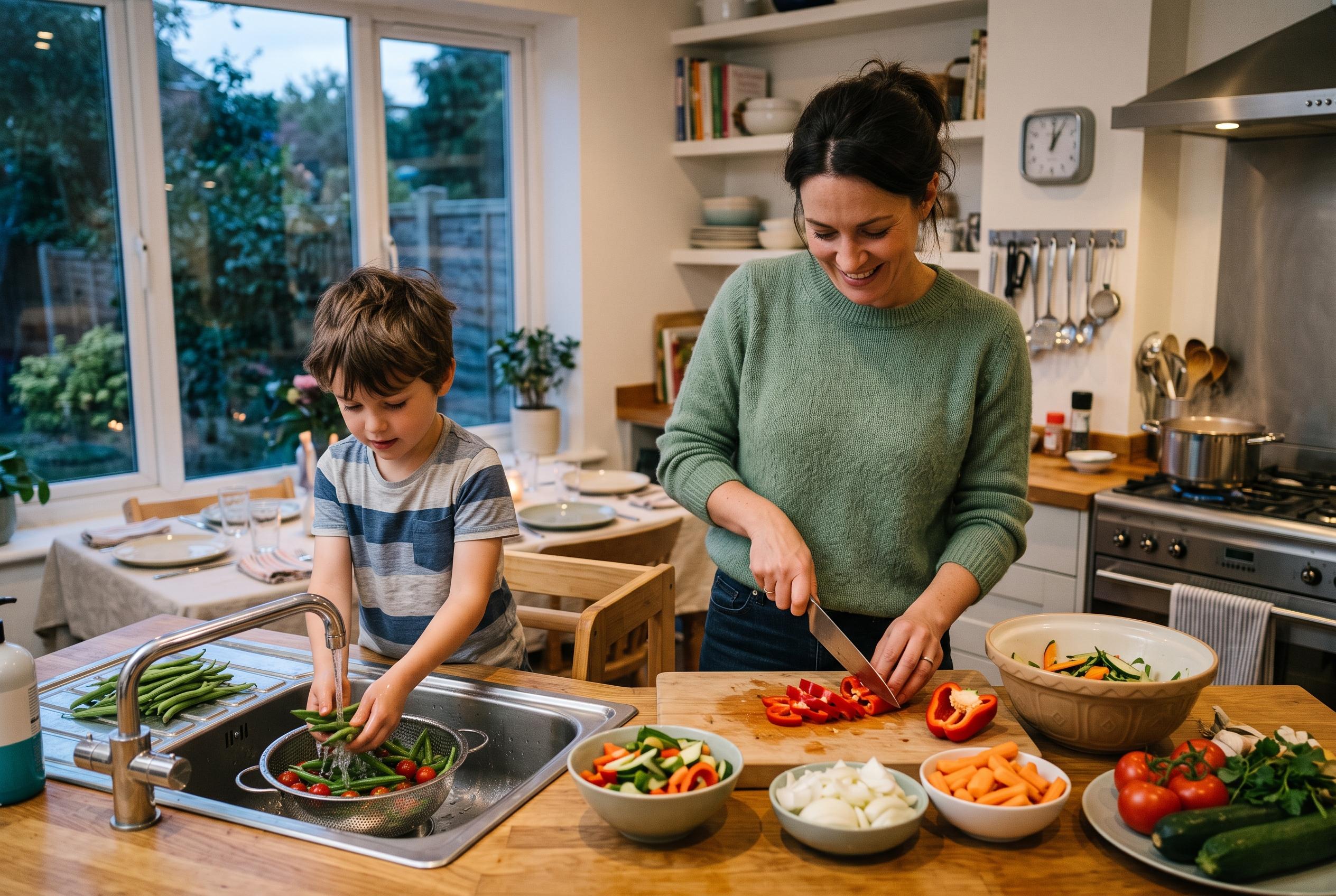

Adopting predictable routines, simple meal options, and involving children in food prep can ease busy parents’ efforts to maintain healthy eating habits and reduce stress at mealtimes.
For many parents, the hardest part of feeding children is not choosing healthy foods but finding a rhythm that holds together on a busy day. A balanced routine does not need elaborate cooking or a perfectly ordered kitchen; it depends more on consistency, planning and a few repeatable meals that make breakfast, lunch and dinner easier to manage. Healthline says children do best when meals and snacks follow a predictable pattern, with a range of nutrient-dense foods offered across the day rather than pressure at any one sitting.
A sensible starting point is breakfast. Rather than reinventing the morning meal each day, families can lean on a small set of familiar options such as oatmeal, eggs on toast or yoghurt with cereal. The aim is to remove decision-making from the rush hour, and a little preparation the night before can help: bowls can be set out, ingredients portioned and overnight oats chilled in advance. Healthline and Children’s Healthcare of Atlanta both note that predictable routines and advance preparation can reduce stress and make healthier choices more realistic on school mornings.
The same principle works later in the day. Instead of building an elaborate weekly menu, parents can use a few dependable ingredients, such as rice, pasta, potatoes, beans, eggs and chicken, then add fruit or vegetables to keep meals varied. Children’s Healthcare of Atlanta recommends making balanced meals simpler by combining foods from different groups, while other guides on family meal planning suggest a plate built around vegetables, protein and whole grains. That approach can turn leftovers into a sandwich filling, a wrap or a quick bowl meal without forcing the family into a brand-new recipe every night.
Snacks work best when they are intentional rather than endless. Healthline recommends a steady schedule of meals and snacks instead of all-day grazing, and suggests offering a mix of fruits, vegetables, protein and grains to support stable energy. Simple, ready-to-grab options such as yoghurt, cheese, crackers and fruit can help families avoid the late-afternoon slump, especially when portions are prepped in advance and stored where children can reach them. The point is not to eliminate snacks but to make them part of the day’s structure.
Children can also play a modest role in the process. Younger children can wash produce or choose between two fruit options, while older children can measure ingredients or assemble part of a meal. Children’s Healthcare of Atlanta says involving children in preparation can make food feel more familiar and appealing, and it may also reduce conflict at the table. Just as important, experts caution against turning meals into contests, rewarding children for eating or labelling foods as “good” or “bad”, because that can make picky eating worse rather than better.
For parents trying to make nutrition more reliable, the larger lesson is that progress usually comes from small habits repeated often. Meal prepping can save time, reduce waste and cut down on last-minute choices, according to Fit and Well, while balanced meal planning becomes easier when families start with one meal, then build from there. A flexible routine will not solve every difficult mealtime, but it can give busy households a steadier baseline and make healthy eating feel less like another demand on an already crowded day.
Disclaimer: This content is for informational purposes only and is not intended to be a substitute for professional medical judgment, advice, diagnosis, or treatment.



