

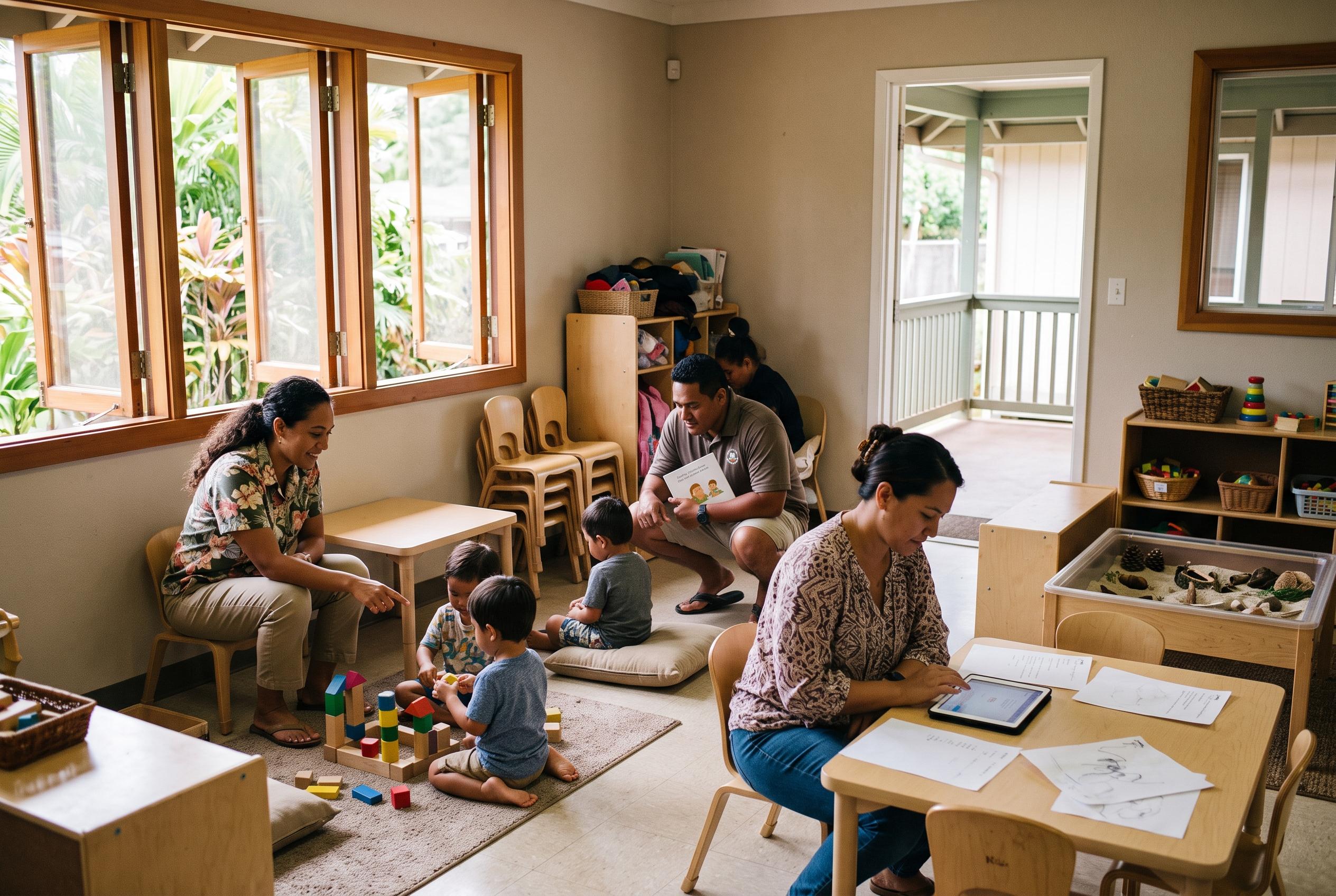

Despite limited space and workforce challenges, Hawaiʻi is prioritising quality and long-term accessibility in its preschool expansion, aiming for universal access by 2032 while improving early learning standards and infrastructure.
Hawaiʻi’s debate over preschool expansion should not be reduced to a simple tally of seats, even as critics point to the loss of some places since the state’s recent push began. The broader picture, according to University of Hawaiʻi reporting and state education officials, is that the islands have spent years trying to build a mixed early learning system that reaches more children, improves quality and keeps families from being priced out of care. That effort has included public prekindergarten, subsidies for community-based providers, and investments in facilities and workforce training.
University of Hawaiʻi researchers said the state still falls short of universal access, with only about 55% of 3- and 4-year-olds enrolled in preschool. They said Act 46 set a goal of universal access by 2032 and that the state has committed $200 million for new facilities, while the Preschool Open Doors programme has expanded sharply, with enrolment rising 90% from 2023. The same reporting also noted that childcare worker shortages remain a major obstacle to expansion, even as the policy case for preschool remains strong: children who attend are more likely to be ready for kindergarten and, over the long term, to graduate from high school and earn more as adults.
State data suggests Hawaiʻi is expanding with an unusually strong emphasis on quality. The Hawaiʻi State Public Charter School Commission said the state-funded programme has met all 10 of the National Institute for Early Education Research’s quality benchmarks for four consecutive years, covering teacher qualifications, class size, staff-to-child ratios, learning standards and health screenings. It also said enrolment in state-funded preschool reached 1,637 children in the 2024-25 school year, up by 611 from the year before. A separate commission update said the previous year’s state-funded enrolment had been 1,026 children, underscoring how quickly the programme has grown even if it remains far from universal.
Infrastructure remains the limiting factor. The Hawaiʻi School Facilities Authority said more than 8,000 3- and 4-year-olds still cannot attend public preschool because there is not enough space, leaving families on wait-lists or with no affordable option at all. To close that gap, the authority is aiming for 405 new classrooms by 2032 and is pursuing a combination of renovated spaces on public school campuses, new build partnerships and support for community-based projects. The larger policy argument, as the Civil Beat essay makes clear, is that the real measure of progress is not whether the total number of seats rises every year, but whether Hawaiʻi builds a durable system that families can actually use.
Disclaimer: This content is for informational purposes only and is not intended to be a substitute for professional medical judgment, advice, diagnosis, or treatment.



