

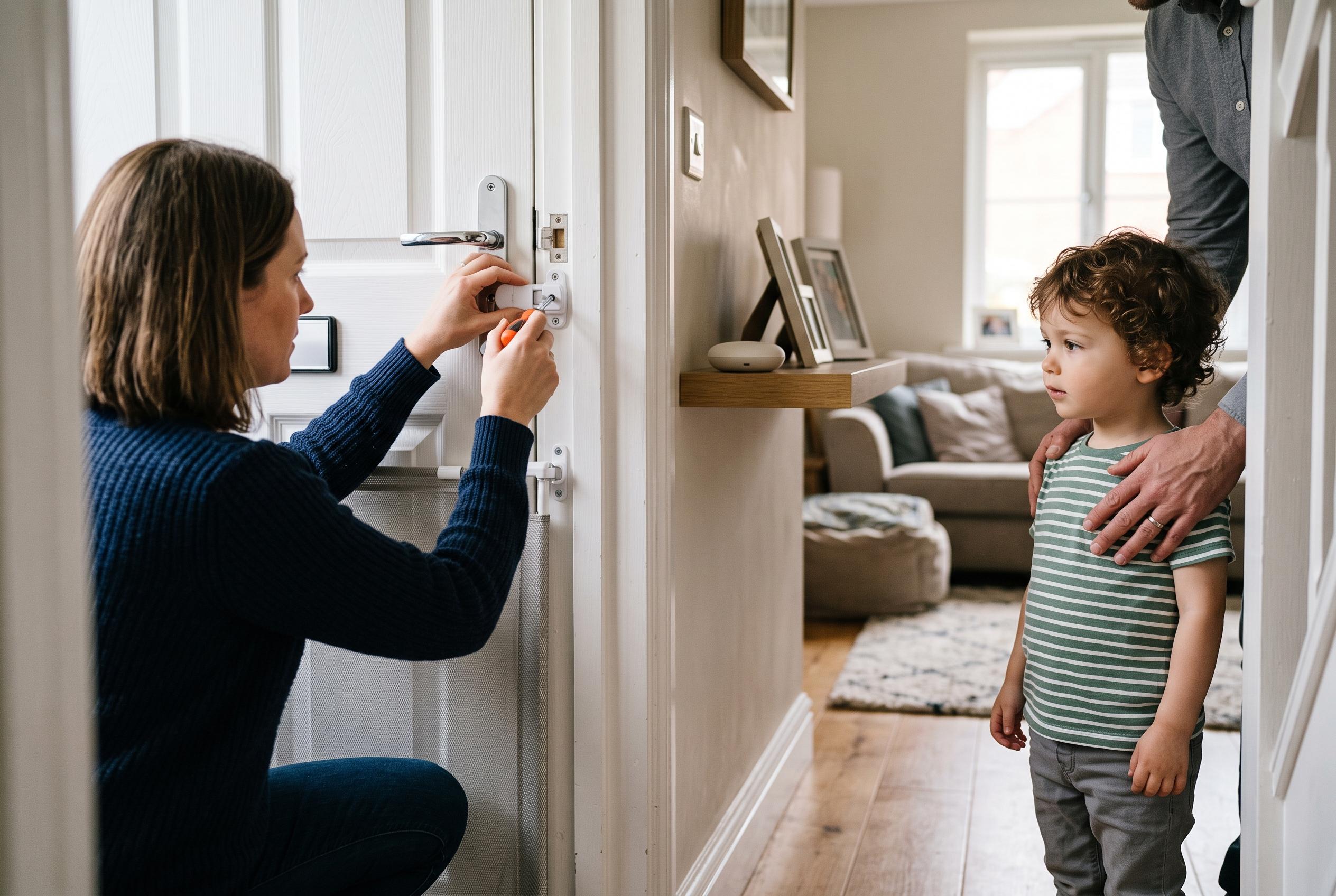

A comprehensive approach to home safety, combining physical barriers, technology, and behaviour support, is essential for protecting children who are prone to elope, according to experts from Marcus Autism Center and safety organisations.
Children who elope need more than a single lock on a door. The safest homes are built in layers: secure every exit a child can reach, remove easy climbing routes, add alarms that tell adults the moment something opens, and keep a way to find the child quickly if prevention fails. Marcus Autism Center says elopement is often tied to either seeking something desired or escaping a stressful situation, which is why a plan that addresses both the child’s behaviour and the home environment is more effective than relying on one device alone.
The first step is to map the house the way a child would use it. That means walking each room from inside, at the child’s height, and listing every possible exit: front and back doors, sliding patio doors, the garage, basement access, reachable windows, and even pet doors. Best Kid Shop’s safety checklist recommends noting triggers and patterns as well, because many incidents happen during transitions, busy periods or moments of distress rather than at random. If a child has already escaped once, the route, time of day and what happened just beforehand can reveal the weakest point in the house.
Once those routes are known, physical barriers should be doubled up. GRSCorp recommends high-mounted deadbolts, door and window chime alarms, fencing with self-latching gates and making sure all adults know how the system works. Marcus Autism Center similarly advises locks that a child cannot operate, plus alarms on doors and windows so caregivers get an alert even if they are in another room. For sliding doors and windows, the goal is not just to make them harder to open, but to slow the child long enough for an adult to intervene. Windows should be secured with limiters or screw-in guards, because removable screens are not a real safety measure.
The yard and garage deserve the same scrutiny. A fence is only as strong as its gate, and anything climbable near the perimeter can undo the barrier in seconds. That means moving bins, chairs, ladders and play equipment away from fences, checking for spots where a child could hoist themselves over, and making sure pool gates and other water hazards are closed and latched. Water is a particular concern because wandering near pools, ponds or even a neighbour’s yard can become fatal very quickly. Home safety guidance from several autism resources stresses that outdoor risks should be treated with the same seriousness as the front door.
For many families, the most useful safety net is the one that starts after a child has already left. Wearable GPS devices, Project Lifesaver-style programmes and other tracking tools can shorten the search, especially for children who are non-verbal or unlikely to respond to their name. Marcus Autism Center recommends keeping identifying information close to hand, including a recent photo and details that search teams or police may need straight away. Some parents also use bracelets or cards with a caregiver’s phone number. The point is not to replace supervision, but to reduce the time between disappearance and recovery.
The home plan should also include communication supports that give the child a way to ask for what they need before they bolt. Behaviour specialists commonly recommend teaching a break card, sign, word or other simple request that functions as an alternative to leaving. Practising that skill when the child is calm is far more useful than trying to teach it in the middle of a crisis. A clear first-then routine, predictable cues and praise for staying near an adult can all help reduce the urge to run, particularly during transitions or moments of overload.
Preparation matters as much as hardware. Families should write a short elopement response plan that names every exit, identifies who watches siblings, who calls 911 and what information should be shared with responders. Marcus Autism Center advises keeping child details ready for searchers, while other autism safety guides stress briefing neighbours, grandparents, babysitters and schools so the response is consistent everywhere. If the child is old enough to learn it, teaching a name, phone number and address can add another layer of protection. For younger children, that information may need to be attached to them directly.
The most important habit is to test and review everything. Alarms need fresh batteries, locks need checking, trackers need charging and adults need to practise the response before a real emergency happens. Families should review the plan after any incident and again as the child grows, because a barrier that works for a toddler may be defeated later by an older, stronger child. The safest approach is not to assume one fix will solve the problem, but to build a home that gives adults more time, more warning and more ways to recover quickly if a child gets out.
Disclaimer: This content is for informational purposes only and is not intended to be a substitute for professional medical judgment, advice, diagnosis, or treatment.



