

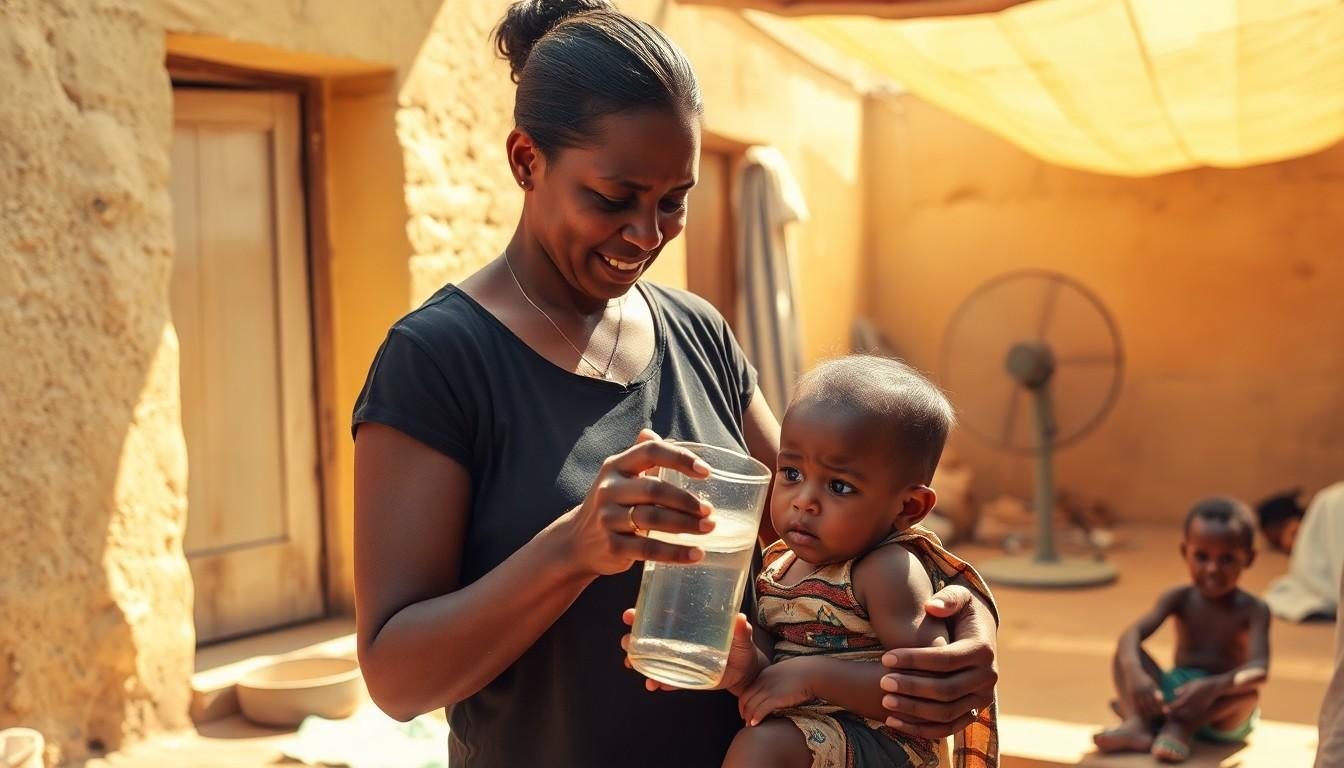

A new study across 32 countries in sub-Saharan Africa reveals that simultaneous exposure to conflict and extreme heat significantly worsens nutritional outcomes for children under two, especially among girls, children of less-educated mothers, and urban populations.
A new study spanning 32 countries in sub-Saharan Africa suggests that conflict and extreme heat can combine to worsen the health of very young children, with girls, children born to less-educated mothers and urban residents appearing especially vulnerable. Drawing on georeferenced data from the Demographic and Health Survey programme, conflict records from the Uppsala Conflict Data Programme and climate data from the Climate Hazards Center, the researchers examined the weight-for-height scores of 188,412 children aged 0 to 23 months and found that armed violence and high temperatures were each linked to poorer outcomes. The findings point to a broader warning: children exposed to overlapping social and environmental shocks may face greater nutritional harm than studies that examine each stressor separately would suggest.
The study focused on weight-for-height, a standard measure used to identify acute malnutrition and recent illness. The authors restricted their analysis to the 12 months before each child’s measurement and looked at conflict events within 10 kilometres of the survey cluster, alongside local temperature and rainfall anomalies. In models that treated the two forces separately, conflict exposure was associated with a modest but meaningful decline in weight-for-height, while higher temperatures also reduced scores. Precipitation showed little consistent effect. When the researchers allowed conflict and climate to interact, however, the picture changed: the health penalty linked to violence was far steeper when it occurred during hot periods. In practical terms, conflict during above-average heat was associated with much larger drops in children’s weight-for-height than conflict during milder conditions.
The study also found signs that the burden is not evenly shared. According to the authors, female children and children born to mothers with less education experienced the strongest conflict-related losses during hot spells, while urban children also appeared especially exposed. Rural children, by contrast, did not show the same pattern of conflict-related decline, a result the researchers say may reflect differences in measurement, underlying vulnerability or the ways violence and heat are experienced in cities and countryside settings. The paper argues that these patterns reinforce the need to treat conflict, climate and child nutrition as interconnected rather than separate policy problems. It also notes that the risks may intensify as climate change accelerates and instability continues across the region, increasing the likelihood that households must cope with more than one shock at once.
Disclaimer: This content is for informational purposes only and is not intended to be a substitute for professional medical judgment, advice, diagnosis, or treatment.



