

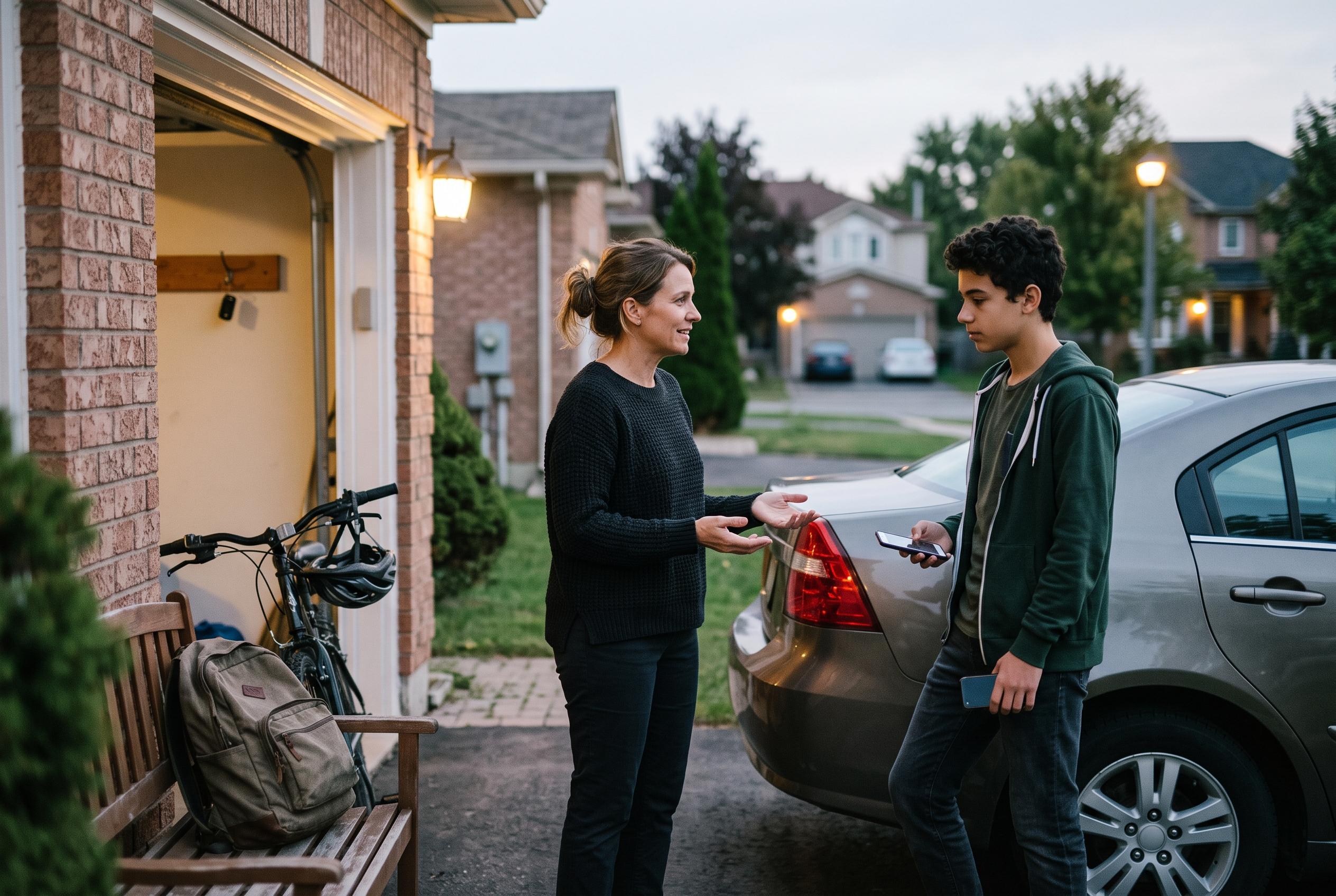

Recent research highlights that adolescents’ risk-taking behaviours are driven more by social and emotional factors than ignorance, prompting a shift towards context-aware parental guidance that balances independence with safety.
Teenagers do not usually take risks because they fail to understand danger. More often, they are drawn by what the danger seems to promise: status, belonging, excitement or a sense of independence. The Gottman blog argues that parents need to look beyond what could go wrong and consider what their teenagers think might go right.
That distinction is supported by developmental research. Laurence Steinberg has argued for years that adolescent risk-taking is shaped less by ignorance than by a mismatch between two systems that mature at different speeds: the brain’s reward circuitry, which becomes especially sensitive during the teen years, and the self-regulation networks that help people pause, plan and resist impulse. In that view, a teenager may understand the risks in a calm setting and still make a very different choice once emotions, peers or the prospect of reward enter the picture.
Evidence from laboratory studies points in the same direction. In work led by Bernd Figner, teenagers were more willing than adults to take risks when a task was framed in a more emotionally engaging way, but that gap disappeared in a more reflective setting. A separate study by Jason Chein found that adolescents took greater risks in a simulated driving task when friends were watching, even though those friends were in another room and offered no encouragement. The presence of peers alone was enough to alter behaviour.
For parents, that means the real conversation is not only about rules, but about context. A teenager deciding at home whether to accept a drink is not making the same decision as a teenager standing in a noisy room with friends, music and a chance to seem bold. The Gottman guidance suggests beginning with curiosity: ask what makes the risky choice appealing, rather than only repeating why it is dangerous.
That approach can make it easier to discuss the social side of refusal as well. Teenagers often need help imagining how a friend might react if they said no to a drink, declined to get into a car with a speeding driver or backed away from a stunt that might end up online. Practising those moments in advance can make the response feel more natural when the pressure is real.
Clear arrangements matter too. Parents are advised to know where their teenager is going, who will be there and how they will get home. The boundaries should be specific, especially around riding with anyone who has been drinking or using drugs. It also helps to agree beforehand on a back-up plan if circumstances change, including who to call and how to get home safely.
What follows after the outing can be just as important as the preparation. A calm, non-judgemental debrief gives teenagers space to explain what they hoped would happen and what actually did. That kind of conversation can be uncomfortable, but it helps parents stay connected to the motives behind a decision, not just the decision itself.
In the end, the goal is not to pretend that teenage risk-taking is harmless. It is to recognise that much of it is socially and emotionally intelligent, even when it is also dangerous. Parents who understand that tension are better placed to guide their teenagers towards safer choices without losing sight of the need for independence.
Disclaimer: This content is for informational purposes only and is not intended to be a substitute for professional medical judgment, advice, diagnosis, or treatment.



