

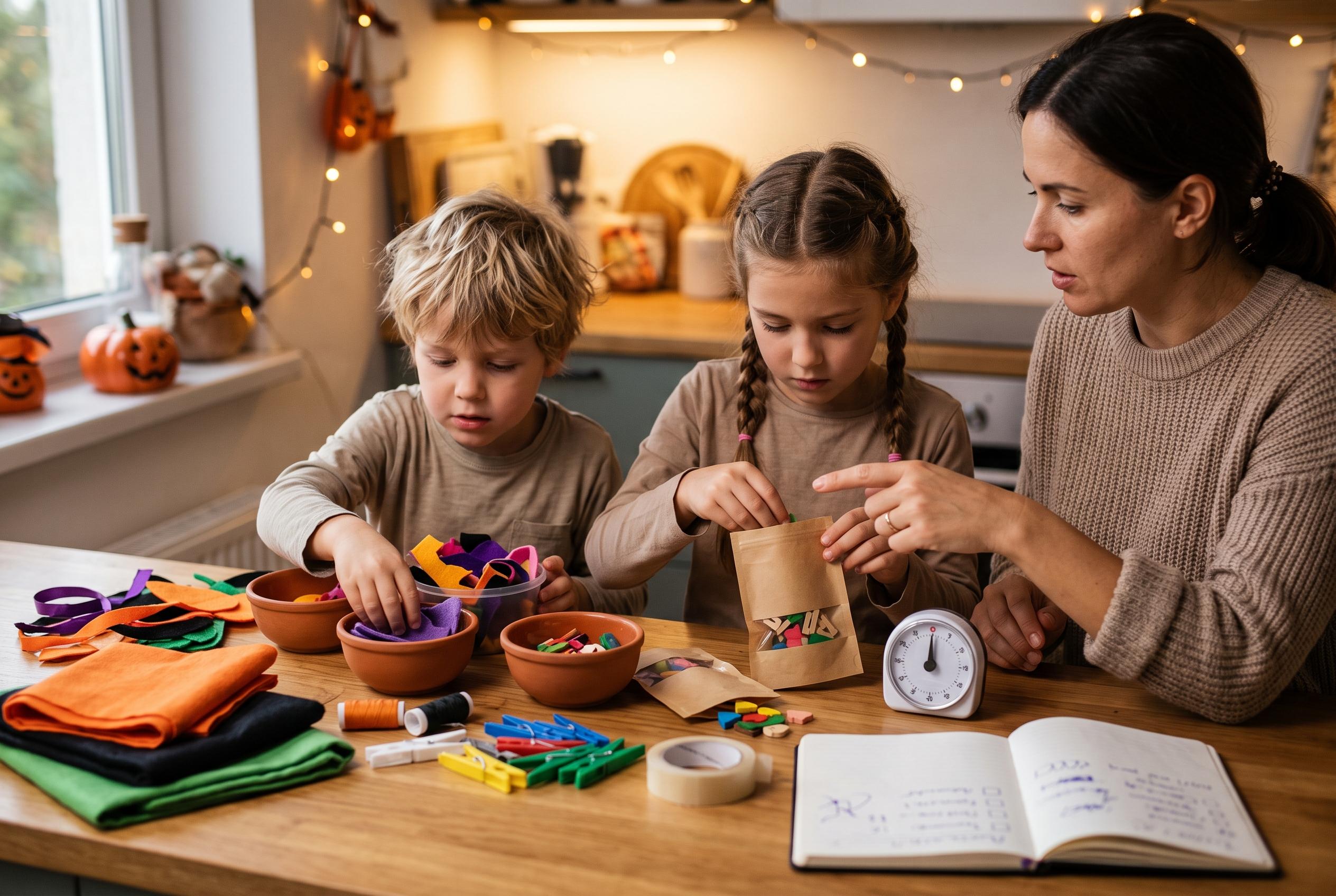

Experts highlight how Halloween’s festive activities can serve as natural opportunities to boost children’s planning, organisation, memory, and self-regulation skills through fun, hands-on experiences.
Halloween may be best known for costumes and sweet treats, but it can also be a useful training ground for children’s executive functioning skills. According to Dr Emily Levy, founder of EBL Coaching, the holiday offers natural chances to practise planning, organisation, time management, working memory, self-control and reflection in ways that feel playful rather than forced.
That matters because executive functioning underpins many everyday tasks: getting ready on time, following routines, remembering instructions, starting work and seeing responsibilities through. Levy notes that difficulties in these areas are often especially visible in children with ADHD and learning disabilities, though many children benefit from support in these skills. The advantage of Halloween, she says, is that it turns practice into something concrete and immediate.
One simple place to start is costume planning. Instead of adults handling every detail, children can be involved in deciding what they want to wear, what materials are already available, what still needs to be bought or made and when everything needs to be finished. Younger children can use picture checklists, while older ones can work from written lists with deadlines. Levy argues that this helps children break a larger project into smaller steps, a key part of planning and task initiation.
Getting ready for trick-or-treating can also become a lesson in time management. Levy suggests asking children to estimate how long it will take to put on a costume, add face paint or accessories and gather the items they need, then comparing those guesses with the real time involved. That sort of practice can help children better understand the passage of time, a skill many find hard to judge accurately. The same method can later be applied to homework, where children can learn to estimate how long a task should take and then review the result.
Halloween can also support working memory, the ability to hold information in mind while using it. Before heading out, parents can ask children to repeat a list of items they need, visualise them or write them down. During trick-or-treating, children can be encouraged to remember which houses they have already visited and what route comes next. Levy says the point is not to make the evening feel academic, but to create small, low-pressure chances to manage information independently.
Once the candy comes home, the holiday can offer more opportunities to build organisation and self-regulation. Children can sort sweets by type, size, flavour or whether they want to eat them now or save them for later. That kind of categorising is not just useful for Halloween; it mirrors the way children can learn to organise backpacks, folders or digital files. Families can also discuss a sensible plan for when and how much candy to eat, which gives children a chance to practise delayed gratification and decision-making. These are the same habits that help them wait their turn, resist distractions and finish work before moving on to something more enjoyable.
The holiday can be broadened even further through hands-on activities. Occupational therapy resources and classroom materials aimed at Halloween regularly use threading, sorting, scooping and scavenger hunts to strengthen fine motor control, problem-solving and attention. That wider body of seasonal activity shows why Halloween works so well as a learning setting: it naturally combines movement, planning and sensory engagement. Levy also recommends giving children a chance to plan a Halloween event from start to finish, whether that means a film night, craft project, pumpkin carving session or small party, then talking afterwards about what went well, what was harder than expected and what they might do differently next time. She says that kind of reflection helps build metacognition, the ability to think about one’s own thinking, which can support greater independence in school.
Disclaimer: This content is for informational purposes only and is not intended to be a substitute for professional medical judgment, advice, diagnosis, or treatment.



