

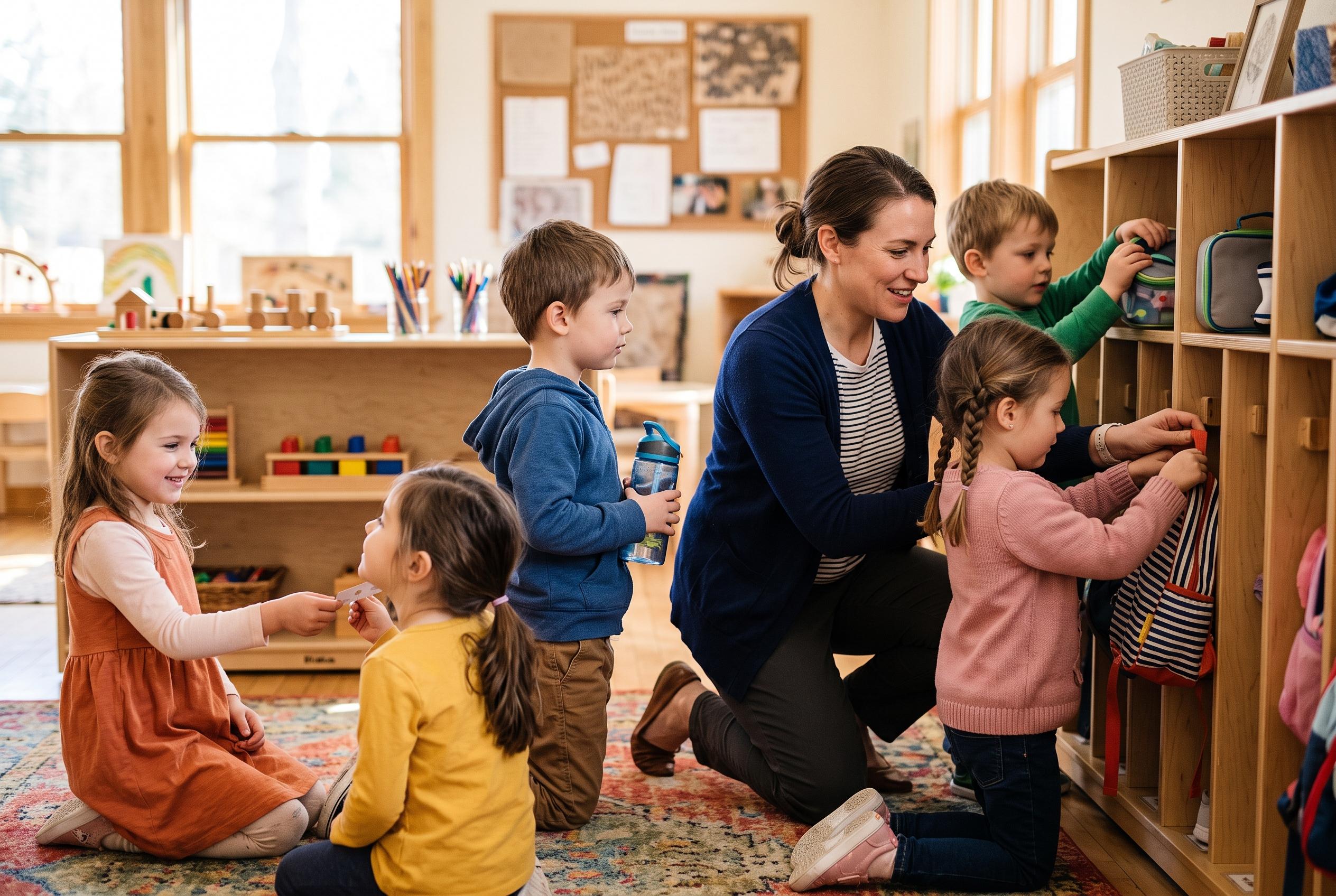

A detailed account of how a pre-primary teacher uses simple routines and language to foster kindness, responsibility, and social skills among young children, demonstrating that early education goes beyond academics to shape lifelong habits.
In a pre-primary classroom, the smallest routines can carry the greatest weight. That is the central lesson from Alekhya Bellapu’s account of observing Sutapa Das’s LKG class, where snack time, lining up, handwashing and even a simple game were used to build habits, confidence and care. The classroom may have been designed for young children, but its purpose was clear: to help them learn not only letters and numbers, but also how to live and work with others.
Bellapu describes walking into the room while the children were eating, and finding not noise or disorder, but a calm rhythm of conversation, sharing and laughter. When one child had forgotten a snack box, Das responded without fuss by asking support staff to fetch food from the canteen. That small act, Bellapu writes, reflected a wider ethic in the room: kindness was not treated as an extra, but as part of daily teaching.
The lesson continued in the way Das framed ordinary tasks. Rather than issuing blunt commands, she used language that made cooperation feel natural. Children were reminded to make space for one another in line, to finish eating carefully, and to clean up because others would otherwise be left with the work. In Bellapu’s telling, the result was discipline that came from understanding, not from fear. The children were not merely obeying; they were beginning to recognise their own responsibility to the group.
That approach aligns closely with what early-years specialists say about social and emotional learning. Education groups such as Pre-K Pages and The Goddard School have argued that preschool is a crucial stage for building self-awareness, empathy, relationship skills and self-regulation. They also stress that play, when used deliberately, can reinforce those lessons. In Das’s classroom, a simple trick game in which the teacher said one thing and did another was not just a moment of amusement. It became a way for children to practise attention, identify the purpose of an activity and speak about what they had learned.
Bellapu also notes how Das drew quieter lessons out of reflection. When the children were asked what had gone well and what felt difficult, they answered with striking directness. One child spoke proudly of counting well; another admitted to struggling. That kind of honest self-assessment, often seen as advanced for such young pupils, was made accessible through simple questions and a reassuring tone. The same was true of the classroom’s broader social-emotional culture: children were encouraged to wait their turn, respect different answers, ask before moving and offer thanks when peers helped them.
What emerges from Bellapu’s account is not an idealised picture of a perfect classroom, but one shaped by steady practice. Hyperactive children were not shamed; they were given useful jobs such as handing out books. Children were not silenced; they were redirected. Even the room’s colourful displays, Bellapu suggests, could not outshine the teacher’s presence. Das’s calm voice, thoughtful language and carefully chosen activities made the classroom feel purposeful.
For parents and educators, the story offers a useful reminder. Early schooling is not only about academic readiness. It is also where children begin to learn how to listen, share, reflect and contribute. The best pre-primary teaching, as Bellapu shows, is often invisible in its method and profound in its effect. It plants habits that may seem small in the moment, but can shape a child’s learning and character for years to come.
Disclaimer: This content is for informational purposes only and is not intended to be a substitute for professional medical judgment, advice, diagnosis, or treatment.



