

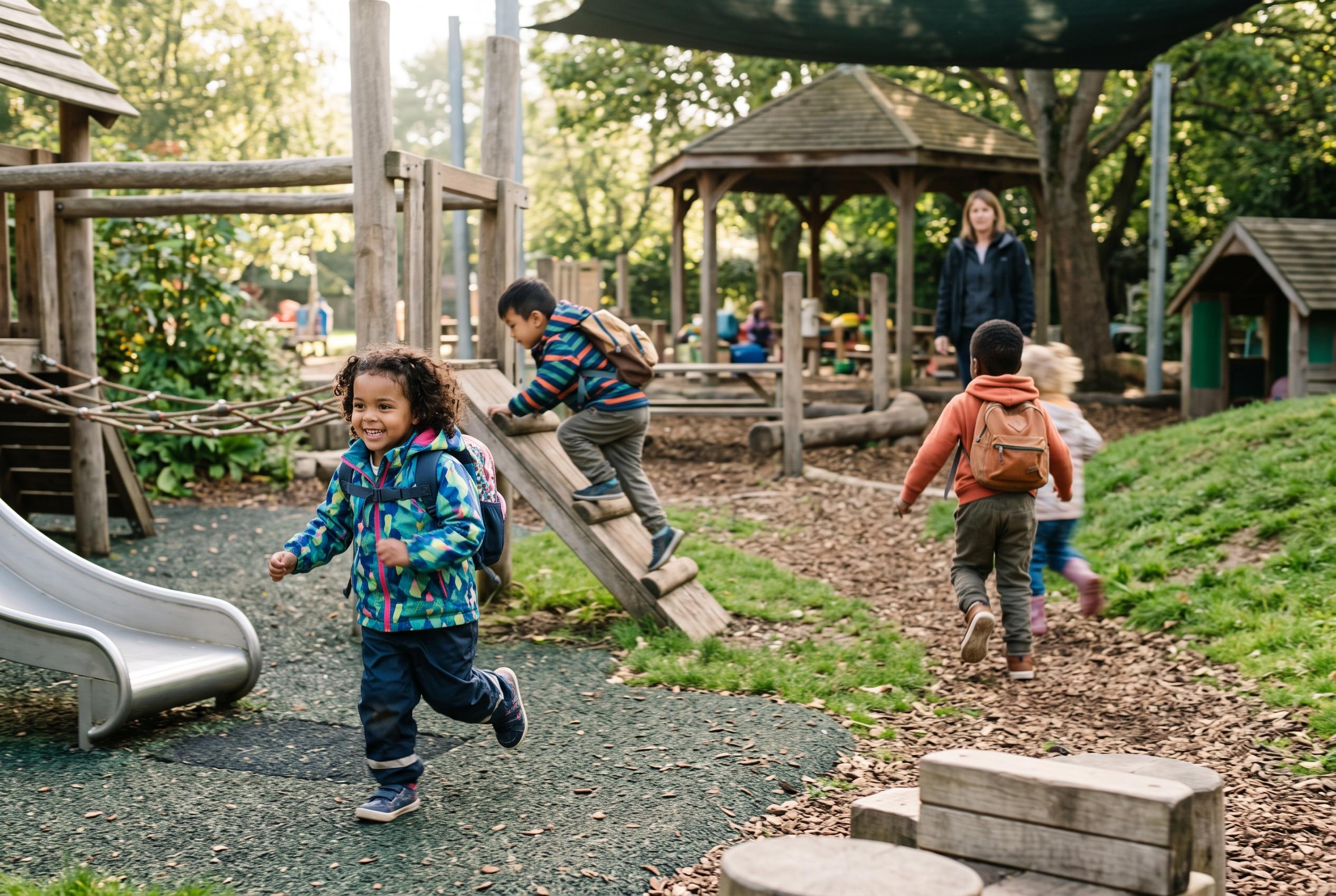

An international study finds that three- and four-year-olds average 18,000 steps daily, with significant variations influenced by environment, income, and gender, challenging fixed step targets for early childhood activity.
Children aged three and four are far more active than many adults assume, averaging roughly 18,000 steps a day, according to an international study published in The Lancet Child & Adolescent Health. The research, which examined more than 3,500 children in 44 countries, used movement sensors worn at the hip for at least three days between 2018 and 2025. The weighted median was 18,542 steps a day, meaning half the children recorded more and half recorded less. Three-year-olds averaged about 17,500 steps, while four-year-olds came close to 19,000.
The spread was striking. At the low end, some children recorded only about 1,100 steps in a day, while the most active reached nearly 29,800. That gap suggests that lifestyle, environment and family routines can shape movement levels very early in life. The study’s authors said physical activity in early childhood is essential for healthy growth and development, but they stopped short of recommending a fixed daily step target for pre-school children because movement is only one part of the picture. They argued that future research should also look at sitting time and sleep.
The findings sit alongside broader public-health advice that focuses on time spent moving rather than step counts. The World Health Organisation recommends that children aged three and four get at least 180 minutes of activity across the day, including at least 60 minutes at moderate to vigorous intensity. For adults, there is no official WHO step target. In separate reporting last year, ZEIT noted that researchers have increasingly challenged the old 10,000-step benchmark, with evidence suggesting that health gains can begin at lower levels.
The new childhood study also found clear differences between groups. Children in lower-income countries averaged about 23,000 steps a day, more than 5,000 above those in higher-income countries. Those in rural areas walked roughly 2,000 steps more than children in cities. Boys were also more active than girls at both ages, a pattern the researchers linked to differences in play, leisure activities and social expectations. They said girls and children with higher body weight, who also tended to take fewer steps, should be given particular attention in efforts to promote activity early in life.
Disclaimer: This content is for informational purposes only and is not intended to be a substitute for professional medical judgment, advice, diagnosis, or treatment.



