

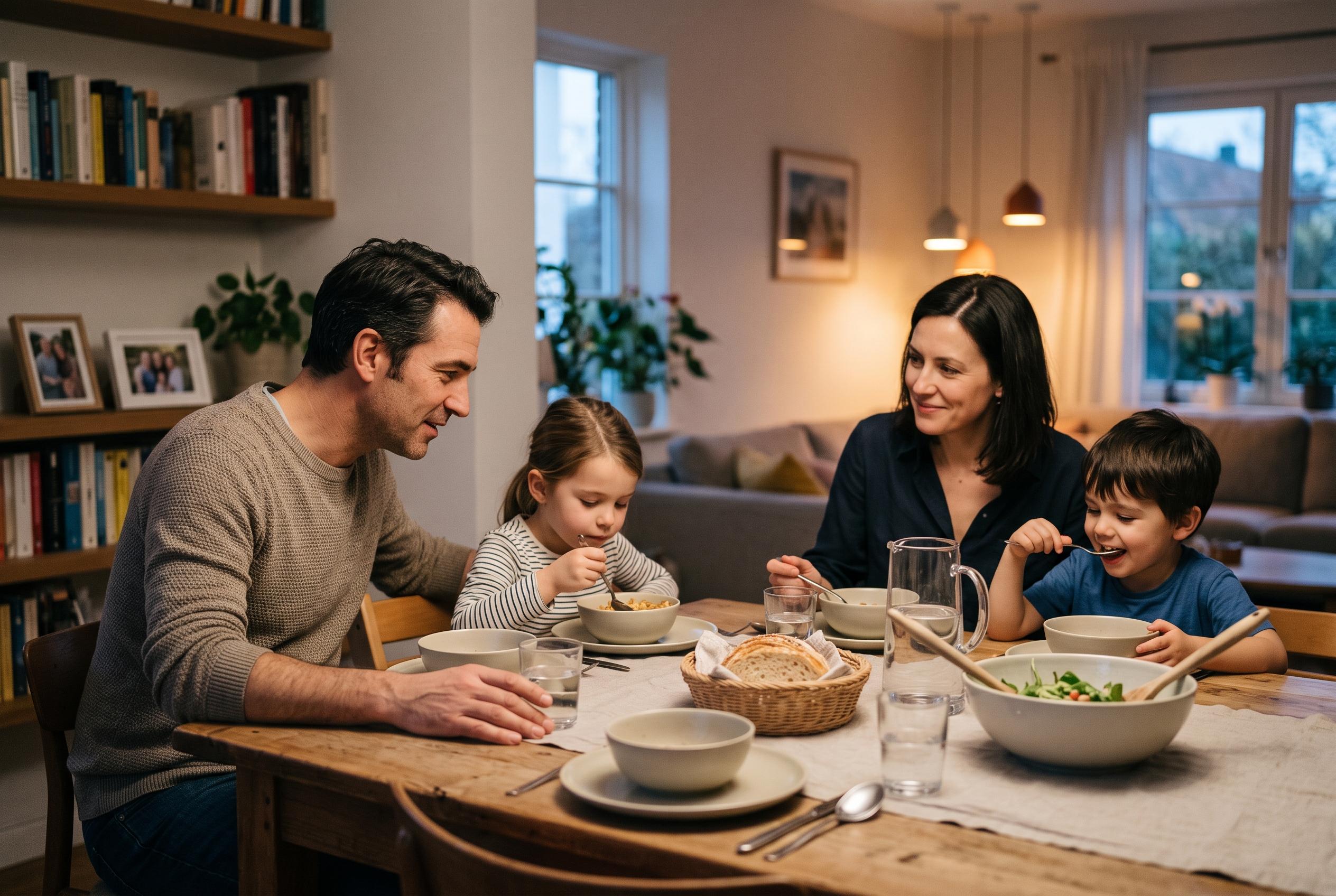

Swiss psychologist Ronia Schiftan advocates for a relaxed approach to family dinners, suggesting that less commentary and greater autonomy can transform stressful mealtimes into more enjoyable and less confrontational experiences.
For many parents, the evening meal can feel less like a family routine than a daily negotiation. A child who refuses vegetables, asks for pasta again or suddenly declares hunger just as bed is looming can turn an ordinary table into a battleground. Swiss nutritional psychologist Ronia Schiftan says the problem is often not the food itself but the expectations adults bring to the meal.
In her book “Wie Kinder essen”, Schiftan argues that parents frequently approach mealtimes wanting calm, balance and sameness from everyone at the table. But, as she has explained in interviews and reviews of her work, those hopes often collide with tired children, exhausted adults and a great deal of inherited anxiety about what counts as a proper meal. The result, she says, is that eating becomes loaded with tension long before anyone takes a bite.
Her advice for families caught in that pattern is disarmingly simple: step back. Schiftan recommends a short experiment in which parents stop commenting on how much children eat, whether they finish their plates or what order they eat in. No reminders to take “just one more bite”, no pressure to try something new and no moral judgement about sweet foods. According to Schiftan, that freedom often helps children test limits at first, but over time it can reduce the power struggle and make more foods feel ordinary again.
She also rejects the idea that children must be forced to taste everything. In her view, eating should be treated as part of bodily autonomy, not an exception to it. Children are still learning textures, flavours and mixtures, and many go through phases of highly selective eating. Rather than preparing a separate meal for every family member, Schiftan suggests offering a familiar “safe” food alongside the main dish, so a child can eat something recognised without turning dinner into a test.
That approach also extends to what adults cook for themselves. Schiftan has argued that parents should not feel obliged to make food they do not enjoy simply to model the “right” lesson. If a parent genuinely likes a dish, she says, the child is more likely to see that food as pleasurable rather than compulsory. She also notes that many parents underestimate how varied their children’s diets actually are, because the one rejected dinner tends to dominate their memory while fruit, yoghurt, bread or vegetables eaten at other times are forgotten.
Schiftan warns, too, that a child who appears disinterested at the table may simply be too tired or overstimulated to register hunger properly. A meal refusal at 6pm does not necessarily mean the child will not want something later in the evening. In those cases, she says, it is better to offer something small and plain later on, rather than insist on a full meal or send the child to bed hungry. Her broader message is that families often do better when they question old food rules, rather than passing them on without thinking. That, she believes, makes the table less stressful and, in the end, more enjoyable for everyone.
Disclaimer: This content is for informational purposes only and is not intended to be a substitute for professional medical judgment, advice, diagnosis, or treatment.



