

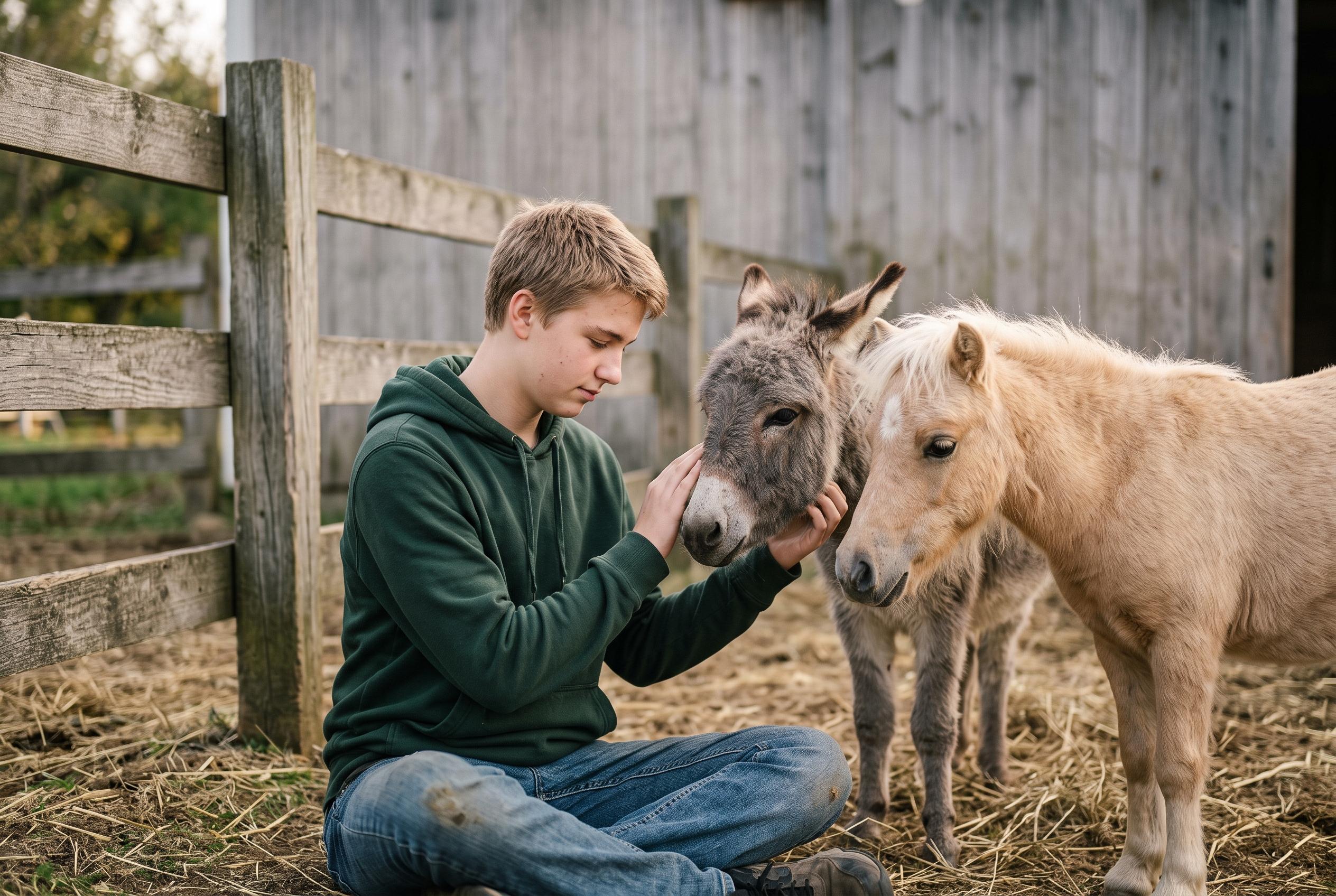

A new research study suggests that just three minutes of contact with miniature horses and donkeys can significantly improve teenagers’ emotional well-being, highlighting the potential of low-cost animal-assisted support for youth facing emotional challenges.
A few minutes with a miniature horse or donkey may be enough to ease teenage sadness, according to new research from the University of California, Davis. In a study published in Scientific Reports, researchers found that a three-minute interaction with the animals was linked with a measurable lift in mood among adolescents, offering a brief and low-cost example of how animal-assisted support might help young people facing emotional strain.
The study involved 61 teenagers and a small herd made up of two miniature horses, Olivia and Randy, and two miniature donkeys, Mary and Memphis. Some participants were asked to stroke the animals gently, while others scratched their necks in a way that imitates how equines groom one another. Researchers also taught the teens to recognise two signs of the animals’ body language: lip-wriggling, which signals enjoyment, and walking away, which indicates a need for space. After the session, the teenagers reported feeling calmer and less sad, nervous and lonely.
The strongest mood improvements appeared among the teens who paid attention to the animals’ signals. Those who noticed lip-wriggling reported bigger drops in loneliness, while those who recognised when an animal moved away recorded the greatest reductions in sadness. Rebecca Calisi Rodríguez, an associate professor of neurobiology, physiology and behaviour at UC Davis, said in a university release that the work raises “this beautiful possibility” that making the interaction better for the animal may also make it better for people. She added that a meaningful encounter may not require continuous engagement, and that the freedom for an animal to approach or leave may make the experience feel more authentic.
The findings add to wider interest in equine-assisted therapy, which is being used in settings ranging from schools and hospitals to therapeutic riding centres. Previous research has linked contact with horses to lower cortisol, the body’s main stress hormone, as well as calmer heart rates and benefits for trauma, anxiety, depression and mindfulness. The UC Davis team says the next step is to better understand when these interactions help both species, and how programmes can be designed so that care for the animal is part of the benefit for the person.
Disclaimer: This content is for informational purposes only and is not intended to be a substitute for professional medical judgment, advice, diagnosis, or treatment.



