

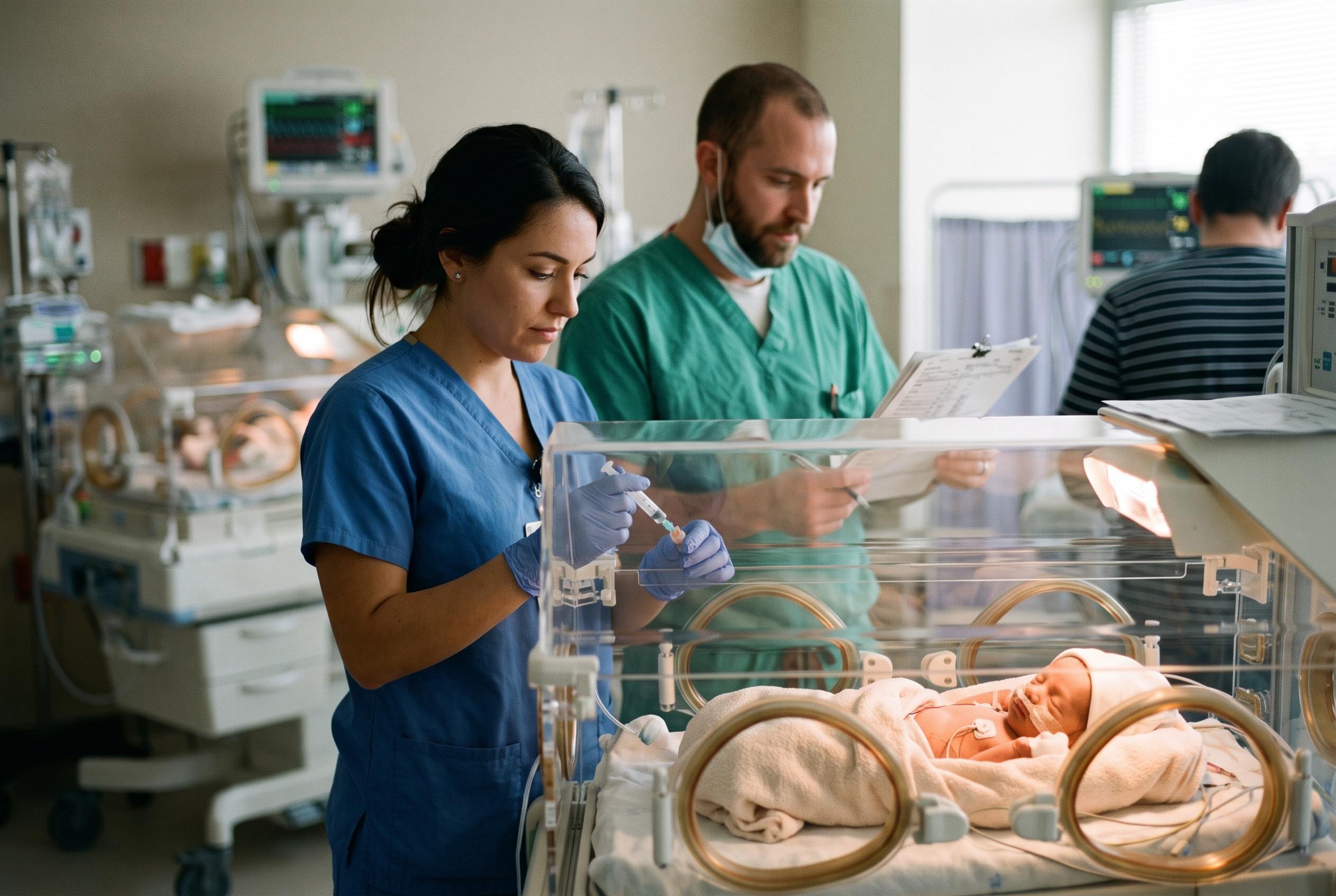

A large Swedish study provides new evidence that daily probiotic supplementation could significantly reduce the risk of necrotising enterocolitis and mortality in very premature babies, reigniting debate over safety and regulation in neonatal care.
A large Swedish study has added fresh evidence that probiotics may help protect premature infants from necrotising enterocolitis, a dangerous bowel condition, while also lowering the risk of death.
Writing in JAMA Network Open, researchers reported that babies born between 28 and 31 weeks of pregnancy who received a daily probiotic regimen had markedly lower rates of necrotising enterocolitis than those who did not. The study also found a lower risk of death and fewer cases that required surgery, although the authors and an accompanying editorial urged caution in interpreting the mortality benefit.
The findings come at a time when neonatologists in the United States remain divided over whether probiotics should be used routinely in neonatal intensive care units. The Food and Drug Administration has warned that probiotic products containing live bacteria or yeast can cause invasive, potentially fatal infections in very preterm or very low-birthweight infants, and it says no probiotic has been approved as a drug or treatment for infants. That regulatory stance has limited hospital use in the US even as a growing body of research has suggested possible benefit.
The Swedish analysis drew on a national neonatal quality registry covering infants born from 2017 to 2024. Sweden’s neonatal society recommended probiotic supplementation for very premature babies in 2020, giving the researchers a natural before-and-after comparison. The probiotic used in the study combined three strains , Bifidobacterium infantis, Bifidobacterium lactis and Streptococcus thermophilus , and was given once a day starting before the fourth day of life and stopped at 34 weeks postmenstrual age.
Among more than 4,600 infants, about one-third received probiotics. Necrotising enterocolitis occurred in 0.6 per cent of treated babies compared with 2.5 per cent of those who did not receive the supplement, while death occurred in 0.3 per cent versus 1.4 per cent. The researchers also reported a lower risk of surgical necrotising enterocolitis, a severe form that can require an operation to remove damaged bowel tissue.
Ayoub Mitha, the study’s lead author and a neonatologist and researcher at Karolinska Institutet in Stockholm, said the results made it less likely that the difference could be explained simply by overall improvements in neonatal care over time. Still, the paper’s editorial raised the possibility of immortal time bias, meaning babies had to survive long enough to receive the probiotic, which could make the treatment appear more protective against death than it really was.
The study’s findings fit with earlier reviews suggesting that probiotics can reduce necrotising enterocolitis in premature infants, particularly when multiple strains are used. A 2025 review of 60 trials involving more than 11,000 infants found a lower risk of the disease with probiotics, and other analyses, including Cochrane reviews, have reached broadly similar conclusions. Even so, Mitha said the Swedish results should not be automatically applied to every setting, because the babies were largely fed human milk and were given a specific three-strain product.
In the US, the debate is as much about safety and regulation as about efficacy. The American Academy of Pediatrics said in 2021 that available evidence did not support routine, universal probiotic use in premature infants, particularly those weighing less than 1,000 grams at birth, pointing to differences among products and trials as well as the lack of an FDA-regulated pharmaceutical-grade option. The FDA later issued additional warnings after reports of adverse events, including a death linked to probiotic use.
For now, the Swedish study strengthens the case that probiotics may help prevent one of the most feared complications of prematurity, but it also underscores why many clinicians want clearer regulation, better product standardisation and more safety data before broad adoption. A single-strain product from Infant Bacterial Therapeutics is now under FDA review, and if it is approved, some neonatologists believe probiotic use in US NICUs could begin to expand again.
Disclaimer: This content is for informational purposes only and is not intended to be a substitute for professional medical judgment, advice, diagnosis, or treatment.



