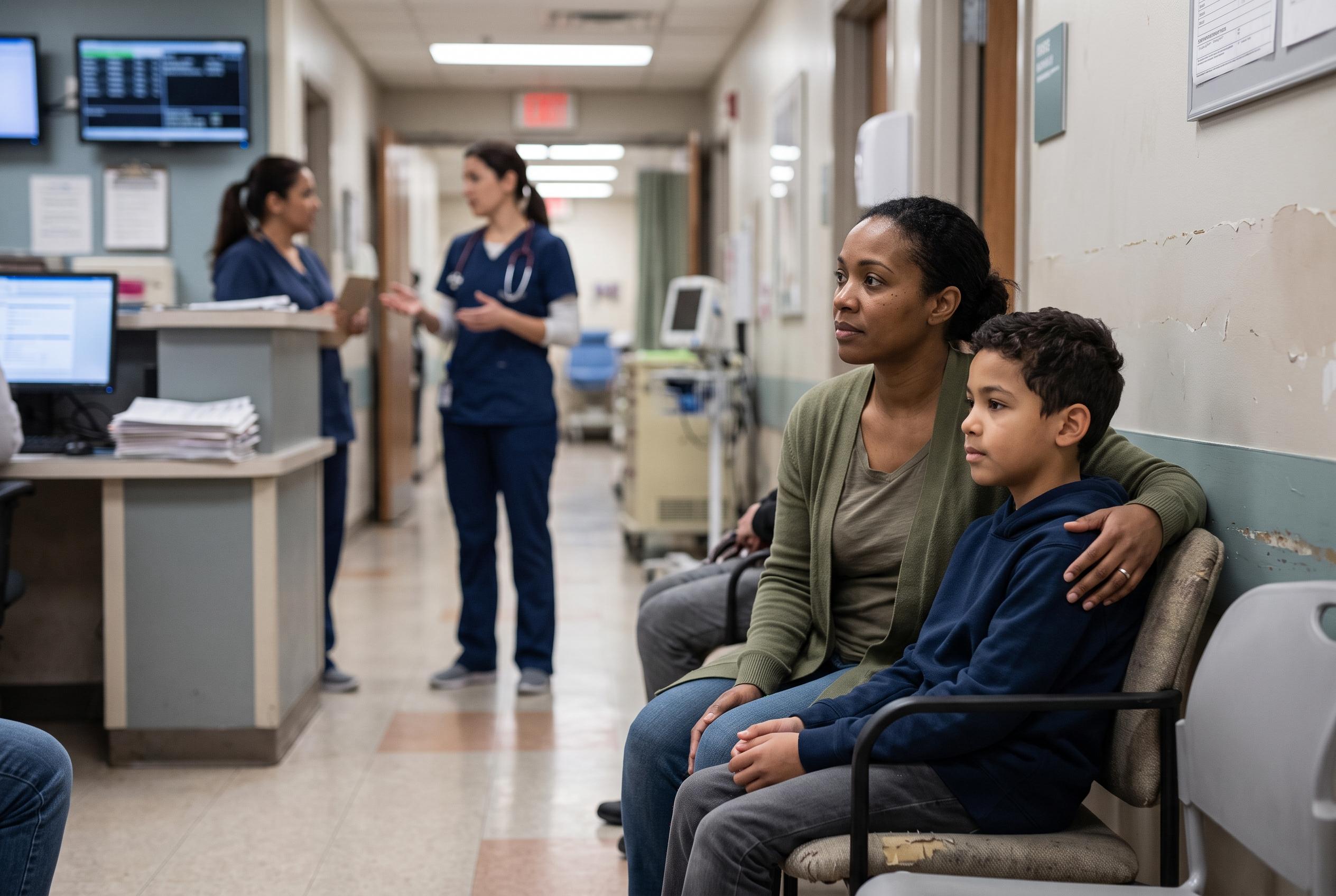

New research reveals that children and teenagers experiencing mental health crises are increasingly seeking urgent care across hospitals of all sizes. However, disparities in hospital resources and patient demographics raise concerns about the quality and equity of treatment for young patients.
Children and teenagers with mental health emergencies are still reaching emergency departments in large numbers, but new research suggests those visits are unevenly distributed across hospitals, with many happening in facilities that see relatively few children each year. According to a study published in the Annals of Emergency Medicine and led by Audrey Brewer of Ann & Robert H. Lurie Children’s Hospital of Chicago, about half of all paediatric mental health-related emergency visits from 2016 to 2022 took place in hospitals with low, medium or medium-high annual paediatric volume, rather than in the busiest children’s emergency departments.
The analysis drew on the Nationwide Emergency Department Sample and included more than 5.3 million weighted visits by children aged five to 17. Mental health-related visits rose by 24% over the seven-year period, while suicide-related visits climbed by 74%, underlining the growing pressure on emergency services as more young people seek urgent behavioural health care. The study also found that just over half of mental health-related visits were handled by high-volume departments, suggesting that large and small emergency units alike are now carrying much of the burden.
Patterns differed by race and ethnicity. Among all mental health-related visits, non-Hispanic Black children and Hispanic children were more likely than non-Hispanic White children to present to high-volume emergency departments. The same pattern held for suicide-related visits. Native American children, by contrast, were less likely than non-Hispanic White children to arrive at high-volume hospitals, a result that persisted across the broader mental health group. Children with private insurance were also more likely than those covered by Medicaid to be seen at high-volume departments.
The findings build on earlier research showing that paediatric mental health demand has been rising for years, including in lower-volume and non-metropolitan emergency departments. Other studies have also described sharp increases during and after the COVID-19 pandemic, though the timing and scale of those changes have varied by site and condition. Brewer’s team said the new data point to an equity issue as well as a capacity issue: where children receive emergency behavioural health care may affect the quality and consistency of treatment, particularly if smaller hospitals have fewer specialist resources.
Disclaimer: This content is for informational purposes only and is not intended to be a substitute for professional medical judgment, advice, diagnosis, or treatment.