

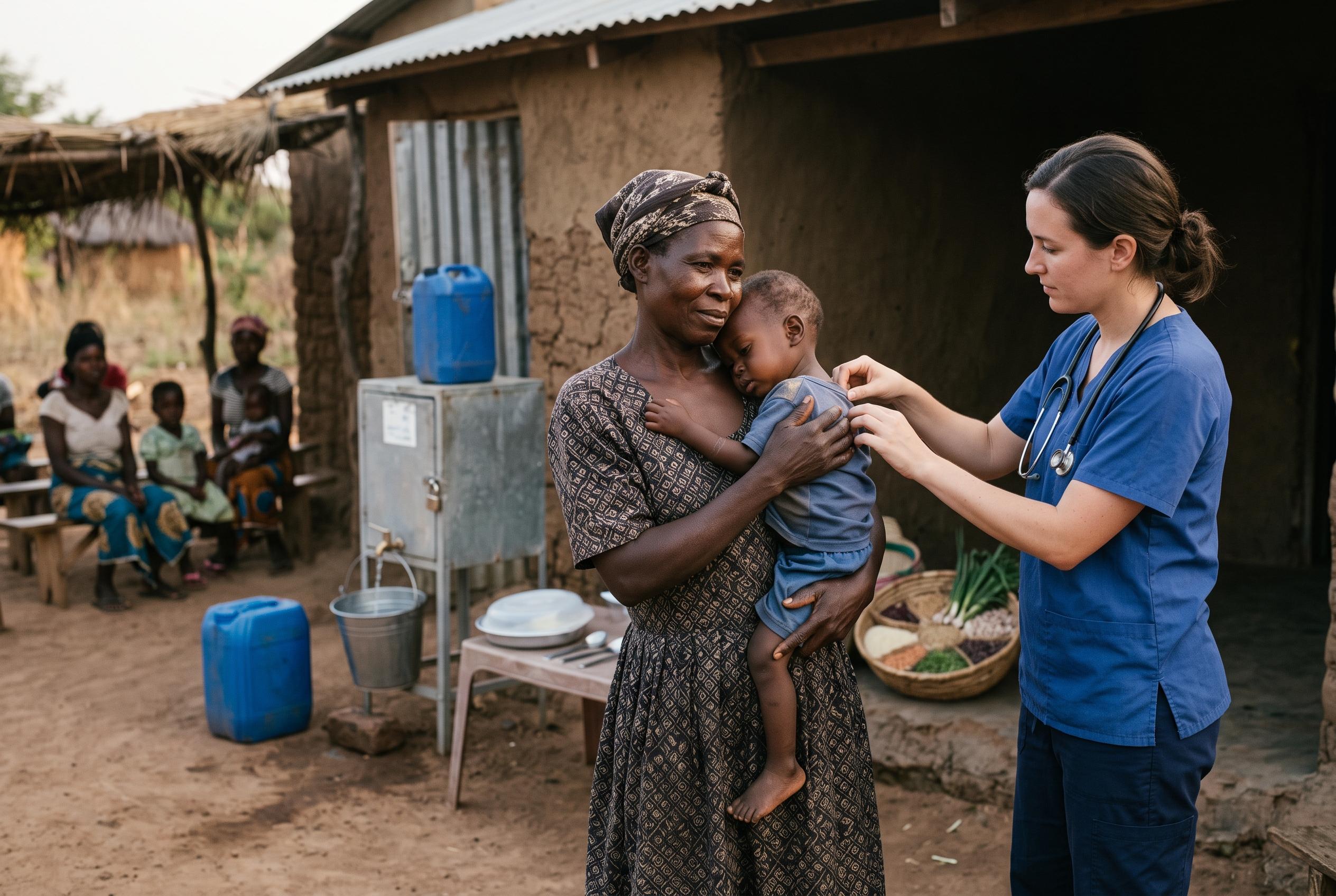

New research from the University of Dar es Salaam underscores the enduring challenge of child undernutrition in sub-Saharan Africa, revealing that combined strategies addressing food security, healthcare, sanitation, and caregiver support are essential to drive meaningful change.
Child malnutrition remains one of sub-Saharan Africa’s most stubborn public health problems, with new research suggesting the region still faces a heavy burden of undernutrition even as some countries begin to see a rise in childhood overweight. A review of 50 studies published between 2015 and 2025, conducted by researchers at the University of Dar es Salaam, found that stunting, wasting and underweight remain the most common forms of malnutrition among children under five, while the causes stretch far beyond a simple lack of food.
The findings reinforce the view, long shared by the World Health Organisation and UNICEF, that malnutrition is not just a matter of calories. It is shaped by disease, poor sanitation, limited access to healthcare, climate stress, poverty, weak food systems and gaps in caregiver knowledge. The review found that stunting, a sign of long-term nutritional deprivation, was the most frequently reported problem, with more than a quarter of children under five affected in several countries, including Tanzania, Uganda, Ethiopia, Liberia and the Central African Republic.
The researchers also found that about one in five children under five were underweight across 12 countries in the region, while wasting, which reflects rapid weight loss and acute hunger, was strongly linked to food insecurity, poverty, unsafe water and poor access to medical care. This fits with earlier evidence from the Public Health Nutrition literature, which reported similarly high rates of stunting, wasting and underweight across sub-Saharan Africa. The review also noted a growing double burden in some places, where undernutrition and overweight exist side by side as urban diets shift towards highly processed foods.
On the question of what works, the evidence points to a mix of approaches rather than a single fix. Nutrition-specific programmes, such as breastfeeding support, supplementation and community-based treatment for acute malnutrition, have improved outcomes. Nutrition-sensitive measures, including agriculture schemes, cash transfers, water and sanitation improvements, disease prevention and maternal education, can also help, although their effect on children’s growth has been uneven. Studies of large-scale initiatives, such as Feed the Future, have shown that country-tailored agriculture and food-security programmes can reduce stunting, wasting and underweight when they are sustained and adapted to local conditions.
The strongest results appear to come from integrated programmes that combine direct nutrition support with action on poverty, food access, health services and the environment. The review pointed to efforts that pair breastfeeding promotion, nutrient supplements, agricultural support and caregiver education as better placed to deliver lasting change. That conclusion matches the position of agencies such as the World Food Programme, which has argued that child malnutrition in the region can only be tackled through joined-up action on food systems, healthcare, water and sanitation, and community engagement. For parents and caregivers, the message is clear: giving children enough to eat is essential, but it is only one part of what healthy growth requires.
Disclaimer: This content is for informational purposes only and is not intended to be a substitute for professional medical judgment, advice, diagnosis, or treatment.



