

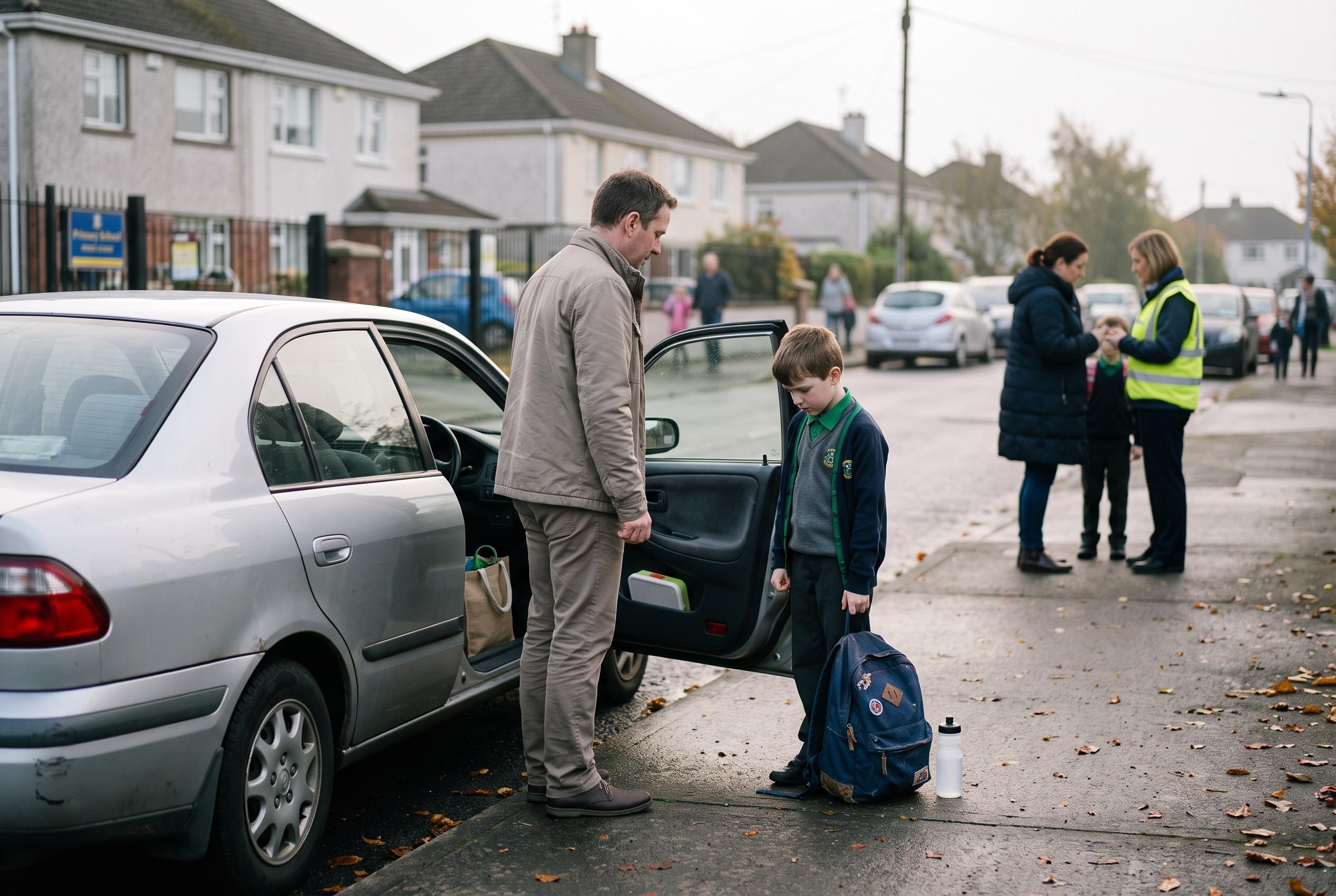

Recent research reveals a significant increase in school absences among Irish children over the past decade, driven by complex social, emotional, and economic factors, with the COVID-19 pandemic exacerbating the trend.
School absenteeism in Ireland has risen in the past decade, with the sharpest increases among young people who struggle socially and emotionally and those who say they do not like school, according to new research from the Economic and Social Research Institute and Tusla Education Support Service. The study, based on Growing Up in Ireland data, tracks absence patterns from ages nine to 13 and suggests that attendance problems are shaped by a mixture of child, family, school and community factors rather than any single cause.
The research points to a strong link between absence and disadvantage. Children from unskilled manual and non-employed households, families under financial strain, lone-parent homes and households where mothers have lower levels of education were all found to miss school more often. It also found that children with disabilities are much more likely to be absent than their peers, and that absence tends to rise when a disability emerges or is identified between the ages of nine and 13.
Home life also appears to matter. The report says harsher parenting styles, such as shouting rather than explaining, and a lack of routines around bedtime and breakfast are associated with poorer attendance. It also links higher absence to difficult life events, including bereavement and addiction within the family. At the school level, pupils in DEIS schools, which serve communities with higher levels of disadvantage, had higher absence rates, while schools that involve pupils more in decision-making tended to have lower absence.
Attitudes towards school were another major factor. Young people who held negative views of school at age nine or 13, those who had weaker relationships with teachers and those who experienced bullying were more likely to miss class. The researchers also found that socio-emotional difficulties have become more common than they were a decade ago, and that this increase has played a significant role in driving absence levels higher. In particular, not liking school now appears to be a stronger predictor of absence than it was previously.
The findings come against a wider post-pandemic rise in absenteeism, with the ESRI noting that absence rates are higher in Ireland since Covid-19, as they are in many other countries. The institute says the cohort that was 13 during the pandemic showed a marked rise in absence, while rates at age nine remained relatively stable. In a separate publication, the ESRI said more than a fifth of primary and post-primary pupils missed 20 or more school days in 2023/24, underlining the scale of the problem. Researchers and Tusla say the response must be broad, combining school-based measures with mental health, parenting and anti-poverty supports.
Disclaimer: This content is for informational purposes only and is not intended to be a substitute for professional medical judgment, advice, diagnosis, or treatment.



