

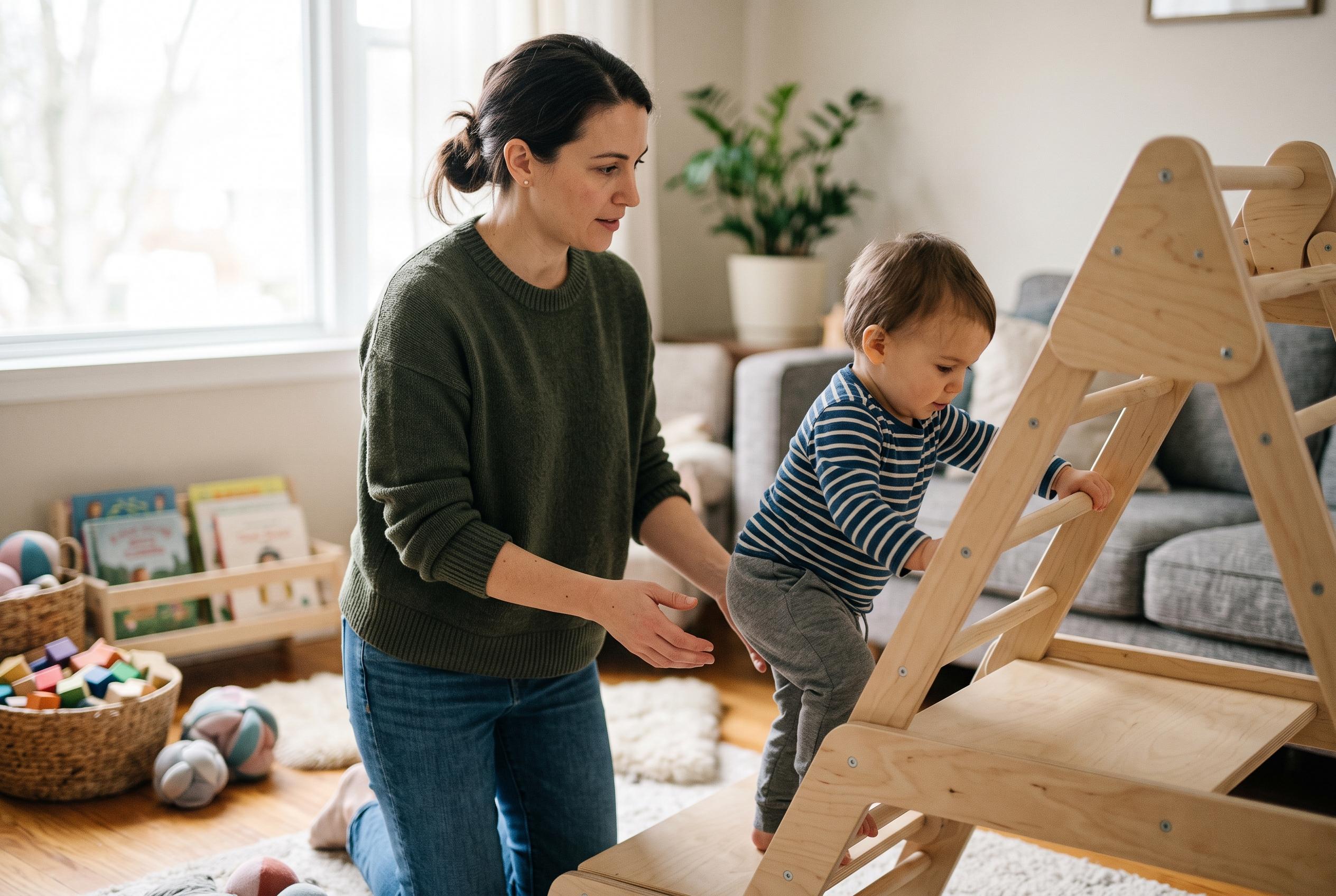

Research and parenting experts highlight the importance of supporting toddlers in safe risk-taking to foster balance, confidence, and emotional resilience, emphasising the role of adult guidance and positive language during play.
Toddlers learn a great deal when they are allowed to test what their bodies can do, provided adults keep the setting safe. Carmel Mountain Preschool says this kind of risk play can begin once young children are steady enough to explore with more confidence, because it helps them build balance, coordination and body awareness while also learning how to judge a challenge. The idea is not to remove caution, but to give children room to practise new movements without being shut down at every turn. According to the CDC, child-led play also supports independence and confidence, especially when adults keep the tone positive and avoid over-directing every moment.
That means resisting the reflex to say “no” at the first sign of effort. If a toddler wants to climb a low structure, step on and off a small ledge or balance along a curb, adults can stay close without taking over. Parenting Mentor says this sort of manageable challenge gives children a chance to explore height, movement and balance in a way that is appropriate for their age, while Happy Day Play notes that supported risk works best when adults scan for hazards first and then pause before intervening. The distinction matters: a risk is something a child can learn from, while a hazard is something likely to cause harm and should be removed or redirected.
Language also plays a part. The CDC recommends letting children lead play, using calm listening and limiting directions so they can stay engaged in the activity they have chosen. In practical terms, that can mean naming what a child is attempting rather than interrupting immediately. Saying a toddler is trying to reach the top of the rocks or working out how to step up a small incline helps turn the moment into learning rather than a power struggle. National Geographic has likewise argued that children benefit when adults offer concrete safety guidance instead of hovering too closely, because children often learn best by negotiating small challenges for themselves.
Repetition is another key part of the process. Rasmussen University says climbing, running and balancing help develop strength, spatial awareness and co-ordination, while also building emotional resilience as children work through excitement, frustration and uncertainty. For toddlers, repeating a movement is often how confidence takes root. A child who climbs up, comes down and tries again is not simply playing; they are gathering information about their own limits and abilities. Done well, risk play gives parents a way to support curiosity without smothering it, helping children grow braver, steadier and more capable over time.
Disclaimer: This content is for informational purposes only and is not intended to be a substitute for professional medical judgment, advice, diagnosis, or treatment.



