

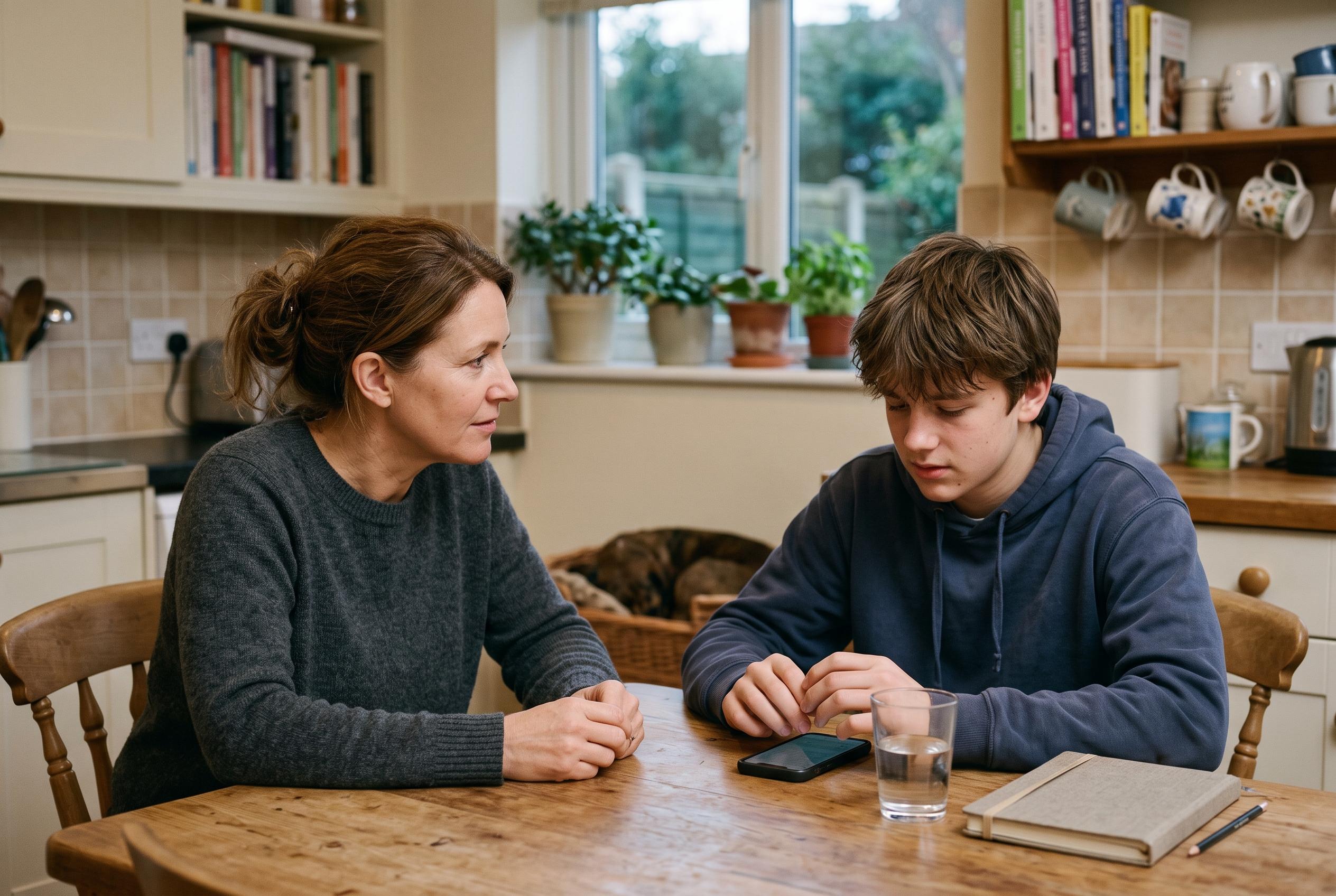

Experts highlight the rising impact of health anxiety among teenagers and offer practical advice for parents to manage fears, normalise body sensations, and seek professional help when necessary.
Health anxiety can turn ordinary bodily sensations into a source of constant alarm, particularly for teenagers already prone to worry and self-scrutiny. TulsaKids reports that even common headlines about bacteria, foodborne illness and other health scares can leave young people scanning their bodies for danger, while Harvard Health notes that the condition can become disruptive when fear persists despite little or no evidence of illness. In practice, that can mean repeated checking, compulsive symptom searches and a growing sense that something is wrong even when a teen is otherwise well. According to Grace Evans, a licensed professional counsellor supervisor in Tulsa, the problem is real, common and, for some young people, deeply disabling.
One of the most useful steps parents can take is to resist the urge to turn every worry into an immediate medical verdict. Evans, speaking to TulsaKids, said that the first impulse is often to look up symptoms online, but that habit usually reinforces fear rather than easing it. Harvard Health and the Mayo Clinic both describe health anxiety, sometimes called illness anxiety disorder, as treatable, but they also show how easily it can spiral into repeated reassurance-seeking, unnecessary testing and constant monitoring. Instead of replying with a blunt “you are fine”, Evans recommends acknowledging the distress first and then exploring what else may be driving it, since health fears can sometimes be a doorway to broader anxiety.
That shift matters because validation is not the same as reassurance. Evans advises parents to say they can see how upsetting the fear is and to make clear they are there to help, while avoiding a cycle in which every worry is met with instant certainty. Research published in the Journal of Child and Family Studies suggests that adolescent health anxiety can be shaped by online information-seeking and by parental anxiety, which means adults may be unintentionally modelling the very vigilance they are trying to calm. In other words, a parent’s tone, habits and responses can either steady a frightened teen or intensify the sense that danger is always nearby.
Practical coping tools can also help break the loop. TulsaKids recommends grounding exercises such as the 5-4-3-2-1 technique, rainbow grounding and box breathing, all of which are designed to pull attention away from the fear spiral and back into the present moment. The broader clinical guidance from the Mayo Clinic and Cleveland Clinic points in the same direction, emphasising stress management, regular activity and other healthy routines that make the body feel more predictable. Parents can reinforce that work by encouraging sleep, hydration, exercise and balanced meals, while also normalising ordinary body sensations such as a racing heart, a twitch or a growling stomach so they are not treated as automatic warning signs.
Distraction can be useful too, particularly when it is calm and connected rather than dismissive. A walk, a shared meal, a board game or another low-pressure activity can give a teen enough distance from anxious thoughts to let the nervous system settle. Evans also suggests that families use a simple mantra to restore a sense of agency: the idea is not to control every symptom or sensation, but to remember that there are meaningful choices in how to care for body and mind. When the fear keeps returning, or starts to interfere with school, sleep or daily life, Harvard Health, Mayo Clinic and Cleveland Clinic all point to professional treatment, especially cognitive behavioural therapy, as an effective next step.
Disclaimer: This content is for informational purposes only and is not intended to be a substitute for professional medical judgment, advice, diagnosis, or treatment.



