

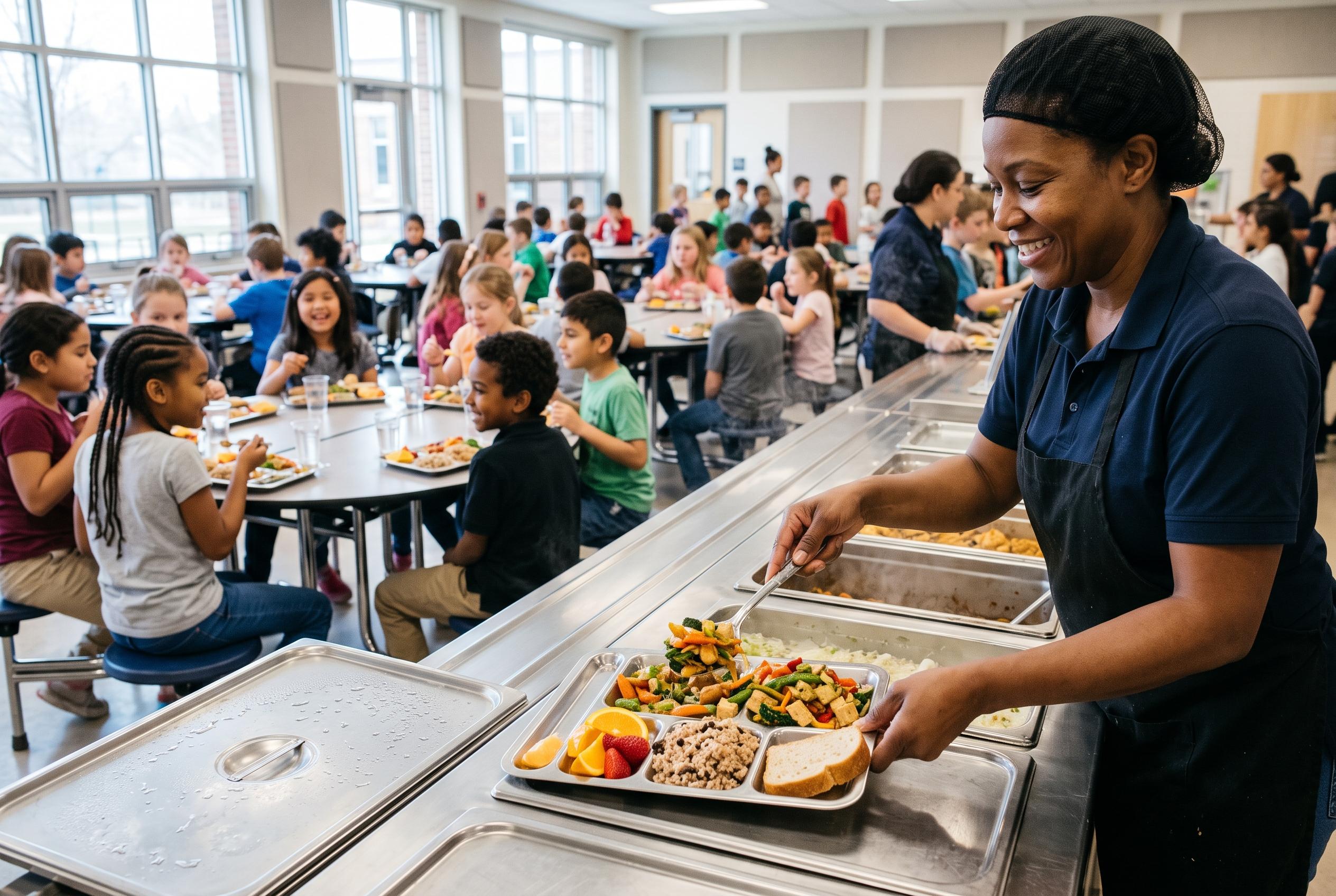

Advocates argue that Minnesota’s universal school meal programme needs to include reliable plant-based options to serve diverse dietary needs, following models from Illinois and meeting federal standards with minimal cost implications.
Minnesota’s universal school meals programme was built on the idea that every child should be able to eat at school without hassle, stigma or confusion. But advocates for plant-based options argue that the state’s current system still leaves out students whose families avoid animal products for religious, cultural or ethical reasons, as well as children who simply need a meat-free meal when pork or beef is on the menu. They say the fix is straightforward: follow Illinois and guarantee a plant-based option when requested in advance.
Supporters point to broader demand for this kind of accommodation. A Gallup poll cited in the article found that 4% of Americans identify as vegetarian and 1% as vegan. That may be a minority, but it is large enough to challenge the claim that a universal meal programme is truly serving everyone if it offers no reliable path for plant-based eaters.
School districts have often argued that such meals are difficult to provide because they fall outside medical diet requirements. Yet guidance from the Minnesota Department of Education says schools may choose to accommodate dietary preferences, and the department’s meal pattern standards show how plant-based meals can still meet the rules needed for reimbursement. In testimony in February 2025, the department said plant-based meals are fully reimbursable if they satisfy federal meal pattern requirements, undercutting the claim, made by Minneapolis Public Schools, that vegan meals cannot be offered because of USDA rules.
The legal framework in Illinois also suggests the barrier is more about policy than principle. State law there requires school districts to provide a plant-based lunch option for students who request one in advance, so long as the meal meets federal nutrition standards. In Minnesota, House File 2764 would move in the same direction by requiring participating public schools to offer at least one plant-based meal option daily beginning in the 2026-27 school year.
Cost is another frequent objection, but the financial picture is more complicated than the price of soy milk versus cow’s milk. The article notes that school food budgets are separate from general district funds and are usually built around a mix of state and federal reimbursement, commodity food purchases and meal revenue. In some districts, the balance between labour and food costs matters more than a single ingredient’s sticker price. Scratch kitchens may spend more on staff and less on food; heat-and-serve operations may do the opposite. Advocates also point to examples elsewhere, including Portland, Maine, where local reporting has found vegan lunches did not raise district costs because they relied on inexpensive staples such as beans and rice.
There are also signs that some districts have room to absorb the change. During testimony in April 2024, Becker Public Schools Superintendent Jeremy Schmidt said his district had a healthy food service fund and suggested some of that money could be redirected towards building needs. The broader point, supporters argue, is that districts with surplus meal accounts should be able to cover a plant-based option without straining core operations. They also say the potential benefits extend beyond individual students: using more plant-based proteins could support local agriculture, reduce waste and align school menus with a wider range of family needs. The argument, in the end, is not about replacing meat across the board. It is about making a universal programme live up to its name.
Disclaimer: This content is for informational purposes only and is not intended to be a substitute for professional medical judgment, advice, diagnosis, or treatment.



