


Nutrition experts emphasise understanding which sugars matter and advocate for varied, textured foods over sweet pouches as new guidance aims to balance sweetness with healthy eating habits during baby weaning.
Parents beginning weaning are often left uncertain by headlines about sugar, especially when baby food pouches are involved. Charlotte Stirling-Reed, a baby and child nutritionist, argues that the issue is less about banning sweetness altogether and more about understanding which sugars matter, how often they are offered and what else is on the plate. Her central message is straightforward: babies do not need sugar added to their food or drinks. According to NHS guidance, children under one should have the amount and frequency of sugary foods and drinks kept as low as possible, while from age one free sugars should account for no more than 5% of total energy intake.
That advice sits alongside an important biological reality: babies are naturally drawn to sweet tastes. Stirling-Reed notes that breast milk and formula are sweet, and that infants often show a preference for sweeter flavours from the very start. The NHS distinguishes between free sugars and the sugars found naturally in whole fruit, vegetables and milk. Free sugars include those added at home or by manufacturers, as well as sugars in honey, syrups, fruit juices, fruit concentrates and purées. In other words, the concern is not sweetness itself, but the form it takes and how much of it enters a child’s diet.
This is where fruit purées can cause confusion. Under the UK definition used by the NHS, puréed fruit counts as a source of free sugars because the fruit’s structure has been broken down. That does not mean babies should never have puréed fruit, or that homemade purées are out of bounds. It does mean that parents should avoid building a weaning pattern around fruit pouches and sweet purées alone. The NHS says babies under 12 months do not need fruit juice or smoothies, and if these are offered they should be diluted and given with meals. It also advises against sugary foods and drinks before bedtime to help protect teeth.
Dental health is another reason to be cautious. The NHS warns that sugary foods and drinks can be especially damaging when they linger on baby teeth, and that frequent intake of foods such as dried fruit can raise the risk of decay. Stirling-Reed makes a similar point about pouches: because the texture remains smooth and the baby feeds through a spout, they do not encourage the same chewing and oral-motor development as lumpier foods or finger foods. That matters because weaning is not just about calories; it is about learning how to eat, how to handle different textures and how to accept a wider range of flavours.
That said, pouches are not the villain some online debates suggest. Stirling-Reed says they can be useful on busy days or when families need a convenient option on the move. The problem comes when they become the default rather than the exception. She says babies benefit from early exposure to savoury tastes, mixed textures and a wider variety of foods, including vegetables, protein, iron-rich ingredients and wholegrains. Relying too heavily on sweet pouches can crowd out those experiences and may also mean a child is offered fewer nutrients than they would get from a more varied homemade meal.
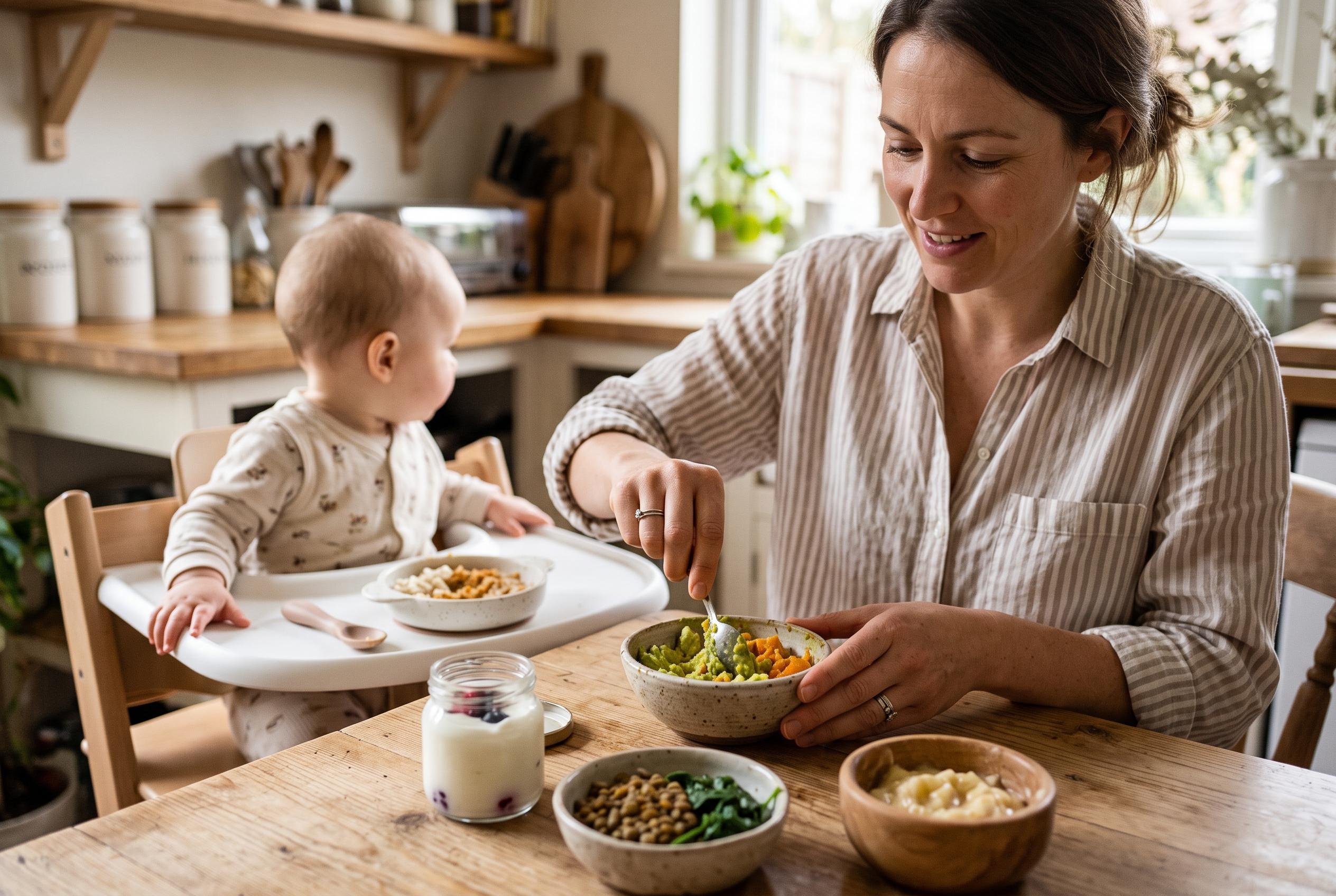
Her practical advice is to treat pouches as occasional rather than everyday foods, and to spoon them out rather than letting a baby suck directly from the packet. She also recommends choosing savoury, textured options where possible, checking ingredients carefully and avoiding products that are mostly fruit. At home, there is no need to add sugar to baby food at all. Instead, parents can offer plain full-fat yoghurt or an unsweetened plant-based alternative with fresh fruit added, alongside soft vegetables, finger foods and a broad range of flavours, including some bitter or sour ones such as broccoli and spinach. The wider point, she says, is that variety in both taste and texture is what helps set babies up well during weaning, not sweetness on its own.
Disclaimer: This content is for informational purposes only and is not intended to be a substitute for professional medical judgment, advice, diagnosis, or treatment.



